
24, April 2024
Biya regime delays bond sale amid regional market strain 0
The Cameroon government has postponed its planned 2024 bond sale, originally slated for April, due to market saturation caused by Gabon and the Central African Development Bank (BDEAC). A source within the Ministry of Finance Treasury Department revealed ongoing negotiations for the delay.
With regional capital markets facing adversity, marked by difficulty in accessing funds, Cameroon opts for caution, refraining from pursuing significant borrowing. Gabon and BDEAC, preceding Cameroon with bond issuances totaling CFA200 billion earlier in 2024, faced challenges in attracting subscriptions, leading to extending their bond closure dates.
Despite offering various interest rates and maturity terms, both Gabon and BDEAC had to prolong their bond subscription deadlines due to underwhelming responses from investors. This move aims to grant them more time and a better opportunity to attract hesitant investors.
In light of this cautious market environment, Cameroon, accustomed to controlled interest rates, refrains from significant borrowing. The country’s preference for controlled rates contrasts with the current trend of rising interest rates, a consequence of the Central African Central Bank’s austerity monetary policy to combat inflation by tightening liquidity. Amid uncertain market conditions, Cameroon prepares to preserve its treasury amidst difficulty in accessing fresh funds. The government plans to repurchase certain bonds issued on the regional market, scheduled for early May, totaling between CFA150 billion and CFA200 billion. This strategy aims to extend repayment dates for bonds nearing maturity, ensuring liquidity for essential priorities.
Source: Business in Cameroon























30, April 2024
Cameroon Employers Association: Célestin Tawamba’s landslide victory raises questions 0
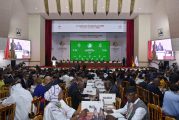
The election of Célestin Tawamba as the head of the Cameroon Employers’ Association (Gecam) is hailed as a resounding success, according to a statement released after the organization’s first general assembly. Gecam was born from the merger of the Inter-Patronal Group of Cameroon (Gicam) and Cameroon Enterprises (Ecam).
Tawamba’s slate, the only one in contention, secured 550 out of 560 votes, amounting to 98.18% of the valid votes, as stated in the document signed on April 9 by the managing director, Aline Véronique Mbono.
However, the document remains silent on the number of voters. Yet, upon scrutiny of Gecam’s texts, it’s evident that the number of votes no longer matches the number of voters. The new vote distribution is as follows: large enterprises, with revenues exceeding CFA50 billion, have five votes; medium-sized enterprises, with revenues ranging from one to CFA15 billion, possess two votes; small enterprises, with revenues between CFA50 million and CFA1 billion, have one vote; and very small enterprises, with less than CFA50 million in revenue, are allocated 0.2 votes.
Some business owners turn their backs on Gecam
It is important to note that only 295 members participated in Gecam’s inaugural general assembly. This indicates that out of a potential 1,400 members, 295 have formally joined Gecam, comprising 1,000 from Gicam and 400 from Ecam. This reality tempers the claimed landslide victory and raises questions about the consensus around the merger project. Acknowledging this, sources within Gecam admit that the desired unity of the employers’ association has not been achieved. Since Gicam’s extraordinary general meeting on July 11, 2023, when 329 members voted in favor of the merger treaty, no employers’ association gathering has attracted more than 300 people.
Following the merger, a significant number of patrons have not paid their dues and are not actively involved in the activities of the new employers’ organization. Notable absentees include Abakal Mahamat, the CEO of BGFIBank Cameroon, and Reine Essobmadje, the CEO of Evolving Consulting, who was previously one of the vice presidents in Gicam’s last board of directors under Célestin Tawamba’s presidency.
“Many of us were left unsatisfied with the underlying project behind such a merger,” stated Jacques Jonathan Nyemb, a member of the Gicam board of directors, back in December. Nyemb, who served as the spokesperson for Célestin Tawamba until July 11, 2023, further believes that the merger process was marred by irregularities both in substance and in form. This led Emmanuel Wafo, then president of the Gicam’s economic and business development commission, to file several complaints that are still pending before the courts in Douala. For opponents of the merger, the sole aim of this project was to dissolve the country’s largest employers’ organization, thus allowing Célestin Tawamba to prolong his tenure at the helm of Cameroonian business leadership by assuming control of the newly created employers’ federation. It’s worth noting that Gicam’s regulations prevented him from running for office again at the end of his second term in December 2023.”
Tawamba gained ground
At the treaty signing on April 5, 2023, the project’s initiators, Célestin Tawamba and Protais Ayangma, then presidents of Gicam and Ecam respectively, outlined their goal of building a new, stronger, more modern, influential, and representative employers’ organization. Despite some patrons’ reluctance, Tawamba has garnered support, securing official endorsement from the country’s authorities. The inaugural board of Gecam, which he heads, was received by Prime Minister Dion Ngute on April 24, 2024, and the following day by the Secretary-General of the Presidency, Ferdinand Ngoh Ngoh.
During these meetings, the board presented its program and action plan for the next four years. This program focuses on positioning Gecam at the forefront of discussions for implementing policies affecting the business environment, restructuring its organizational framework to provide tailored services to members based on their size and sectors, and supporting SMEs and micro-enterprises to become engines of growth and employment within Cameroon and the region, particularly within the framework of the AfCFTA.
According to reports from these meetings, “Ferdinand Ngoh Ngoh expressed readiness to further support the employers’ association in finding sustainable solutions to improve the business environment through a more inclusive approach.” Prime Minister Dion Ngute emphasized the need for a new paradigm of public-private dialog where the government and employers are equal partners with the same objective.
Source: Business in Cameroon