27, October 2023
Biya regime raises CFA50bn on the Beac market with higher rates 0
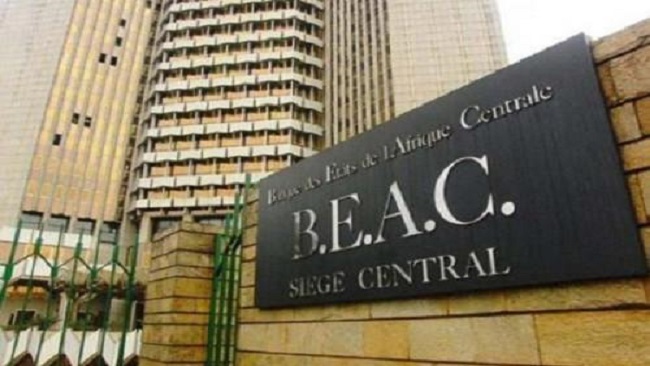
Cameroon’s Treasury raised a total of CFA49.8 billion on the Beac public securities market during the week of October 16 to 20, 2023, we learned. According to the operations report published by the central bank, these funds were raised through issues of 26-week fungible Treasury bills (BTA) (CFA39.8 billion raised out of CFA40 billion sought) and 52-week bills (the 10 billion sought were oversubscribed).
The weighted average interest rates for these transactions were 5.59% for 26-week BTAs and 5.85% for 52-week securities, for an overall average of 5.7%, well above the usual 3%. This rate is even slightly higher than the 5.67% average offered by the Cameroon Treasury on this market in September2023 but remains below the general market average, estimated at 6.29% that month.
Investor interest in Cameroonian bonds, which picked up again in September, continued in October, after the lack of interest seen at the start of the year. According to central bank data, the subscription rate for the 26-week BTAs was 99.80%, while 52-week securities were 140% oversubscribed. By way of comparison, the average subscription rates for this category of securities in Cameroon were 46.7% and 68.8% in June and August 2023 respectively.
Source: Business in Cameroon























31, October 2023
banque atlantique Cameroun rises to improve the quality of its service 0
Banque Atlantique Cameroun, a banking institution of systemic importance, has been in legal operations in the Cameroon’s banking market since 2009 and today, posts exceptional results driven by a dynamic evolution of its main indicators. These results served as basis for the award of the prize to the Best Performance in 2022 during Finance Week organized by EcoMatin Magazine.
In a bid to reach operational excellence and sustainably improve its infrastructure, banque atlantique Cameroun has embarked on a complete overhaul of its information systems, to acquire the best-in-class technologies and provide its valued customers with the best experience at its touchpoints.
Interieur
Based on the foregoing, banque atlantique Cameroun wishes to announce the migration of its core banking system and other technological and communication infrastructures, towards more modern, more stable, more efficient, more automated, and more secured systems.
For this purpose, banque atlantique Cameroun will observe a necessary shutdown of its systems, services, platforms and applications from Wednesday, November 1st to Saturday, November 4th, 2023. However, our Automated Teller Machines (ATMs) will remain in operation throughout this period. The restart of the systems is scheduled for Monday, November 6th, 2023 at 8:00 a.m.
banque atlantique Cameroun wishes to reassure the public and especially its valued customers that this operation aims to sustainably improve the quality of its products and services; to standardize its operations; and to make the customers’ experience exceptional across its network.
The Bank is aware of the inconvenience caused by this situation and sincerely apologizes in advance, and as well appreciates its customers’ sense of patience and understanding.
Note that our Customer Relationship Center will be available to assist you from 8 a.m. to 6 p.m. by call to 8086.
About BACM
banque atlantique Cameroun is a subsidiary of Atlantic Financial Group (AFG), a panafrican banking group founded in 2006 by the Ivorian businessman, Bernard KONE DOSSONGUI. In 2020, for the first time in its history, the Bank is listed among domiciliary banks for World Bank and African Development Bank projects, thereby consolidating its credibility and financial stability. With 23 branches across the national territory, the Bank successfully improved its footprint in the market, with an outstanding growth of its main indicators, closing the financial year with a total balance sheet of XAF 806 billion, compared to XAF 570 billion in 2021, thus an increase of 41.3%. In October 2023, banque atlantique Cameroun was awarded the 2022 Best Performance Prize during the Finance Week organized by Ecomatin Magazine. Find out more on our website at www.banqueatlantique-cmr.com or follow us on our social media networks.
Source: Business in Cameroon