7, December 2022
Oil and Gas: Biya and Obiang set to seal shameful deal 0
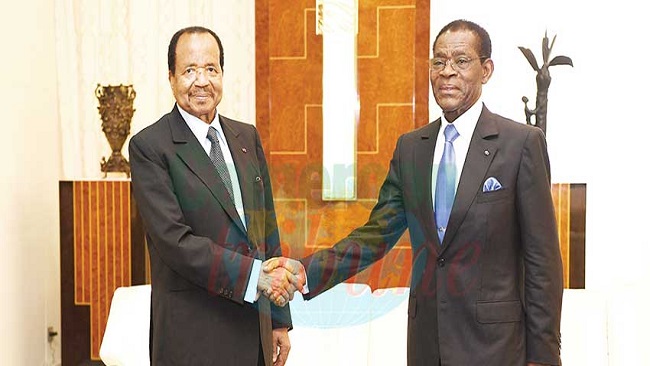
A cross-border energy cooperation deal between Cameroon and Equatorial Guinea, which has been stalled for several years, is now set to go ahead and should boost Yaoundé and Malabo gas operations, Africa Intelligence reported.
Africa Intelligence also added that the deal would also benefit Marathon Oil and its Bioko liquefaction plant as well as Chevron, which operates in both countries.
However, the signing is coming at a time when Equatorial Guinea recently deported several hundred Cameroonians, some of whom say they were fleeing terrorist and rebel attacks at home.
The oil-rich country has a history of always targeting Cameroonian migrants who render services such as mechanics, electricians, and bricklayers including miners.
Innocent Cameroonian citizens have over the years been victims of what many political commentators have painted as Biya regime’s lack of interest in the plight of its citizens outside the country.
By Chi Prudence Asong



















7, December 2022
Debt-Service Payments Put Biggest Squeeze on Poor Countries Since 2000 0
The poorest countries eligible to borrow from the World Bank’s International Development Association (IDA) now spend over a tenth of their export revenues to service their long-term public and publicly guaranteed external debt—the highest proportion since 2000, shortly after the Heavily Indebted Poor Countries (HIPC) initiative was established, the World Bank’s new International Debt Report shows.
The report highlights rising debt-related risks for all developing economies—low- as well as middle-income economies. At the end of 2021, the external debt of these economies totaled $9 trillion, more than double the amount a decade ago. During the same period, the total external debt of IDA countries, meanwhile, nearly tripled to $1 trillion. Rising interest rates and slowing global growth risk tipping a large number of countries into debt crises. About 60% of the poorest countries are already at high risk of debt distress or already in distress.
At the end of 2021, IDA-eligible countries’ debt-service payments on long-term public and publicly guaranteed external debt totaled $46.2 billion—equivalent to 10.3% of their exports of goods and services and 1.8% of their gross national income (GNI), according to the report. Those percentages were up significantly from 2010, when they stood at 3.2% and 0.7% respectively. In 2022, IDA countries’ debt-service payments on their public and publicly guaranteed debt are projected to rise by 35 percent to more than $62 billion, one of the highest annual increases of the past two decades. China is expected to account for 66% of the debt-service payments to be made by IDA countries on their official bilateral debt.
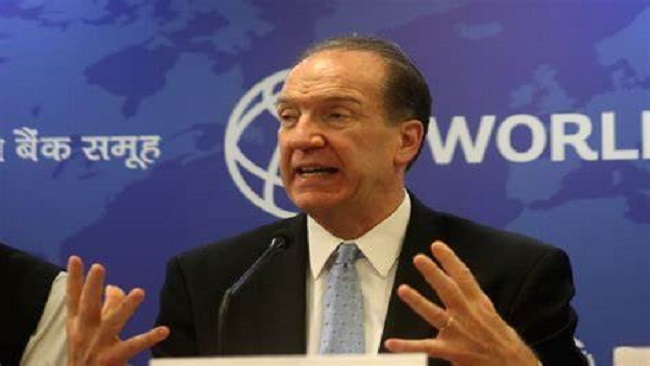
“The debt crisis facing developing countries has intensified,” said World Bank Group President David Malpass. “A comprehensive approach is needed to reduce debt, increase transparency, and facilitate swifter restructuring—so countries can focus on spending that supports growth and reduces poverty. Without it, many countries and their governments face a fiscal crisis and political instability, with millions of people falling into poverty.”
On the surface, debt indicators seem to have improved in 2021, the report shows. As economic growth resumed following the global recession in 2020, public and publicly guaranteed external debt as a share of GNI returned to pre-pandemic proportions. However, this was not the case for IDA countries, where the debt- to-GNI ratio remained above the pre-pandemic level at 25%. Moreover, the economic outlook has deteriorated considerably.
In 2022, global growth is slowing sharply. Amid one of the most internationally synchronous episodes of monetary and fiscal policy tightening the world has seen in 50 years, the risk of a global recession next year has been rising. Currency depreciations have made matters worse for many developing countries whose debt is denominated in U.S. dollars. The 2021 debt-to-GNI improvement, as a result, is likely temporary.
Over the past decade, the composition of debt owed by IDA countries has changed significantly. The share of external debt owed to private creditors has increased sharply. At the end of 2021, low- and middle-income economies owed 61% of their public and publicly guaranteed debt to private creditors—an increase of 15 percentage points from 2010. IDA-eligible countries owed 21% of their external debt to private creditors by the end of last year, a 16-point increase from 2010. Also, the share of debt owed to government creditors that don’t belong to the Paris Club (such as China, India, Saudi Arabia, United Arab Emirates, and others) has soared. At the end of 2021, China was the largest bilateral lender to IDA countries, accounting for 49% of their bilateral debt stock—up from 18% in 2010. These developments have made it much harder for countries facing debt distress to quickly restructure their debt.
The rising debt vulnerabilities underscore the urgent need to improve debt transparency and provide more complete debt information to strengthen countries’ ability to manage debt risks and use resources efficiently for sustainable development.
“Poor debt transparency is the reason so many countries sleepwalk into a debt crisis,” said Indermit Gill, Senior Vice President and Chief Economist of the World Bank Group. “Complete, transparent debt data improves debt management. It makes debt sustainability analyses more reliable. And it makes debt restructurings easier to implement, so that countries can return quickly to economic stability and growth. It is not in any creditor’s long-term interest to keep public debt hidden from the public.”
The new International Debt Report reflects an advance in debt transparency. It draws from the World Bank’s International Debt Statistics database—the most comprehensive source of comparable cross-country information on the external debt of low- and middle-income countries. It improves on the earlier International Debt Statistics reports by adding substantive analysis and expanding both the breadth and specificity of the data in it.
Over the past five years, the International Debt Statistics database has identified and added $631 billion of previously unreported loan commitments, and an additional $44 billion were identified in 2021. The total of these newly documented additional loan commitments over the past five years is equivalent to more than 17% of the total outstanding public and publicly guaranteed debt stock in 2021.