
2, July 2018
African Development Bank ranked 4th best company to work for in Africa 0
The 2018 Careers in Africa Employer of Choice Survey has ranked the African Development Bank (www.AfDB.org) the fourth best company to work with in Africa. Of 100 companies listed, the top four include the World Bank Group, Chevron, Exxon Mobil and the African Development Bank.
Over 20,000 African professionals answered questions about employee engagement and employment conditions. Opportunities to learn new skills, quality of healthcare provisions, leadership and opportunities for advancement emerged as key indicators of great employers.
Commenting on the African Development Bank ranking, Alex Mugan, Managing Director of the Global Career Company and co-author of the survey with UK-based firm Willis Towers Watson said: “The importance of making a positive impact came through strongly in responses to the Study. This, together with the on-going organisational transformation at the African Development Bank, explains the continued high esteem in which the Bank (as an employer) is viewed by many African professionals worldwide.”
Trust in senior leadership, especially leaders that listen, those who set a good ethical example, and who deliver the values of the business, emerged as the top three most important factors in choosing an employer in Africa. “Employees are interested in leaders that push a good mission. Brands whose leaders are very visible doing those things have tended to do well,” Mugan further indicated.
According to Akinwunmi Adesina, President of the Bank, “the ranking is further validation of the work of the Board and Management to accelerate critically needed institutional changes and efforts to attract the best and the brightest to help implement the Bank’s High-5 agenda to Power Africa, Feed Africa, Industrialize Africa, Integrate Africa, and Improve the quality of life of Africans.”
The Bank scored high in attracting top talents from across all Africa. It also retained its position in the top 5 of established corporate and multilateral organizations. The report highlights a shift in the talent landscape with an increased interest in investment finance from job seekers and a quest for digital savvy experts from employers.
Overall, the survey revealed that job security is considered one of the main reasons to remain in an organization. In addition to attraction drivers for men, including skills development, the Report suggests that female professionals have a greater interest in healthcare opportunities, flexible working conditions, work-life balance, and ethics.
More than just a listing, the report seeks to shape the conversation around what makes a great employer in Africa, and through that positively change employee experience across the continent.The 100-list includes banks, oil companies, FMCG brands and mobile phone operators.
Distributed by APO Group on behalf of African Development Bank Group (AfDB).




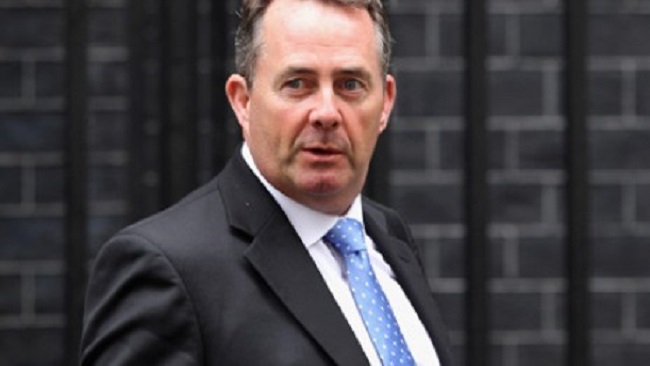
 TRADE Secretary Liam Fox has announced the UK has secured a £1.5billion trade deal and signed off £75million in other trade agreements in a major boost for the UK economy after Brexit.















5, July 2018
China says US ‘opening fire’ on entire world 0
China says the United States is “opening fire” on the global economy and damaging the international supply chains by imposing tariffs on products from China and other countries, as controversial US duties on Chinese goods worth tens of billions are due to come into force at midnight Thursday.
“The US measures are essentially attacking global supply and value chains. To put it simply, the US is opening fire on the entire world, including itself,” said Gao Feng, a spokesman for the Chinese Ministry of Commerce, at a press conference in Beijing on Thursday, referring to the American practice of protectionism.
He said Beijing would continue to assess the impact of the current trade dispute with Washington and would help firms cope with possible shocks.
Last month, US President Donald Trump announced 25-percent tariffs on $50 billion in annual Chinese imports. He said he had also directed the US Trade Representative to identify $200 billion worth of imports for additional tariffs.
Trump also stressed at the time that his administration would be identifying another $200 billion in tariffs if China retaliated the new measures.
The total of $450 billion in goods represents the lion’s share of all of China’s exports to the US.
The US administration had originally proposed duties in April, starting with 1,333 Chinese products. After obtaining some public feedback, it omitted 515 imports from the blacklist but added 284 others.
Washington will impose duties on 818 Chinese products, worth $34 billion a year, from the original list, due to take effect on July 6. The Trump administration will not target the 284 other items — worth $16 billion — until it collects further public comments.
China, for its part, has vowed to retaliate with matching duties on US goods.
Beijing has said that Chinese tariffs on American products would come into force shortly after those of Washington do.
Trump is also involved in a similar trade tussle with Europe, Canada, Mexico, and South Korea.
China ‘will not fire the first shot’
If the US duties proceed to take effect on Friday as planned, Beijing will hit back with its own tariffs, initially on nearly $30 billion in US goods on the same day, China’s General Administration of Customs said in a statement on Thursday.
It added that China would not be the first to pull the trigger, however.
The Chinese tariffs include duties on vehicles and many agricultural and food products, such as soybeans, which will hit American farmers — normally part of Trump’s popular base — hard.
The remaining $15-billion Chinese tariffs would be imposed in the second phase and would target US crude oil, propane, and chemicals.
Elsewhere in his remarks, Gao also said that China’s foreign trade was expected to continue on an unwavering trail even though investors were afraid that a full-scale Sino-US trade conflict would deal a body blow to Chinese exports and its economy.
Back on June 14, Christine Lagarde, the head of the International Monetary Fund (IMF), warned that the trade war sparked by unilateral US import tariffs would have no winners and that the tit-for-tat cycle of retaliation would only create “losers on both sides.”
She also added at the time that the outcome of such a trade conflict would have a “serious” economic impact on the US and global economies, including by causing inflation to speed up.