
26, March 2026
Anglophone Vice President: a deeply counterproductive idea 0
The Biya regime’s recent proposal to create an Anglophone Vice President in Cameroon appears to be a very appetizing and conciliatory gesture toward a long-marginalized people. But in reality, this monstrous political suggestion is a deeply counterproductive idea. It is a plan that is designed to entrench divisions, trivialize legitimate Anglophone grievances and above all, substitute symbolism for the substantive reforms that Cameroon as a nation urgently needs.
The crisis in Southern Cameroons known popularly today as the Federal Republic of Ambazonia has never been a problem of representation at the very top of the executive hierarchy in Yaoundé. It is rooted in decades of structural inequities including the erosion of the common law system, the marginalization of English in public administration, uneven development and a persistent sense of cultural and political exclusion. For some Anglophone comedians from the South West Region to suggest on social media that appointing an Anglophone Vice President would resolve or even meaningfully address these issues is to misunderstand the nature of the crisis itself. For those who do not know, English speaking Cameroonians need policy positions NOT political positions.
The so called Anglophone Vice President proposal risks reducing a very complicated national question into a matter of identity tokenism. It sends the wrong message to the international community that the concerns of English speaking Cameroonians can be appeased by elevating a single individual, rather than by reforming institutions and policies that affect millions of Southern Cameroonians. This approach has failed in countless contexts. Even the common man on the streets of Southern Cameroons is aware that representation without power, without structural change and without accountability does little more than create the illusion of progress.
A regime that divided the nation again by going back to both the Francophonie and the Commonwealth is now on the path of institutionalizing an explicitly Anglophone vice presidency that would formalize the very linguistic divide that Cameroon should be striving to overcome. By embedding the Anglophone identity into the constitutional architecture of executive power in Yaoundé, the ruling CPDM crime syndicate would be fanning the flames of Francophone-Anglophone divide and by extrapolation acknowledging and perpetuating a binary that fuels mistrust and political fragmentation. Biya and his men should get this straight into their heads: nation-building requires bridging divides, not codifying them into permanent features of governance.
The leaked plan is already creating new tensions rather than resolve existing ones. Questions are already being asked as to what powers would this so called Anglophone Vice President hold? Is the role going to be merely ceremonial like that of the Prime Minister? Who is going to select the officeholder and to whom would he be accountable? From every indication, the position will not have any meaningful authority and will eventually become a political ornament with little real impact on the ground. To be more accurate, it will be an ill disguised scheme fabricated to continue hiding the weak and aging President Biya from the public eye.
The timing of this CPDM proposal is also worrying. In the midst of an ongoing war in Southern Cameroons marked by violence, displacement and deepening resentment, what is needed in Anglophone Cameroon is not a constitutional gimmick but a credible inclusive dialogue process. Progressive forces deep within English speaking Cameroon territories affected by the Ambazonia crisis have repeatedly called for a federal structure or some form of genuine decentralization with respect for legal and educational systems within a united Cameroon. These demands cannot be met through symbolic appointments; they require political courage and systemic reform.
Frankly speaking, a call for an Anglophone Vice President is distracting the nation from more urgent priorities which includes restoring trust in public institutions, ensuring justice and accountability, rebuilding war-torn communities in Southern Cameroons and creating a framework for sustainable peace. We of the Cameroon Concord Group are of the opinion that the Anglophone Vice President is now becoming a convenient talking point for those inside the Unity Palace unwilling to engage with the harder, more consequential work of national reconciliation.
Cameroon as a nation does not need a cosmetic fix. Cameroon badly requires a reimagining of the social contract—one that guarantees equality, respects diversity, and empowers all its citizens through strong, inclusive institutions. Until those foundations are addressed, proposals like an Anglophone Vice President will remain what they are: well-intentioned, perhaps, but ultimately inadequate and counterproductive.
By Soter Tarh Agbaw-Ebai















3, April 2026
Etoudi plans constitutional reform to create vice president role 0
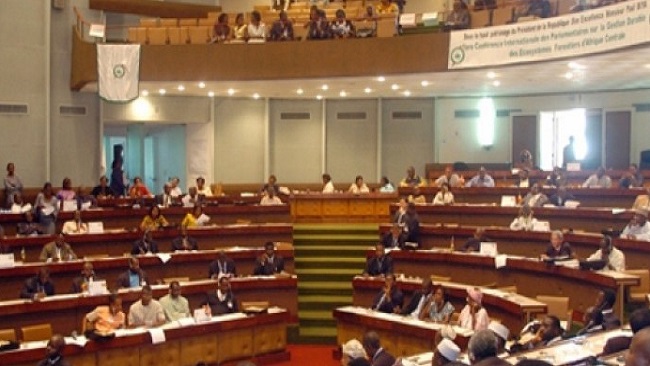
A proposed constitutional reform to create a Vice President position in Cameroon is triggering sharp debate among lawmakers and raising questions about governance and legitimacy.
The draft bill, submitted to parliament on April 2, 2026, seeks to amend key provisions of the constitution. President Paul Biya has called for an urgent congress bringing together both the National Assembly and the Senate to fast-track the changes.
Supporters of the reform say the move would strengthen institutional stability and ensure continuity in leadership.
Tabouli Célestin, a ruling party lawmaker, defended the proposal, saying it would enhance governance.
“There will be modifications to certain articles of the constitution which, according to what we have been told, will allow the President to establish a Vice President post. This would, of course, contribute to the proper and harmonious functioning of institutions.”
However, opposition figures have criticized both the timing and the process, arguing that such a significant reform requires wider consultation.
Ndam Njoya Hermine Patricia Tomaino questioned the legitimacy of the move, especially given concerns over extended parliamentary mandates.
“Regarding this amendment, a broad consultation should really have taken place… submitting the text to elected officials whose mandates are supposedly extended raises questions about the legitimacy of these men and women.”
Under the proposed changes, the Vice President would be appointed and would take over in the event of a vacancy in the presidency.
The initiative, which until recently had circulated only as speculation, has now become a focal point of political tension, with critics warning it could reshape the balance of power in Cameroon’s political system.
Source: Africa News