4, July 2021
Southern Cameroons Crisis: Their arrogance is hurting the country 0
Cameroon has been in the throes of a military conflict for more than four years now and the violence has continued to claim both civilian and military lives.
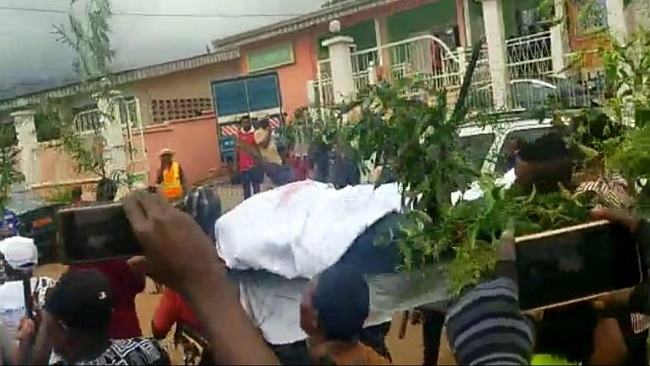
In Bamenda on Sunday, a young man was killed by soldiers in a neighborhood known as “Below Foncha” and this killing has revolted young people in the city of Bamenda, sending thousands of them to the streets.
The latest killing has resuscitated old demons, with many young people calling on the military to pack and leave their land.
The military check-point where the young man was gunned down has been dismantled by angry youths who say they were sick and tired of the military brutality that the country’s arrogant government has unleashed on the Southern Cameroonian population.
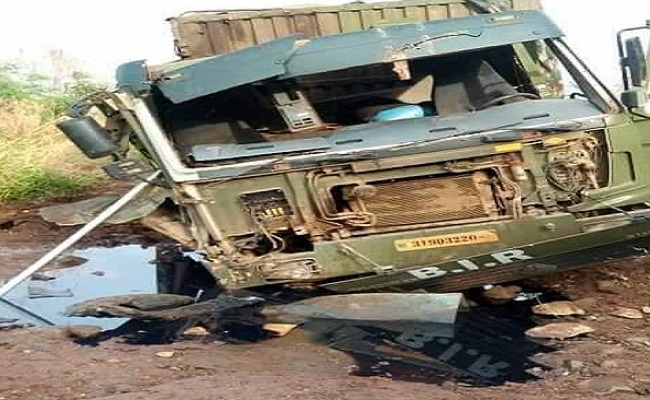
The killing will surely not be ending anytime soon. Over the last month, Southern Cameroonian fighters have been killing army soldiers like flies and this has created doubts in the minds of many politicians who were counting on the military for a fast and clean military operation.
But Southern Cameroonian fighters are not ready to turn down the heat on the military. They have found new ways of demystifying the soldiers, especially officers of the Brigade d’intervention rapide (BIR) which had been touted as the finest and the best in the business of suppressing the population.
The news of Southern Cameroonian fighters killing thousands of army soldiers over the last four years is gradually deflating extremist politicians in Yaoundé who thought they would teach rebelling Southern Cameroonians a bitter lesson by dispatching the military to the two English-speaking regions of the country.
The Southern Cameroons conflict was not even supposed to have existed. It was simply a situation that could have been addressed through frank and fruitful discussions if the country’s authorities had rid themselves of their legendary arrogance that has put the country on a downward spiral both politically and economically.
The arrogance of the country’s officials is hurting the country. By not listening to the people, Cameroon authorities have created a very nasty situation that might result in the splitting of a country that is expected to be a good example to other countries on the continent.
Arrogance could be a very bad ally if not well managed. It could result in self-destruction and excruciating pain. This is exactly what is happening in a country wherein appointments, even those negotiated in the most difficult circumstances, are seen as a sign of intelligence.
This mentality is consuming Cameroonians and it is generating conflicts and giving tribalism a chance to rear its ugly head. Cameroon, once an oasis of peace in a desert of peace, is falling apart.
Disagreement is as old as time and negotiations are the easiest way to bring about peace and security when people disagree. This philosophy has been embraced by many around the world but the Yaoundé government seems to be frozen in time. It is stuck in the past and it clearly holds that the old tool in its toolbox that can bring about peace in the country is military violence.
But the government’s principle on peace-building and nation-building seems to clearly belong to the past. Its monopoly of holding weapons and spreading falsehood has been shattered by new technologies also known as technologies of freedom.
The Internet has produced billions of citizen journalists all over the world and many Southern Cameroonians have used these technologies to sell their case and win hearts and minds across the world.
The same technologies have granted Southern Cameroonians the ability to mobilize resources to purchase arms to confront a military and government that have unleashed death and destruction on their own people.
The government has been in denial and has been living in the past to the point of not noticing what globalization was throwing up for many people around the world. It has not only made it possible for lots of people to collaborate, it has also created huge economic and financial opportunities which have made it possible for Cameroonians to be less dependent on their government.
But old habits die hard. The arrogance of the past is still stalking the country’s officials like a stubborn shadow. They are not ready to walk away from those bad ways which have dumped the country in a massive military conflict that has already consumed more than ten thousand lives and has robbed the country of its development dollars.
The conflict in Southern Cameroons is the easiest to address. The differences might be huge and complicated, but only the negotiating table can throw up much-needed solutions.
Arrogance has ruined Cameroon. It has transformed the country into a pretty mess that is driving its citizens out of the country. Unfortunately, only the leaders are not seeing the adverse impact of their arrogance on the population. They seem to be locked in in a form of blindness that is without a cure. Their disease – arrogance – does not seem to have a cure.
However, with Southern Cameroonian fighters kicking the country’s army soldiers in the teeth, the country’s boastful and arrogant authorities will be cut down to normal human proportions and this might push them into thinking that dialogue will surely solve the problem which military violence has not been able to address too close to five years.
Recently, members of the regime’s inner circle have been testing the waters, clearly indicating that the ruling party also known as the crime syndicate was open to the idea of federalism which they had criminalized in the past.
But many analysts hold that the government might be shutting the barn when the horses might have bolted. Southern Cameroonians have been hurt by the government’s arrogance.
Their family members have been killed by soldiers even when they were not combatants. Their businesses and farms have been destroyed by soldiers who thought a scorch earth policy would bring the population to its knees, thus reducing its support for the fighters.
But the government’s extreme measures have only turned out to be counter-productive. By pauperizing the population of the two English-speaking regions of the country, the government has simply pushed the population into the waiting hands of those it considers as terrorists and separatists.
The pain and anger are palpable. Southern Cameroonians simply want to walk away from a hastily stitched union with East Cameroon, a union that has brought them more pain and death rather than the peace and prosperity they had been promised by their Francophone counterparts.
The deaths and destruction of businesses will make negotiations tough, but there is no conflict that cannot be addressed. When people talk, they turn to understand each other and, in the process, they will see their mistakes and will work together to clear out those obstacles that have made it hard for them to work together for the prosperity of their people and common humanity.
Arrogance is not a curse. It can be addressed. When reality stares us in the face, we are bound to change course. If we don’t, we will continue down the same path and many things will continue to fall apart.
Cameroon authorities must change course. The reality is there. There will never be a military victory in this conflict. Dialogue will deliver better answers than the costly and ineffective military operations. It is time to think differently!
By Soter Tarh Agbaw-Ebai












6, July 2021
Southern Cameroons Crisis: Interim Government Statement on the Murder of a Physicist in Kumba 0
Interim Government Statement on the Murder of a Physicist in Kumba
Last Thursday, 1 July 2021, 52-year-old Mr Fuh Max Dang, a Physics teacher at GBHS Kumba, Meme County, was murdered by unidentified gunmen in the presence of his children after returning from work. The Interim Government condemns this atrocity robustly. Our thoughts and prayers are with his close family and friends during this challenging time. The Interim Government of Ambazonia directed Ambazonia Intelligence Services to open an immediate and comprehensive investigation into the tragedy.
While the investigation was still ongoing, The Interim Government of Ambazonia aimed not to make any statements that may influence its outcome. Late last night, Ambazonia Intelligence Services briefed the Interim Government that initial reports attributing the murder because Mr Fuh was a teacher are unsubstantiated. The investigation into this tragedy is still inconclusive, and the Interim Government of Ambazonia will report soonest as more facts are made available.
On Sunday 4 July 2021, in Bamenda, the French Cameroon army opened fire and killed Mr Njibril Dula in an unprovoked attack in Below Foncha neighborhood in Bamenda. The victim was unarmed in his car. This attack bears similarities with the execution of Mr Fuh Max Dang. These executions of unarmed citizens going about their business are the hallmarks of a regime on its last legs. For a long time now, Ambazonia Intelligence Services have reported that local militias loyal to the regime in Yaoundé have been carrying out executions with the intent of pinning their criminalities on our self-defense forces. So, we call on our self-defense forces to remain vigilant.
Self-defense is a right, and it is a core component of our liberation struggle. However, The Interim Government wants to caution all genuine self-defense forces within Ambazonia that acts of violence on persons for being teachers are intolerable. We must not target any non-combatants also. We know our enemy and must remain focused as we march towards Buea. The Ambazonia we intend to build will need talents from all walks of life, and we cannot afford to waste lives.
To all in Ground Zero, the Interim Government of Ambazonia urges you to persevere, for victory is coming our way soon. Soon, and very soon, we will be free. We call on the UN to commission a Security Council Mandated Fact-Finding Mission to investigate the atrocities in this conflict. Such a mission will curb the loss of lives and bring this war to an end.
Thank You, and God Bless You
Dabney Yerima
Vice President
Federal Republic of Ambazonia