
26, August 2017
Southern Cameroons: Our revolution will succeed 0
The Biya Francophone Beti Ewondo regime, French Cameroun political elites, and Southern Cameroons CPDM surrogates are leading a vicious campaign against the democratic forces directing the Southern Cameroons peoples revolution. The Yaoundé regime suspended all direct and indirect talks with the Cameroon Anglophone Civil Society Consortium, arrested its leaders including several hundreds of its followers and sympathisers and told the world that it had opened dialogue with Southern Cameroons community leaders.
Further, the Yaoundé Francophone regime outlawed the Cameroon Anglophone Civil Society Consortium and the Southern Cameroons National Council leaving the Biya regime with no genuine Anglophone partner to hold talks with. The successive US governments, the EU including France and Britain have all maintained a kind of deliberate silence ever since the revolution started some 11 months ago.
The Biya Francophone regime decided to freeze all bank accounts belonging to prominent members of the Consortium including lawyers and journalists who are all involved in the battle for Southern Cameroons independence. And prior to that, the French Cameroun occupation authority headed by the 85 year old dictator, decided to shut down internet services in Southern Cameroons.
But why this fierce assault?
The interim leader of the Southern Cameroons Governing Council was elected on a pro-independence platform. In addition, Southern Cameroonians have lost faith in Biya and are highly critical of the so-called commission for bilingualism and multiculturalism which recently celebrated its obituary following the resignation of its Chairman, Peter Mafany Musonge from the Senate.
The Southern Cameroons governing body and the Cameroon Anglophone Civil Society Consortium have been labelled “terrorist” organisations even though none of them are on the US and EU terror watch list. But in the context of the Biya Francophone Beti Ewondo government, the term “terrorist organisation” is used exclusively against genuine Anglophone groups, but not against other Southern Cameroons factions and political parties such as the SDF with ties with the ruling Cameroon Peoples Democratic Movement, CPDM.
We of the Cameroon Concord News Group think that any form of agreement between Anglophones and French Cameroonians with Paul Biya as President of La Republique du Cameroun will not be respected in West Cameroon. Biya has undermined Southern Cameroonian leaders, elites, traditional and religious authorities and peoples alike for over three decades coupled with extensive covert and Francophone public action to force the collapse of our Common Law heritage.
In his ill-disguised attempt at deceiving some weak and power-hungry Southern Cameroonians, the Southern Cameroons revolution issue has now been condensed in “Children going back to school.” Forgotten were the facts that the Francophone occupation and Biya’s failure in governance including Southern Cameroons joblessness preceded the establishment of the Cameroon Anglophone Civil Society Consortium. In addition, constitutional amendments recognizing Southern Cameroons rights, and calling for an end to the French Cameroun occupation via the unitary state was pushed under the rug. The continues appointment of French Cameroun civil administrators to head Southern Cameroons counties and the daily arrest of hundreds of Southern Cameroonians are all issues that have put a spanner in the works and are yet to register on the screens of the powers undermining the people of Ambazonia.
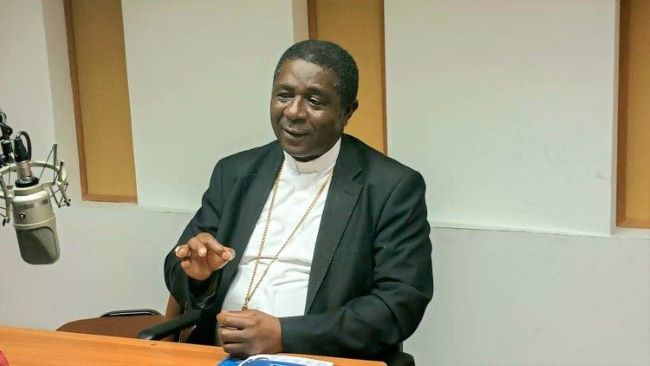
The assessment of the situation made by the Roman Catholic Bishops of Southern Cameroons was also hushed. Southern Cameroons pro Yaoundé groups, namely; SWELA, NOWELA, South West Chiefs Conference, North West Fons Conference, PAP, SDF, LDP, CRP etc for over the last 35 years had fulfilled all the demands for a one and indivisible Cameroon. Yet Southern Cameroons did not get the 10 federated states or the decentralisation that was promised by Biya and his French Cameroun political elites. If 35 years of negotiations bore no fruit for Southern Cameroonians while achieving great economic gains for French Cameroonians, why should the Southern Cameroons Governing Council and the Cameroon Anglophone Civil Society Consortium be eager to negotiate with Biya and his gang of Francophone political elites?
But at the end of the day, the Biya Francophone Beti Ewondo regime, French Cameroun political elites, and Southern Cameroons CPDM surrogates are saving no effort in trying to stifle the Southern Cameroons revolution. For Biya, Anglophones are an endangered species; since his crusade is against them. For the French Cameroun political elites, the Cameroon Anglophone Civil Society Consortium and the Southern Cameroons Governing Council are anti Francophone and will not capitulate under pressure like the 1961 KNDP stalwarts. And for the Southern Cameroons CPDM surrogates, they continue to be tied down by sinecures from French Cameroun, and are not free to make an independent choice.
What makes such decisions more obscure is the fact that Southern Cameroonians are killed and maimed on a daily basis by troops and security agents from French Cameroun. Furthermore, Ambazonians continue to be detained and tortured in French Cameroun prisons. Southern Cameroons land in Fako, Akwaya, Ndian counties are being confiscated by French Cameroun political elites. All of these war crimes have now been branded “Children should go back to school.”
Southern Cameroonians have voted for the struggle and no force can deprive them of their right to defend themselves and their land against an oppressive, expansionist, discriminatory occupation. Instead of siding with the victim, the UN and the AU including some ill-informed Anglophones have sided with the occupier.
To this I put my name
Soter Tarh Agbaw-Ebai













29, August 2017
Anglophone Crisis: Appeasement, not military action 0
The Anglophone crisis that burst into the global stage some ten months ago is still playing out in the two Anglophone regions of the country and there are no signs that it will be going away anytime soon. The situation has been a huge nightmare to the government which has been struggling to prove to the international community that it can really put a handle on this issue. But the last ten months have proven that Anglophones are not going to return to the status quo ante. Measures taken by the government have not met their expectations and the continuous arrest and detention of many Anglophones are diminishing any chances for a constructive and meaningful dialogue. The absence of such dialogue has unfortunately led to so many actions, some of which include the forming of an Anglophone interim government abroad, the frustration of government efforts both at home and abroad, the burning of schools, the intimidation of those who really want their kids to go to school, etc.
Provoked by decades of marginalization of the country’s English-speaking minority, the crisis is gradually crippling the country and exposing the government’s inability to put a handle on a situation that unfortunately escalated because students of the University of Buea were made to drink raw sewage following a peaceful demonstration staged by all the students of the country’s first Anglo-Saxon university. Things got to a head when many Anglophones in the country’s northwest region were killed and others arrested and taken to Yaounde as if there were no jails in the Anglophone regions.
After many months of contention between the country’s English-speaking minority and the government which seems to favor military action over appeasement, the country is gradually descending into total chaos, as even the Francophone majority is sympathizing with Anglophones who have worked hard to expose the inefficiencies and deficiencies of a government that clearly lacks a 21st Century mindset to deal with modern issues. Anglophones who, in modern days, prefer to be called Southern Cameroonians, have made up their minds to walk away from a union that has brought them more pain and death from their government because of their constant demands for the protection of their culture and way of life.
The Majority of Anglophones have gradually walked away from their initial demand for federalism as the government delays to meet their demand. Many Anglophones hold that the government has been chasing shadows instead of the object and in the process has been delivering death and destruction to the country’s English-speaking minority that accounts for about 60% of the country’s wealth and in the event of a secession, French-speaking Cameroon, known by Anglophones as “La Republique”, will be losing a huge chunk of its wealth. It should be recalled that Cameroon’s oil is located in the country’s southwest region and the people of this region have been reduced to sorry spectators of events in the management of their oil wealth.
But currently, it is not oil that is causing the government to lose sleep. Last year, schools in the Anglophone regions did not operate although the government hastily organized end-of-year exams just to demonstrate that the Anglophone education sub-system was working and the outcome of this hastily organized exams has been massive failure. Many students were unjustly awarded marks just to increase the number of successes, but this unfortunate action by the government did not produce the desired results and many of those students who have been successful in what Anglophones call “political GCE” are very concerned about their future as those certificate are simply not worth their weight in gold the world over.
One would have thought that the government would have used the holiday period to address some of those issues that have split the country. But faithful to its indifference and manipulation, the government simply went to sleep while at the switch. Dialogue that has been called for at various levels, including by the Pope, has been carefully ignored and the situation has continued to deteriorate, with the country’s economy taking a hit.
With schools scheduled to resume on September 4, 2017, the government has swung into action to ensure that students return to school, an action it holds will enable it to cry victory. Government surrogates have been dispatched to every nook and cranny of the Anglophone region to spread the gospel of education to parents who are, unfortunately, reluctant to let their children step out into the unknown. Going to school is the best thing that can happen to any child. Education is the key to a bright future and an uneducated person is condemned to live in “perpetual darkness” for the rest of his life. Knowledge can only be well imparted if there is security – security for the students, security for the teachers and security for parents who are more than delighted to see their off-springs exude knowledge.
However, security does not imply the massive deployment of troops across a region that has genuine grievances against a government that has systematically taken actions that have fallen short of the people’s glory. Security implies the local people gleefully work with security agencies to ensure goods and people are safe. This implies the people have confidence, not only in the systems, but also in those who man those systems. Over the last year, that confidence has been caught in a downward spiral. Indeed, it has been in a free fall since the government unleashed a reign of terror on the same people it is supposed to protect. There is nowhere in the world where people are not supposed to complain and most civilized governments understand that complaining is an expression of concerns which should be addressed through dialogue and consultation. In Cameroon, complaining has been a crime. Anglophone were not supposed to complain. They have been brutalized and sent to jail. Their complaints only incurred the government’s wrath and the government’s violent and military reaction has sapped Anglophones of their patriotism and today, most do not want to be part of a country wherein the leaders are frozen in time and only understand one language – an iron fist.
The Anglophone crisis does not require military action. It requires dialogue, appeasement and a campaign to win hearts and minds. Anglophones have been hurt for more than five decades. Their grievances are known by all across the globe. If the government is sincerely sorry for the errors of the past, it should express its regrets and take appropriate actions. To err is human and to forgive is divine. Being silent in the face of a serious issue like the one tearing the country apart does not seem to be the right approach. Silence could be golden, but using it in this context is like treating cancer with Tylenol. The most appropriate actions will include, but not limited to,releasing all those who are in jail, especially Barrister Felix Agbor Nkongho Balla, Dr. Neba Fontem and Macho Bibixy so that genuine and sincere dialogue can start. Old ways are not going to deliver the right results. The world has changed. The Internet has made it a lot easier to mobilize people and resources across the world. Anglophones have made the most of this technology to bring their sorry plight to the attention of the world.
Playing around the issue will also not help. Sending missions to many parts of the world to explain the government’s half measures will surely not cut it and the failure of recent missions to Washington, Ottawa, London and Brussels simply underscores the determination of Anglophones abroad to give the government a very bad name. The government has taken many punches to the liver. It has a black eye and deploying troops across the Anglophone region to oblige students to go to school is simply a game that will further rob the country of scarce development resources. Anglophones may be angry, but they are also willing to meet the government half-way. But for the journey to start, the government must display a lot of goodwill and honesty. It must engage Anglophones and their leaders to ensure that differences and disagreements do not become tough situations that can have long-lasting effects on the country, especially on children, like in the present situation. The current situation does not require a huge deployment of troops. It requires appeasement and dialogue. Using the stick instead of the carrot in this situation will only further radicalize Anglophones. Cameroon can spare itself the agony that other countries have gone through if its leaders understand that its army should not be intimidating the very people it is supposed to protect. The Anglophone crisis is a clash of ideas and cultures. It can easily be resolved at a negotiating table if the government takes the right steps in the right direction. Dialogue is the key. It is the ideal medication. Once there is dialogue, the huge massing of troops across the Mongo will not be necessary and schools will resume. But Anglophone leaders should be freed to give dialogue a huge chance.
Cameroon Concord News Group