
23, August 2017
Ambazonia TV threatening Biya’s control of Southern Cameroons 0
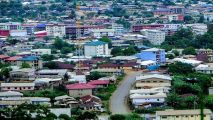
“Driving through Southern Cameroons towns and villages you will see satellite dishes, sprouting mushroom-like from roofs, gardens and balconies. Southern Cameroonians have roofs to repair, but they are buying satellite dishes instead. Wherever you go now in Southern Cameroons, it is the satellite dish that comes first.” This is an extract from an intelligence report sent to the presidency of La Republique du Cameroun stating that the Southern Cameroons Broadcasting Corporation or Ambazonia TV is threatening state control of West Cameroonians.
The report also noted that despite the arrest of several cable companies, the chain’s interest has increased tenfold. Several households have installed private satellite dishes to watch Ambazonia TV whose broadcast center remains unknown to the Francophone regime. The proliferation of these dishes in Southern Cameroons symbolizes the frustration that Southern Cameroonian citizens feel with the Francophone dominated state-owned Cameroon Radio and Television. But after years of hankering for a choice in what they can watch, Southern Cameroonians are fast becoming spoilt for one.
Ambazonia TV has been broadcasting for three months and is essentially engaged in helping Southern Cameroonians to understand the urgent need for secession. The Francophone regime in Yaoundé earlier announced that the chain had its technical facilities at Ngoketunjia in the Bamenda province. Yaounde ordered the arrest of some innocent Southern Cameroonians in the Ngoketunjia County and charged them for distributing the channel.
According to the Francophone regional delegate of communications for the defunct North-West region, Louis Marie Beignet, a cable company registered in Bamenda took responsibility for introducing into its package images that were animated by the Southern Cameroons Broadcasting Corporation. Francophone political elites have opined that Ambazonia TV is hostile to the regime in Yaoundé and has no place in their so-called one and indivisible Cameroon.
Southern Cameroonians have long been denied vibrant local media. Internet penetration in the territory is among the lowest on the African continent, and since the Biya Francophone government declared a state of war against Southern Cameroonians, following civil unrest orchestrated by the Cameroon Anglophone Civil Society Consortium, mobile internet services were stopped throughout all the Southern Cameroons counties.
The Biya Francophone regime also has a fearsome reputation for jailing Anglophone journalists. There are a handful of independent Southern Cameroons newspapers, which can on occasion be critical of the Francophone colonial government, but they are few in number. Ever since the Southern Cameroons revolution started, many English newspaper tabloids have announced they were suspending print operations, citing censorship.
Until three months ago, switching on the TV in Cameroon meant watching President Biya and wife on the state-owned channel or a chartered member of the ruling CPDM crime syndicate passing for a cabinet minister on a meet-the-people tour. There is a recognition inside the ruling Cameroon People’s Democratic Movement, CPDM that squeezing Southern Cameroonians was a costly mistake. “Opening up should have happened earlier,” a baron of the regime admits. The lack of credible independent news source in West Cameroon has now been filled by the Ambazonia TV.
Producing alternative news will be difficult inside the territory since CRTV enjoys a near-monopoly on information and access to ministers and prominent political figures in La Republique du Cameroun. But the signs are positive for Southern Cameroonians in that so long as West Cameroonians stock up on satellite dishes and mobile internet facilities, controlling what they watch will be harder by the evil forces in Yaoundé.
By Soter Tarh Agbaw-Ebai
Cameroon Concord News Group












26, August 2017
Southern Cameroons: Our revolution will succeed 0
The Biya Francophone Beti Ewondo regime, French Cameroun political elites, and Southern Cameroons CPDM surrogates are leading a vicious campaign against the democratic forces directing the Southern Cameroons peoples revolution. The Yaoundé regime suspended all direct and indirect talks with the Cameroon Anglophone Civil Society Consortium, arrested its leaders including several hundreds of its followers and sympathisers and told the world that it had opened dialogue with Southern Cameroons community leaders.
Further, the Yaoundé Francophone regime outlawed the Cameroon Anglophone Civil Society Consortium and the Southern Cameroons National Council leaving the Biya regime with no genuine Anglophone partner to hold talks with. The successive US governments, the EU including France and Britain have all maintained a kind of deliberate silence ever since the revolution started some 11 months ago.
The Biya Francophone regime decided to freeze all bank accounts belonging to prominent members of the Consortium including lawyers and journalists who are all involved in the battle for Southern Cameroons independence. And prior to that, the French Cameroun occupation authority headed by the 85 year old dictator, decided to shut down internet services in Southern Cameroons.
But why this fierce assault?
The interim leader of the Southern Cameroons Governing Council was elected on a pro-independence platform. In addition, Southern Cameroonians have lost faith in Biya and are highly critical of the so-called commission for bilingualism and multiculturalism which recently celebrated its obituary following the resignation of its Chairman, Peter Mafany Musonge from the Senate.
The Southern Cameroons governing body and the Cameroon Anglophone Civil Society Consortium have been labelled “terrorist” organisations even though none of them are on the US and EU terror watch list. But in the context of the Biya Francophone Beti Ewondo government, the term “terrorist organisation” is used exclusively against genuine Anglophone groups, but not against other Southern Cameroons factions and political parties such as the SDF with ties with the ruling Cameroon Peoples Democratic Movement, CPDM.
We of the Cameroon Concord News Group think that any form of agreement between Anglophones and French Cameroonians with Paul Biya as President of La Republique du Cameroun will not be respected in West Cameroon. Biya has undermined Southern Cameroonian leaders, elites, traditional and religious authorities and peoples alike for over three decades coupled with extensive covert and Francophone public action to force the collapse of our Common Law heritage.
In his ill-disguised attempt at deceiving some weak and power-hungry Southern Cameroonians, the Southern Cameroons revolution issue has now been condensed in “Children going back to school.” Forgotten were the facts that the Francophone occupation and Biya’s failure in governance including Southern Cameroons joblessness preceded the establishment of the Cameroon Anglophone Civil Society Consortium. In addition, constitutional amendments recognizing Southern Cameroons rights, and calling for an end to the French Cameroun occupation via the unitary state was pushed under the rug. The continues appointment of French Cameroun civil administrators to head Southern Cameroons counties and the daily arrest of hundreds of Southern Cameroonians are all issues that have put a spanner in the works and are yet to register on the screens of the powers undermining the people of Ambazonia.
The assessment of the situation made by the Roman Catholic Bishops of Southern Cameroons was also hushed. Southern Cameroons pro Yaoundé groups, namely; SWELA, NOWELA, South West Chiefs Conference, North West Fons Conference, PAP, SDF, LDP, CRP etc for over the last 35 years had fulfilled all the demands for a one and indivisible Cameroon. Yet Southern Cameroons did not get the 10 federated states or the decentralisation that was promised by Biya and his French Cameroun political elites. If 35 years of negotiations bore no fruit for Southern Cameroonians while achieving great economic gains for French Cameroonians, why should the Southern Cameroons Governing Council and the Cameroon Anglophone Civil Society Consortium be eager to negotiate with Biya and his gang of Francophone political elites?
But at the end of the day, the Biya Francophone Beti Ewondo regime, French Cameroun political elites, and Southern Cameroons CPDM surrogates are saving no effort in trying to stifle the Southern Cameroons revolution. For Biya, Anglophones are an endangered species; since his crusade is against them. For the French Cameroun political elites, the Cameroon Anglophone Civil Society Consortium and the Southern Cameroons Governing Council are anti Francophone and will not capitulate under pressure like the 1961 KNDP stalwarts. And for the Southern Cameroons CPDM surrogates, they continue to be tied down by sinecures from French Cameroun, and are not free to make an independent choice.
What makes such decisions more obscure is the fact that Southern Cameroonians are killed and maimed on a daily basis by troops and security agents from French Cameroun. Furthermore, Ambazonians continue to be detained and tortured in French Cameroun prisons. Southern Cameroons land in Fako, Akwaya, Ndian counties are being confiscated by French Cameroun political elites. All of these war crimes have now been branded “Children should go back to school.”
Southern Cameroonians have voted for the struggle and no force can deprive them of their right to defend themselves and their land against an oppressive, expansionist, discriminatory occupation. Instead of siding with the victim, the UN and the AU including some ill-informed Anglophones have sided with the occupier.
To this I put my name
Soter Tarh Agbaw-Ebai