
13, December 2017
Burundi’s president to extend rule until 2034 0
Burundian President Pierre Nkurunziza has launched a campaign to promote a referendum to change the constitution that could extend his rule over the landlocked East African country until 2034.
Addressing a crowd of thousands of farmers in the central district of Gitega on Tuesday, Nkurunziza threatened those who sought to undermine the referendum slated for early 2018.
“We take this opportunity to warn those who want to sabotage this project, whether by speech or actions,” Nkurunziza said. “It will be a red line.”
“It’s the day you’ve been waiting for,” Nkurunziza said.
Nkurunziza’s administration adopted a plan in October to revise the constitution that, if passed by the referendum, would allow him to serve another two seven-year terms from 2020.
Opposition activists have already denounced the project they say will be the “funeral” of the country’s 2000 peace agreement. The deal ended a 13-year civil war in which more than 300,000 people were killed.
The start of the campaign comes a day after the government launched a fundraising drive for elections in 2020, presented as “voluntary.” The move, however, has been condemned by rights groups as “organized robbery.”
Burundi has faced deadly political turmoil since April 2015, when President Nkurunziza announced plans to seek a disputed third term that he ultimately won.
The violence claimed between 500 and 2,000 lives, according to differing tolls from the UN and civil society groups, while more than 400,000 Burundians have fled the country.
In September, a UN commission of inquiry report said crimes against humanity, including killings and sexual violence, were still being committed in Burundi and it asked the International Criminal Court (ICC) to open an investigation as soon as possible.
According to the report, alleged perpetrators include top officials in Burundi’s National Intelligence Services and police force, military officials and members of the youth league of the ruling party, known as Imbonerakure.
The ICC in November decided to launch an investigation into atrocities committed in Burundi, despite the country’s pullout from the international body last month.

Source: Presstv











14, December 2017
Yaounde closes border with Nigeria in the North 0
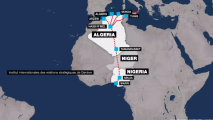
Cameroon has closed its border with Nigeria in the north, after a series of attacks by Boko Haram militants on Cameroonian ranchers. The closure is meant to protect the ranchers’ cattle, but it is hurting the ranchers’ business.
Hundreds of ranchers have brought their cattle and livestock to the Bogo market on Cameroon’s northern border with Nigeria. According to Cameroon’s government, this market is the supply point for most of the cattle sold across the border.
But cattle rancher and seller Ahminou Ngomna says he has not seen his Nigerian customers since September. Business usually booms with the approach of the Christmas and New Year feasts, but that is not the case now.
Only customers from Maroua in northern Cameroon have been buying from the market, and the amount they pay per cattle is not up to what Nigerian buyers pay, Ngomna said. The price per cow, which ranges from $500 to $1,000 depending on size and weight, has fallen to as little as $250.
FILE – A member of a civilian vigilante group carries a bow and arrow while running on patrol with the Cameroonian military in Kerawa, Cameroon, March 16, 2016. Kerawa is on the border with Nigeria and is subject to frequent Boko Haram attacks.
Hamidou Bouba, first deputy mayor of Bogo, says the prices started dropping when Cameroon’s government ordered the closure of parts of the border with Nigeria. The move was made because Boko Haram attacks on farmers and cattle ranchers, which had fallen since January, increased in September with armed men crossing the border for supplies.
“We are suffering very badly about this situation of Boko Haram,” Bouba said. “That is the reason why all the traders cannot go to Nigeria now. We changed their direction, moving their activities to Douala or Yaounde. That is the only solution. I think that we don’t have another solution.”
Bouba says the ranchers are encouraged to transport their cattle some 70 kilometers from the affected zones to the nearest market, because even buyers from the hinterlands of Cameroon are refusing to travel to Bogo.
Cattle ranchers and farmers comprise 80 percent of the population of the border areas. Cameroon reports that more than 100,000 have relocated due to the Boko Haram insurgency; others live in abject poverty.
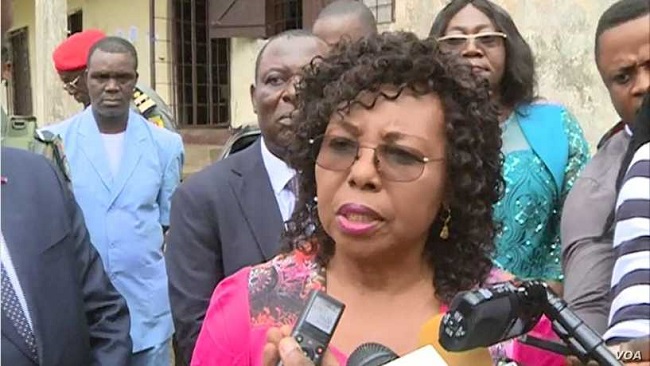
Louis Paul Motaze, Cameroon’s economy minister, says the government will build new markets in safer areas.
“People here are suffering a lot not only because of the war with Boko Haram, but because of poverty,” Motaze. “This is why we would like to take into consideration another battle, and this battle is the battle for development.”
The Boko Haram insurgency, which began in northeast Nigeria eight years ago, has left at least 25,000 people dead and forced more than 2.6 million others to flee their homes, according to the United Nations.
Source: VOA