
16, July 2026
Biya’s absence in Yaoundé is testing the limits of the nation’s political system 0
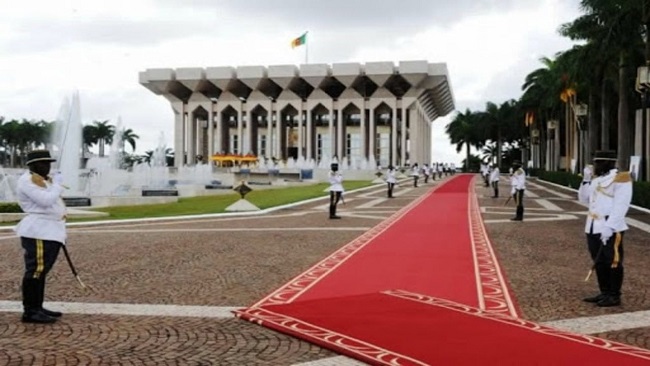
President Paul Biya’s prolonged absence from public view has once again exposed a structural weakness at the heart of Cameroon’s governance: the concentration of decision-making in a single office.
As speculation over his whereabouts and health continues, Yaoundé appears to be operating in slow motion, with reports and widespread perceptions suggesting that major political and administrative decisions have been delayed while officials await direction from the presidency.
Whether every government function has stalled is open to debate, but the perception of institutional paralysis is itself significant. Investors, civil servants, political actors and ordinary citizens increasingly question how a modern state can remain so dependent on the availability of one individual.
The uncertainty has also revived an old constitutional and political debate. Cameroon has no vice-president. Under the Constitution, if the presidency becomes vacant, the President of the Senate assumes interim responsibilities until an election is held. Yet the absence of a permanently designated deputy means there is no clearly visible second-in-command to reassure the public during periods when the president is unavailable. The result is a leadership vacuum in the public imagination, even if constitutional mechanisms exist on paper.
This arrangement has fueled renewed calls from some analysts and opposition figures for reforms that would create the office of vice-president or otherwise clarify executive succession. Supporters argue that such a position could provide continuity and reduce uncertainty during periods of presidential absence, while critics contend that introducing a vice-president could create competing centers of power within the executive.
More broadly, the current situation underscores concerns about the resilience of Cameroon’s political institutions. A system that depends heavily on a single leader inevitably raises questions about succession planning, institutional autonomy and the ability of government to function smoothly under extraordinary circumstances.
Suggestions that the country is on the verge of a political rupture should, however be treated with caution. While prolonged uncertainty can heighten political tensions and deepen divisions among competing elites, predicting a rupture goes beyond the available evidence. What is clear is that sustained ambiguity over leadership risks eroding public confidence, encouraging speculation and increasing pressure for constitutional and institutional reforms.
Cameroon stands at an important moment. The issue is no longer simply the president’s absence, but whether the country’s institutions are sufficiently robust to ensure continuity, transparency and public confidence regardless of who occupies the highest office.
A stronger framework for executive succession and clearer communication during periods of presidential absence would not eliminate political uncertainty, but they would strengthen the credibility of the state and reduce the risks that uncertainty poses to governance.
Biya has been stuck in Geneva, Switzerland, for a month – alternating between a private clinic and his favoured suite at the InterContinental Hotel. This follows multiple false alarms about the 93-year old president’s declining health but the arrival of so many of his family and political associates in Geneva suggests that the concerns of those closest to him are mounting – leaving an ominous power vacuum in Yaoundé.
By Soter Tarh Agbaw-Ebai















17, July 2026
Cameroon advances key trade corridor upgrade to Equatorial Guinea 0
Cameroon has moved a step closer to rehabilitating the Ebolowa-Ambam highway, a strategic trade corridor linking the country’s southern region to Equatorial Guinea, as technical studies enter a more advanced stage.
According to a statement published on July 15 by the Ministry of Public Works, contractor HAB S.A. has intensified topographic and geotechnical surveys along the section between kilometer point 0 and kilometer point 47+600.
The studies are intended to refine the engineering design and identify the most appropriate technical solutions before rehabilitation work begins. The ministry said the contractor has strengthened its field operations by deploying a project director, topographic and geotechnical teams, laboratory technicians, an environmental specialist, and specialized equipment, including a deflection testing truck, a dual-frequency GPS station, and additional support vehicles.
Administrative procedures are also underway to secure authorization for the quarry that will supply construction materials for the project.
A key trade corridor
The rehabilitation carries significant economic importance. The 92-kilometer Ebolowa-Ambam section forms part of National Road No. 2, which links the capital of Cameroon’s South Region to the border with Equatorial Guinea.
The corridor is a major route for transporting agricultural products, timber, and other goods to border markets while facilitating trade with neighboring members of the Central African Economic and Monetary Community (CEMAC). Over time, however, the road’s deteriorating condition has increased transport costs, lengthened travel times, and raised vehicle maintenance expenses, reducing the competitiveness of businesses operating in the region.
The project forms part of the broader rehabilitation of the Ebolowa-Ambam-Olamze road. In June 2025, Public Works Minister Emmanuel Nganou Djoumessi launched a restricted national tender under an emergency procedure for the first phase of rehabilitation works.
The CFA15 billion project will be financed through the government’s public investment budgets for 2025, 2026, and 2027. Planned works include pavement rehabilitation, pothole repairs, shoulder restoration, and replacement of road signs.
Supporting regional integration
For Cameroon, upgrading the highway is about more than improving mobility. The project is part of a broader strategy to strengthen transport corridors connecting the country with its neighbors at a time when trade within CEMAC remains relatively limited.
A more efficient road is expected to facilitate cross-border trade, reduce logistics costs for businesses, and improve market access for agricultural producers. For investors in agriculture, forestry, logistics, and related sectors, transport infrastructure remains a key factor in investment decisions and business expansion.
The technical studies currently underway therefore represent more than a routine administrative step. They will determine when construction can begin on a project expected to generate economic benefits well beyond the Ntem Valley department, supporting development across Cameroon’s South Region while strengthening commercial links with Equatorial Guinea.
Source: Sbbc