18, March 2026
Mafia: Morocco awarded Afcon title after CAF overturns result 0
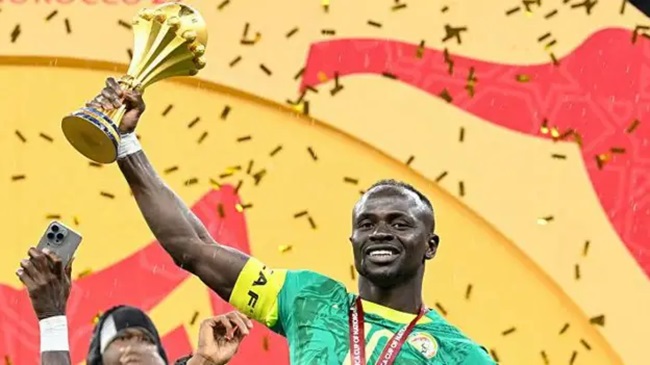
Morocco have been declared the winners of the 2025 Africa Cup of Nations after the Confederation of African Football (Caf) overturned the result of the final following Senegal’s controversial walk-off.
Senegal beat Morocco 1-0 in the final on 18 January in a match which was overshadowed when the Senegalese players refused to play after the hosts were awarded a stoppage-time penalty with the match goalless.
Following a delay of around 17 minutes, the players did eventually return and Brahim Diaz’s penalty was saved before Senegal’s Pape Gueye scored an extra-time winner.
However, that result has now been overturned after a decision by an appeal board at African football’s governing body.
A statement from Caf said that Senegal are “declared to have forfeited the final match” with the “result of the match being recorded as 3-0 in favour” of Morocco.
The Senegalese Football Federation said it would appeal Caf’s decision at the Court of Arbitration for Sport, calling it “unfair, unprecedented and unacceptable”.
The decision follows an appeal by Moroccan FA (FRMF) which Caf said is “declared admissible in form” and was upheld.
Caf added that “through the conduct of its team” Senegal infringed on Article 82 of regulations of the Africa Cup of Nations and as a result Article 84 became applicable.
Article 82 states that if a team refuses to play or leaves the ground before the end of regulation time without the referee’s authorisation, it will be considered the loser and eliminated from the competition.
Article 84 complements this provision, stating that any team that violates Articles 82 will be permanently eliminated and will lose the match 3-0.
A statement from FRMF said that their decision to appeal the final result was “never intended to challenge the sporting performance of the teams” but was a request for the “application of the competition’s regulations”.
“The federation reaffirms its commitment to respecting the rules, ensuring clarity in the competitive framework, and maintaining stability within African competitions,” the FRMF statement added.
“It also wishes to commend all the nations that took part in this edition of the Afcon, which has been a major moment for African football.”
Earlier, a video was posted on the X account of the Senegal men’s national team, external of their players celebrating on a bus parade with the Afcon trophy and an ‘OK’ emoji.
Maher Mezahi, a North African football journalist, told BBC Radio 5 Live that the decision to overturn the result will not change the emotional impact of what unfolded on the pitch for those who witnessed it.
“We cannot erase the final 16 minutes of that match and what we saw,” he said.
“We cannot erase the feelings of seeing Senegal lift the trophy and the players going home with the medal and them having a parade.”

What happened in the Afcon final?
With the scoreline 0-0, referee Jean Jacques Ndala gave a spot-kick in the eighth minute of added on time.
Ndala was advised by the video assistant referee (VAR) to consult the pitchside monitor and review defender El Hadji Malick Diouf’s challenge on Diaz.
Senegal head coach Pape Thiaw, still incensed by Ndala’s decision a few moments earlier to disallow a Senegal goal from Ismaila Sarr, ushered his team off the field.
Former Liverpool striker Sadio Mane stayed on the pitch and tried to encourage his Senegal team-mates to finish the game.
After a 17-minute delay, Senegal’s players did eventually return.
Real Madrid forward Diaz was trusted with the penalty, but his tame ‘Panenka’ effort was caught by Senegal keeper Edouard Mendy who barely had to move, and Ndala immediately blew his whistle for full-time.
Villarreal midfielder Gueye then scored the winning goal in the fourth minute of extra time to seal a second triumph in five years for Senegal.
In his post-match news conference, Morocco coach Walid Regragui said Senegal’s actions were “shameful” and do not “honour Africa”.
Fifa president Gianni Infantino strongly condemned the “ugly scenes” in a post on Instagram.
Thiaw, meanwhile, had his media briefing cancelled after a ruckus broke out in the press room.
But in a later post-match interview he accepted that he should not have ordered his team off the field and he had reacted “in the heat of the moment”.
Morocco subsequently parted company with head coach Walid Regragui on 5 March – four months before the World Cup finals.
Source: BBC











18, March 2026
Changes in the Senate and National Assembly: who becomes next head of state? 0
Cameroon as a nation now stands at a very quiet but consequential crossroads. The recent changes in the leadership of both the Upper and the Lower House have not merely reshuffled the Senate and the National Assembly hierarchies but they have subtly altered the geometry of succession in a Francophone dominated system where constitutional order and political reality do not always move in lockstep.
At the heart of the so called political changes in Yaoundé lies a 60 million dollar question: who becomes the next head of state?
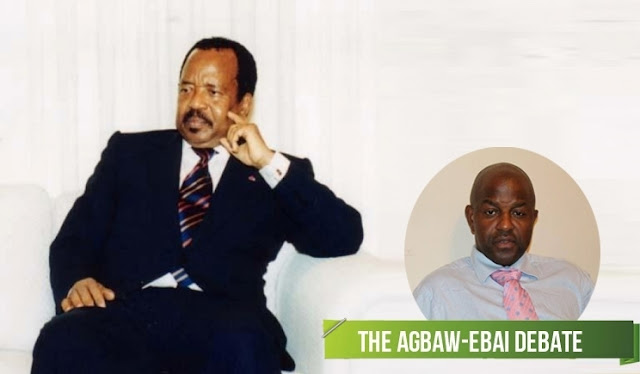
Under Cameroon’s present constitution, the head of the Senate is first in line to assume interim leadership in the event of a vacancy. This provision was designed to guarantee President Biya’s continued stay in power and not to ensure continuity and institutional stability. With new figures now presiding over both the Senate and the National Assembly, the predictability of that succession has become even more complicated. Change is not only needed in both the Senate and the National Assembly but also in the Unity Palace and the Star Building.
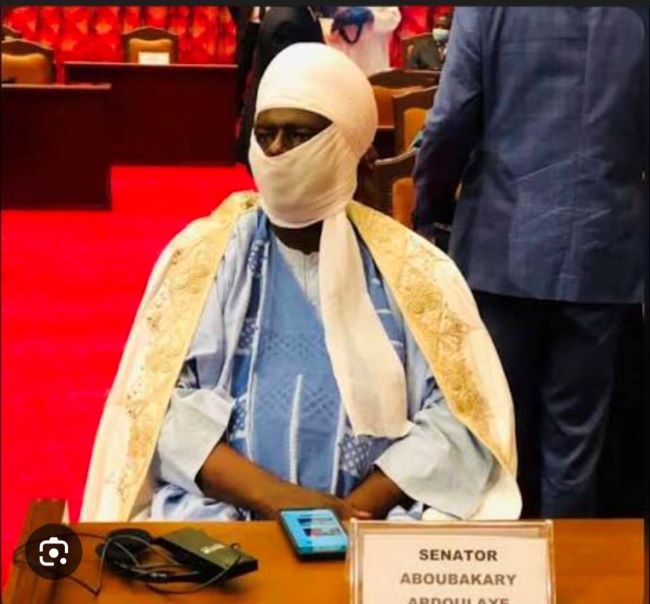
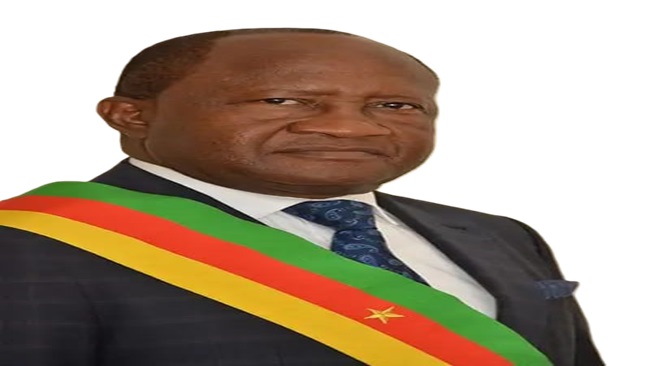
Having a new leadership in the Senate is of course significant. In theory, the President of the Senate is a transitional political figure in a caretaker presidency with limited powers tasked with organizing elections. But in practice, Senator Aboubakary Abdoulaye occupying that seat becomes the face of the nation in a moment of potential uncertainty. Correspondingly, Senator Aboubakary Abdoulaye’s political alliances, administrative competence and perceived neutrality matters far more than the constitution suggest.
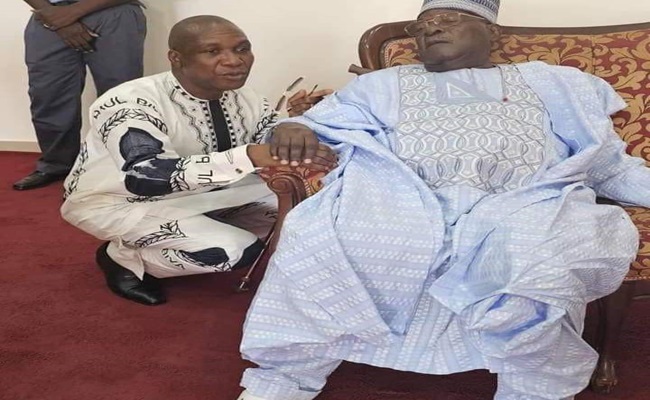
The National Assembly’s leadership shift from the 86 year old Cavaye Djibril to Theodore Datoua adds another layer to the puzzle. Though not directly in the line of succession, the National Assembly plays a vital role in shaping the political environment in which any transition unfolds. The Speaker of the National Assembly can influence parliamentary priorities, manage consensus and perhaps most importantly signal where the balance of power truly lies within the ruling CPDM institution.
What has emerged from these two changes in both the Upper and Lower House is not a clear successor, but a more fluid and possibly contested pathway to power. Political power in Cameroon revolves around a strong presidency, with the Senate and the National Assembly including the Central Committee of the ruling CPDM party often seen as supportive rather than autonomous. But as Cameroon approaches its moment of transition, these same establishments can become arenas of political negotiation or even rivalry.
The wahala here is not simply “who” will be the next head of state, but “how” that person will emerge. Will the constitution be followed allowing Senator Aboubakary Abdoulaye to step in smoothly and elections organized without friction? Or will political realities such as CPDM party dynamics, tribal and regional considerations and elite bargaining reshape the process behind the scenes?
Added to this very complicated scenario is also a generational undercurrent. Frankly speaking, recent changes in parliament may reflect a cautious attempt to recalibrate the Cameroon political system for the future. If so, the next president of the republic—whether interim or elected—could mark a departure from entrenched patterns.
For now, Cameroon remains in a state of watchful anticipation. The coming of Senator Aboubakary Abdoulaye and Hon. Theodore Datoua has not answered the succession question; they have instead sharpened it. And in doing so, they remind political commentators that in Cameroon, the formal rules are only part of the story. The rest unfolds in the quieter, less visible spaces where power is negotiated, alliances are forged and futures are decided.
The coming weeks and perhaps months will very much reveal whether these institutional adjustments were merely routine or the early signals of a more significant transition.
By Soter Tarh Agbaw-Ebai