
8, September 2026
Yaoundé: Papal Nuncio says ‘preventing children from going to school is diabolical’ 0
At the start of the 2026/2027 academic year in Cameroon, the Apostolic Nuncio to Cameroon, Archbishop José Avelino Bettencourt, warns against the forced boycott of schools in Cameroon’s English-speaking regions.
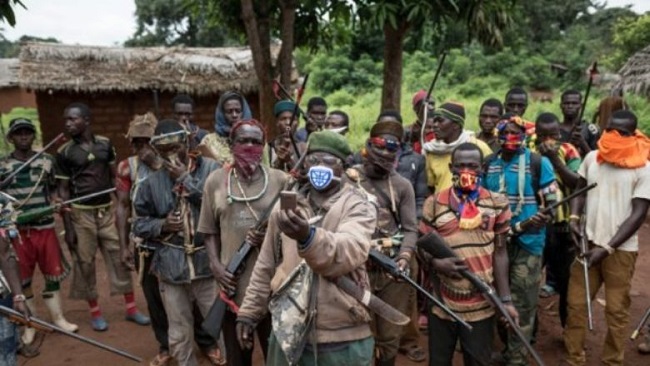
For the past ten years, the North West and South West regions have been reeling from a separatist crisis, with the boycott of schools a cornerstone of the separatist strategy.
The statistics have been stark. According to UNICEF, the crisis has forced the closure of more than 6,000 schools, affecting more than 800,000 children.
A report by Save the Children indicates that, on average, children in the North West region have lost three and a half years of schooling due to the crisis, and that the number of teenage pregnancies in the North West region has increased by 45 percent because of the crisis.
In addition, thousands of teachers have fled the region, with the World Bank reporting that absenteeism rates in both regions are as high as 50 percent.
According to Human Rights Watch, armed groups have attacked at least 75 schools and abducted over 150 education personnel since 2016.
Bettencourt says children have become the ultimate victims of these developments.
With schools opening their doors on September 7 for the start of the 2026/27 academic year, the Portuguese-Canadian prelate warns that forcing kids out of school is “utterly diabolical.”
“As the new school year begins, our thoughts go to the most vulnerable members of our community, the children,” the archbishop said.
“Preventing children from going to school is wrong,” the nuncio said in a video message published on September 1.
“Violence is never acceptable. Let that be quite clear,” he added.
Bishop George Nkuo of Kumbo in the North West Region has issued a similar call, telling Crux Now that children’s right to education must not be negotiable.
“Ask me what can be the greatest gift that can be given to children, especially the underprivileged, in a community plagued by sociopolitical unrest, and I will remind you of what men of old used to say: that the man who turns his back to education invites poverty into his household,” Nkuo said.
Kumbo has been the epicenter of separatist violence, and the impact on society has been incalculable.
“Kidnappings and torture — both physical and psychological — have tragically become common in Kumbo over the past few years. I have witnessed thousands of children of all ages leaving Kumbo out of fear,” Nkuo told Crux Now.
“The population is on edge; they are terrified of the lockdowns and the chaos that rules the streets,” he added.
“We have seen so many people flee Kumbo because they have been targeted, and the number of victims is staggering. I have seen people begging for food just to feed their children,” the bishop explained.
“Confused and lost, they face military checkpoints and heavy separatist controls on the roads where we are all advised to stay away. So many people have been kidnapped — victims of a senseless cycle of abduction,” Nkuo told Crux Now.
On Aug. 30, the bishop celebrated Mass for a male-dominated Church group in the diocese known as the Samba Action Group. It’s an annual Mass usually celebrated at the start of each school year.
Given the crisis’s impact on education, the group has initiated what it calls “Giving Someone a Future,” with the overarching aim of supporting the bishop in sponsoring underprivileged children in school.
Nkuo said he was glad that, despite the ongoing socio-political crisis, the group has continued to encourage children to pursue an education.
“This resilience is remarkable given that kidnappings and torture, both physical and psychological, have been all too common in Kumbo in recent years,” the bishop said.
Describing the members of the Samba Action Group as modeling the Christian values of parenthood, he noted that “even those [members] who may not have had the educational opportunities they desired understand that education is indispensable for any society hoping for a bright future.”
“Is this, then, not an initiative worthy of emulation and support by all?” Nkuo said.
Meanwhile, various separatist factions, historically united in calling for a boycott of schools in the two regions, have been sending mixed signals ahead of the start of the new school year.
The Ambazonia Governing Council (AGovC), the largest separatist faction, has urged parents to facilitate the unconditional return of children to school.
The Interim Government (IG) has also said it is open to allowing kids to resume school.
John Mbah Akuroh, who leads The Consortium, a civil society group advocating for the independence of Cameroon’s English-speaking regions, told Crux Now that separatist groups had ended the era of school boycotts.
“We don’t do school boycotts anymore,” he said.
“We need our children back in school, and we are doing everything to ensure that children go to school in a very conducive environment,” Akuroh told Crux Now.
Culled from Crux










8, September 2026
Bishop George Nkuo marks 20 years of Episcopal Ministry 0
Bishop George Nkuo of Cameroon’s Catholic Diocese of Kumbo has marked the 20th anniversary of his Episcopal Ordination with thanksgiving, reflecting on the journey of his Priestly and Episcopal ministry and asking for the grace to continue serving God’s people with hope, compassion and perseverance.
Speaking during a Thanksgiving Mass marking the anniversary on Tuesday, September 8, Bishop Nkuo thanked members of the St. Augustine’s College (SAC) community who joined him in prayer, saying the occasion offered him an opportunity to look back on the two decades since he was ordained a Bishop.
He reminded those gathered that while the occasion marked a personal milestone, the celebration of the Holy Eucharist must remain centered on Jesus Christ.
“It’s Christ who is the center of our celebration. So let us not shift our attention from Christ to the Bishop. It’s Christ Himself who is present with us,” he said.
The Local Ordinary of Kumbo shared a personal prayer inspired by his reflection earlier in the day on the Blessed Virgin Mary, inviting the faithful to pray with him as he renewed his entrustment of his Priestly ministry to the Mother of Jesus.
“Mary, Mother of Jesus and my Mother, I entrust my Priesthood to you again,” he said.
Reflecting on two images of Mary — holding the infant Jesus at Bethlehem and standing with Christ in the mystery of His suffering and redemption — the Catholic Bishop asked for the grace to make his ministry one of liberation and service.
“I ask for intercession that my Priestly ministry will always be one of redeeming the people I serve from whatever holds them back from becoming more than the human being God wants them to be. This is my vocation. This is my work. This is my life,” he said.
The Local Ordinary of Kumbo, since September 2006 asked Mary to help him treasure in his heart the blessings God has bestowed upon him and to develop a more positive outlook in the face of difficulties and disappointments.
Bishop Nkuo acknowledged that ministers of the Church can sometimes become overly focused on what goes wrong, the suffering people experience and the disappointments encountered in life.
He said he had prayed for the grace to look beyond suffering and failure and to recognize the hope offered by Christ’s Resurrection.
“I need you to have a more positive outlook. That’s my prayer this morning, and I know you can help me,” he said.
The Catholic Bishop then expressed one of the central reflections of his anniversary prayer: “I want to be able to look at the crucifix and see Easter.”
Bishop Nkuo said he wanted to learn to see failure and rejection not as reasons for despair but as opportunities to learn and improve.
“I want to treat failure and rejection as information about how I can do better. I know from experience that I have a chance. I can dwell on negative outcomes or on positive projections. Help me to choose the latter,” he said.
The Bishop of Kumbo said a more positive attitude would enable him to approach those entrusted to his pastoral care with greater hope.
“With a more positive attitude, Mary my Mother, I can approach the people I am serving with greater hope. And this is certainly what they need,” he said.
Reflecting on his ministry as a preacher of the Gospel, Bishop Nkuo noted that many people who come to Church carry the burdens of difficult experiences from their daily lives.
“When I stand at the pulpit on the weekend, I need to realize the people before me have come from a week of hardships, difficulties, disappointments, tensions, and heartaches. And they are looking to me to give them a reason to go back into their daily lives and try again to persevere,” he said.
He therefore asked Mary, whom he described as one who persevered through the different stages of her Son’s public ministry and stood at the foot of the Cross, to help him nourish God’s people with the Gospel.
“You know what people need, and you can help me to feed them the solid food of the Gospel to nourish them in their perseverance,” he implored.
The Bishop also asked for the grace to empathize with those facing difficulties even when he himself needs encouragement and support.
“Help me, Mother of Joy and Mother of Sorrow, to bring reinforcement into the people’s lives and to empathize with people’s problems even while I myself am looking for understanding and support,” he said.
Bishop Nkuo, who was ordained a Priest for the Diocese of Buea in April 1981, expressed his desire to remain rooted in the mystery of Christ’s Incarnation, suffering, death and Resurrection.
He prayed for the grace to “kneel before the King of Bethlehem” and to remain faithful at the Cross of Calvary, believing that the Risen Christ continues to accompany and strengthen him.
He asked Mary to help him remain convinced “with all my heart that the Son now risen is always with me and within me, strengthening me with the resurrection power to persevere.”
Culled from aciafrica