
17, August 2023
Frozen accounts forced MTN Cameroon to borrow funds for continuity of operations 0
MTN Cameroon borrowed CFAF91.5 billion (at the current South African Rand value) in the first half of 2023, according to data collected by Business in Cameroon. The funds, which represented almost 98% of the company’s operating expenses during the period, were raised in the form of syndicated loans from undisclosed banks.
In 2022, it took no new loan and even settled almost CFAF18 billion of debt. What’s more, as of January 1, 2023, its net cash position was positive, at CFAF29.15 billion. However, at the end of June this year, its cash position showed a net debt of CFAF13 billion.
One plausible hypothesis to explain this situation is the impact of its accounts being frozen following the legal action initiated by Cameroonian business mogul Baba Danpullo to dispute what he considers the illegitimate expropriation of his assets in South Africa. According to internal MTN sources, the telecom operator had to indebt itself to ensure the continuation of its operations.
Uncertainties
MTN Cameroon’s solid performance –with a CFAF156 billion turnover, a 36% operating margin, and 51.4% market share– as of the end of the first half of 2023 strengthens its credibility with Cameroonian banks. However, this confidence could be challenged.
Financial data for the first half of 2023 show that its interest-bearing liabilities (CFAF95.8 billion) exceed its liquidity (CFAF83 billion). What’s more, some of this cash has been seized by the courts, making it impossible to use it for day-to-day operations. It is also uncertain if the telecom operator’s holding company (based in South Africa) will easily intervene in the event of challenges since its debt has also grown to 1.5 times its equity.
If the Cameroonian courts do not quickly rule on the case, MTN Cameroon could have to face short-term liquidity issues. Developments in the telecommunications sector will also be decisive for the operator. A slowdown in activity could exacerbate its difficulties in meeting its financial commitments. This should be of concern to creditors and suppliers because, in an unfavorable economic climate, they may have to wait longer for payment.
Source: Business in Cameroon






















18, August 2023
Cash-strapped Biya regime suspends work contracts, says foreign workers must leave 0
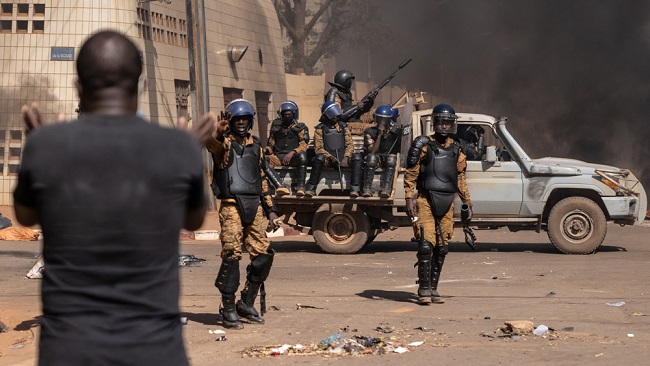
Officials in Cameroon suspended the work contracts of several thousand foreign workers, including Africans, Chinese and Europeans, and ordered them to obtain work permits and pay taxes within a month or leave the country.
The Cameroon government said that only about 100 of more than 2,000 foreign workers from China, Nigeria, the Central African Republic and Chad are authorized to work in gold mines and export timber near Cameroon’s eastern border with the Central African Republic.
More than 10,500 of an estimated 11,000 foreign workers in the central African nation do not have work permits, government officials said.
Issa Tchiroma Bakary, Cameroon’s employment minister, said a majority of foreign workers are acting in bad faith. By not paying taxes, foreign workers have deprived Cameroon of more than $25 million since January, he said.
Bakary said that this week government officials in Cameroon’s 360 districts were ordered to make sure foreign workers obtain work permits and pay taxes or leave within 30 days.
Cameroon’s employment ministry said that a relaunch of construction, mining and exploration for gas and oil has caused an influx of Chinese and European engineers.
The government said several thousand foreign workers in northern and eastern gold mines and forests deceived Cameroon consular officers to receive tourist visas.
The government said it cannot afford to allow more than 10,000 illegal foreign workers in Cameroon when more than 70% of its 27 million citizens either lack jobs or are underemployed.
Florent Djounou, who owns a wood company that employs 30 Chinese and eight Europeans, spoke on behalf of foreign workers at a meeting with Cameroon’s employment minister in Batouri, near Cameroon’s border with the Central African Republic.
He said that foreign workers understand they should respect Cameroon’s laws before carrying out economic activity, but that they were surprised when at least 1,000 contracts were suspended even before the Cameroon government publicly asked foreign workers to obtain permits.
European and Chinese workers often are able to obtain work permits, Djounou said, but Africans, especially those displaced by conflicts in their own countries, may not have the financial means to pay for their permits.
Prices of timber and wood have risen 15% because huge quantities of wood cannot leave eastern forests where the government has put a stop to activities of foreign workers, he said.
Bakary said foreign laborers will be allowed to work freely when they obtain their permits.
The employment of foreign workers is subject to special procedures in Cameroon. Potential workers are obliged to declare their wages and allowances, including transportation and accommodation, which are used to determine how much is paid to obtain a visa.
A 2022 law institutes a fee equivalent of two months’ wages for non-African workers and one month’s wages for African workers before work permits are issued. The law went into effect this year.
Source: VOA