5, September 2022
Boxing: Fury offers Joshua ‘Battle of Britain’ heavyweight bout 0
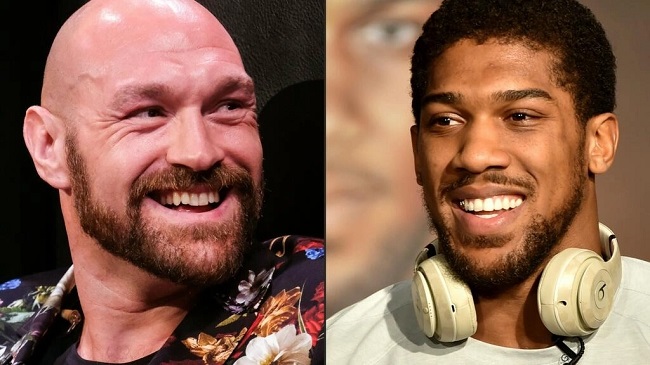
Tyson Fury has offered fellow British heavyweight Anthony Joshua the chance to fight for his WBC crown before the end of the year.
Fury, who suggested he was retiring from boxing after beating Dillian Whyte in April, is now searching for a high-profile opponent after rival champion Oleksandr Usyk said he does not intend to fight again until 2023.
Joshua suffered a second consecutive defeat to the Ukrainian in Saudi Arabia last month and his promoter, Eddie Hearn, is considering options for a return early next year.
Fury announced he was retiring on his 34th birthday last month, having previously performed a number of U-turns over his future in the sport.
But in a video posted on social media on Monday he appeared to confirm he had reversed his decision.
“You’ve all heard that I’m going to be fighting within the next few months, and before I announce an opponent I need to do this just in case,” said Fury.
“Anthony Joshua, I know you’ve just lost a fight to Usyk, and I know you’re belt-less at the moment, and I’d like to give you an opportunity to fight me for the WBC heavyweight championship of the world and the lineal championship in the next few months.
“You’re coming off a 12-round fight so you’re match fit, you’re ready, I’m giving you a few months’ notice.
“If you’re interested I’ll send you the date over and we can rumble — a battle of Britain for the WBC heavyweight championship of the world. Let me know if you’re interested. If not, I will select another opponent.”
Joshua is unlikely to take the bait as his team look to help him rebuild with a bout against a different opponent.
Usyk, who retained his WBO, IBF and WBA titles with his victory over Joshua, said on Friday he hoped to set up a unification bout against Fury next year.
Source: AFP















5, September 2022
Pogba and African witch doctor: Mbappe dismisses talk of rift with teammate over blackmail affair 0
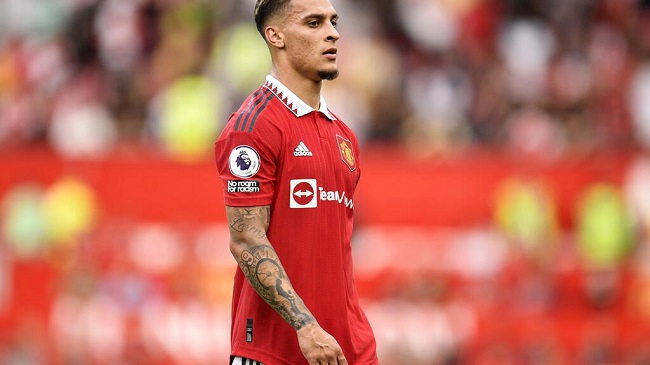
Kylian Mbappe on Monday played down suggestions that his relationship with Paul Pogba could be impacted after his name came up in a blackmail affair engulfing his France teammate.
Pogba says he is the victim of a multi-million euro blackmail plot to discredit him by claiming he asked a witch doctor to cast a spell on Mbappe.
The claims about the witch doctor were revealed publicly by Pogba’s elder brother Mathias.
Paul Pogba, who left Manchester United in the close season to return to former club Juventus, denies the accusation.
“No because today as things stand I prefer to believe what my teammate says,” Paris Saint-Germain star Mbappe said when asked if there might be a problem with Pogba.
Mbappe was speaking at a press conference ahead of Tuesday’s Champions League game between PSG and Pogba’s Juventus in Paris.
“He called me and gave me his version of events. It is his word against his brother’s word. I am going to trust my teammate,” Mbappe said of his fellow 2018 World Cup winner.
“I think it’s in the interests of the national team as well with a big tournament coming up.
“At the moment he already has certain problems and now is not the time to add to those problems.
“We’ll see what happens but I am quite detached from all that.”
A criminal investigation was launched in France last week into the affair.
Based on the findings of a preliminary investigation last month it will examine allegations — for now against persons unknown — including blackmail by an armed gang, kidnapping and membership of a criminal conspiracy.
Pogba is sidelined for Juve’s clash with PSG on Tuesday and faces a battle to be fit for France’s defence of the World Cup trophy in Qatar starting in November.
He is currently recovering from a knee injury.
Source: AFP