23, October 2021
Biya regime to vaccinate civil servants against COVID-19 0
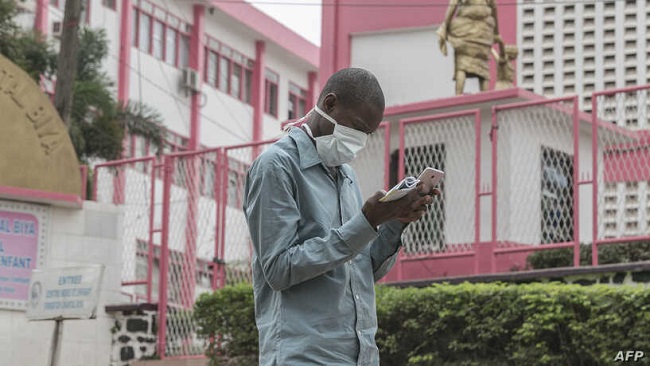
Cameroon will inoculate all personnel on state payroll against COVID-19 next month as part of its nationwide vaccination program, a government minister has said.
The civil servants will be vaccinated from Nov. 6 to 30, Minister of Public Service and Administrative Reform Joseph Le said Thursday.
“The preservation of the health of personnel at the service of the state is both a major concern and a duty of public authorities,” he said. “We must ensure that the work environment is not a place where the virus spreads, but a framework for professional development and health promotion for all.”
Le said vaccination will not be compulsory but urged all civil servants to get vaccinated to protect themselves and their loved ones.
On Wednesday, the United Nations Office for the Coordination of Humanitarian Affairs in Cameroon, quoting government statistics, said the central African nation reported 4,024 positive cases from Sept. 21 to 28, the highest weekly count since March, and raised an alert on the presence of the Delta variant.
Cameroon wants to vaccinate 60 percent of the target population by January 2023, but as of Sept. 22, only 0.9 percent had been vaccinated, according to figures from the Expanded Program on Immunization.
Source: Xinhuanet
















24, October 2021
Attack on Kumba School: CPDM Crime Syndicate has sentenced 4 Anglophones to death 0
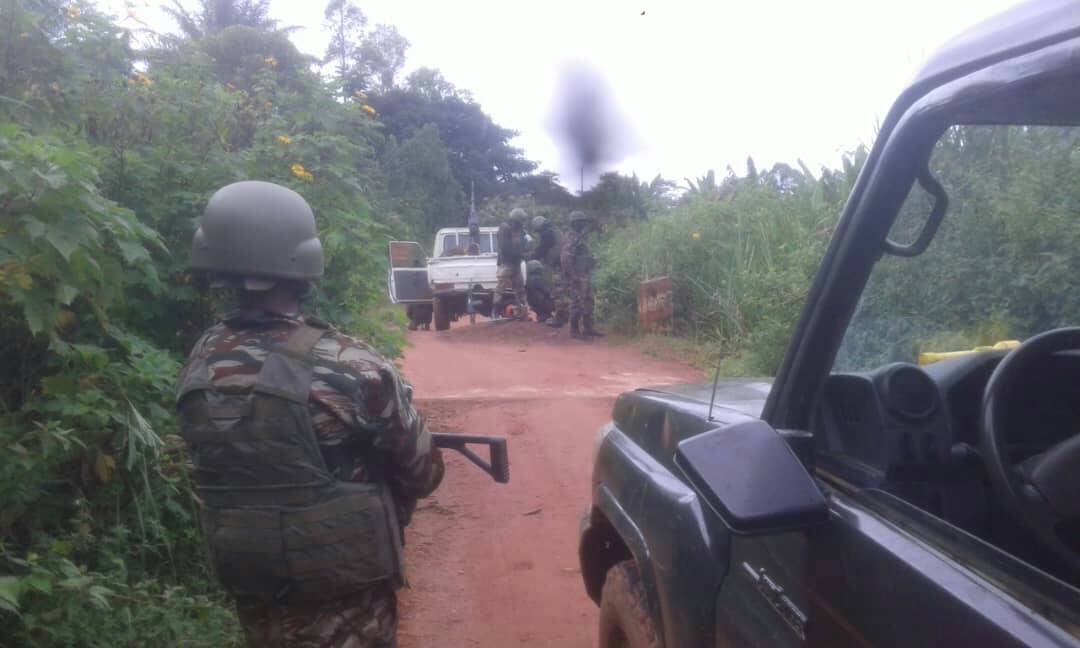
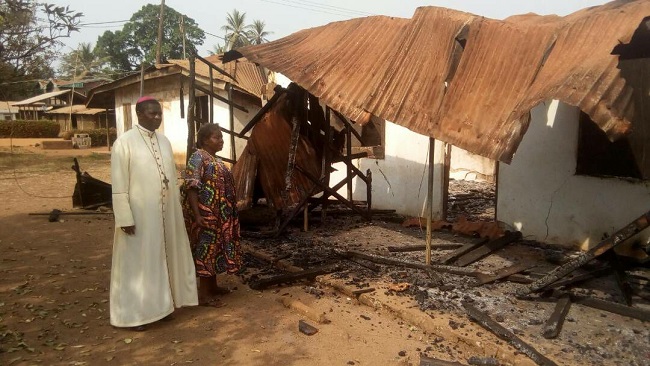
A military tribunal in Cameroon has sentenced four people to death, in a trial marked by procedural irregularities, for an attack on a school in Kumba, the South-West region, one year ago. The attack killed seven children and injured at least 13 others.
The 12 defendants, on trial before the Buea military court since December 2020, included the school owner, principal, and four teachers. The court found four guilty of terrorism, secession, hostility against the fatherland, murder, possession of illegal arms and ammunition, and insurrection. It sentenced four other defendants to five months in jail and a fine of 50,000 CFA (US $89) for allegedly failing to report receipt of a threat from separatist fighters. The court acquitted four others. In addition to the use of a military tribunal to try civilians, the trial was marred by serious procedural irregularities such as violating the rights of the accused to challenge the evidence against them and to present evidence in their own defense. Two teachers were acquitted.
“Victims of the Kumba massacre have a right to expect an effective investigation, and for those responsible to be brought to justice in a fair trial,” said Ilaria Allegrozzi, senior Africa researcher at Human Rights Watch. “Instead, Cameroonian authorities seem to have railroaded people into a sham trial before a military tribunal, with a predetermined outcome, capped with the imposition of the death penalty which is unlawful under international human rights law.”
On October 24, 2020, gunmen stormed Mother Francisca Bilingual Academy, a private school in Kumba’s Fiango neighborhood. No one claimed responsibility for the killings, but the government blamed armed separatists who have called for a boycott of education in the Anglophone regions since 2017.
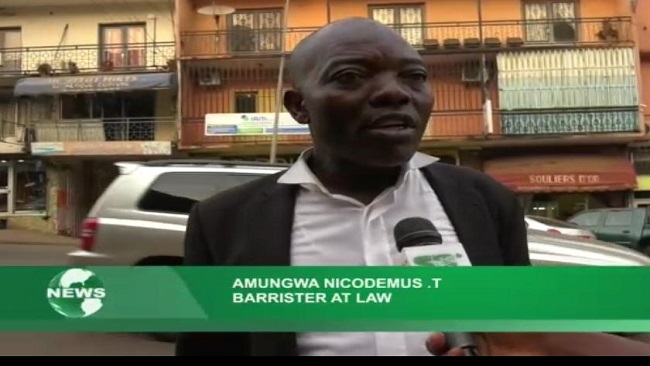
Defense lawyers described to Human Rights Watch the multiple procedural irregularities at the trial, including the inherent lack of independence and fairness of the process that civilians face before a military tribunal. The defense was not allowed to cross examine witnesses; the proceedings were not translated from English or French into the pidgin English spoken by most of the defendants; the accused were arbitrarily detained; and the use of the death sentence is of concern.
“The entire trial was predicated upon circumstantial evidence as opposed to real evidence, and throughout the trial, the prosecution brought no witness we could ask questions,” Atoh Walter Chemi, the leading defense counsel, told Human Rights Watch.
Defense lawyers said that the prosecution presented all its evidence in written statements without calling any witnesses to be questioned on their statements. Section 336 of Cameroon’s criminal procedural code allows written testimony if a witness cannot appear in court. Such exceptions should be rare and limited to occasions in which it is not possible to produce the witness. Such evidence should also require corroboration. To base a conviction solely or predominantly on the untested hearsay testimony of absent witnesses violates fair trial standards.
Among the defendants were four teachers of the Mother Francisca Academy, the principal of the school, and the owner of the school and her husband. On the day of the attack, Chamberlin Ntou’ou Ndong, the government’s senior divisional officer for the Meme division, an administrative area that includes Kumba, ordered the police to detain the owner of the school, her husband and two teachers at the Kumba police station to “ensure their safety,” citing potential risks of reprisals by the community. But victims’ family members and Kumba residents told Human Rights Watch that it was unlikely that anyone would want to harm them. “These teachers should have been brought into the trial as witnesses, not as accused persons,” said Ikose Daniel Etongwe, a defense lawyer.
Four days after the massacre, Cameroon’s communications minister said that security forces had killed a separatist fighter who was allegedly among those responsible. In February, local media reported that the army spokesperson had announced that elements of the Rapid Intervention Battalion (Battallion d’intervention rapide, BIR), an elite army unit, killed another separatist fighter known as “Above the law,” who was also allegedly involved in the Kumba school killings.
Defense lawyers said the prosecution didn’t inform them about these killing, nor was this evidence mentioned in the preliminary investigations. During the trial no reference was made to these military operations, no connection was established between the alleged fighters killed and the defendants, and the defense did not have an opportunity to raise any questions about those killed. Defense lawyers said that one of the four people sentenced to death admitted that he was a former separatist fighter.
Defense lawyers also said that the 12 accused were initially held without charge for more than 30 days at the police station and the gendarmerie brigade in Buea which violates both international law and the Cameroonian criminal procedure code.
On September 14, defense lawyers notified the court of their intention to appeal but were required to pay 200,000 CFA (USD 352), the amount of the fines also levied by the military court on the four defendants, before their appeal would be accepted. On October 4, the secretary of the Buea military court informed the defense lawyers about the conditions of appeal, which include an additional payment of 420,000 CFA (USD 739), a clear barrier to appeal in a death penalty procedure.
The trial, which received no media attention before the verdict was pronounced on September 7, started in December 2020. Defense lawyers said all 12 defendants had to present their cases in one day during a “marathon hearing” in July 2021.
The use of military courts to try civilians violates international law. Military court proceedings typically do not protect basic due process rights or satisfy requirements for independence and impartiality, Human Rights Watch said. Human rights groups, including Human Rights Watch and Amnesty International, have previously documented military trial proceedings in Cameroon marred by serious substantive and procedural defects in which the presumption of innocence, the right to an adequate defense, and the independence of proceedings are all seriously undermined.
Courts in Cameroon continue to impose the death penalty, although the country’s last reported execution was in 1997. Cameroon has not ratified the Second Optional Protocol to the International Covenant on Civil and Political Rights on the abolition of the death penalty. The African Commission on Human and People’s Rights has long called on African governments to abolish the death penalty and has adopted a resolution on its abolition. The UN Human Rights Committee in its general comment on the right to life, reiterated that where the death penalty has not been abolished, it can only be imposed in the most limited of circumstances for the most serious cases and when fair trial standards have been observed to the highest standards, so that the person’s criminal responsibility is proved beyond a reasonable doubt.
The committee has noted that trials in which the accused has been unable to question relevant witnesses or where there is lack of an effective right of appeal, among other violations, are not fair trials and make any imposition of the death sentence arbitrary and a violation. The committee also emphasized that imposition of the death penalty by a military court on civilians violates the right to life. Human Rights Watch opposes the death penalty in all cases without exception regardless of the nature or circumstances of the crime.
“The military court should never have handled this case involving civilians, and it seems to have made little effort to ensure basic respect for human rights standards,” Allegrozzi said. “If the authorities intend to deliver justice for this heinous crime against children, they need to bring a credible case before civilian courts and hold those responsible to account according to international fair trial standards.”
Culled from Human Rights Watch