
25, August 2026
Music legend Dolly Parton dies at 80 0
Dolly Parton, the country music star who rose from grinding poverty in Tennessee to become a rhinestone-studded cultural icon with hits like “Jolene” and “9 to 5,” has died at 80, her family said Tuesday.
Parton was more than a singer — she wrote 3,000 songs, acted in major Hollywood films and donated millions of dollars to charities in her home state and beyond.
She was also an accomplished businesswoman, with her interests spanning from her popular Dollywood theme park to cosmetics, pet apparel, baking mixes and even a truck stop.
“Dolly has lived in the light and is in the arms of Jesus,” her nephew Bryan Seaver said in a video announcing her death on social media.
He said the multiple award-winning artist — known for her glittering style, curvy figure and larger-than-life blonde wigs — had “opened doors for generations of singers, songwriters, musicians, and dreamers from every walk of life.”
The family did not give a cause of death, but Parton had spoken about her recent ill health. Her husband Carl Dean died last year.
A small private funeral service will be held, her representative told People magazine, encouraging fans to leave messages on her website.
Tributes quickly poured in for Parton, who won 10 Grammys and 13 Academy of Country Music (ACM) awards during her long career.
“May her legacy live on through her songs, the lives she touched, and the countless artists she inspired. There will never, ever be another one like her,” the Grand Ole Opry, America’s temple of country music, said on social media.
Her co-stars from the hit 1980 movie “9 to 5,” which sparked her soundtrack smash, expressed their shock.
Oscar winner Jane Fonda said she was “devastated” while Lily Tomlin said only: “No words.”
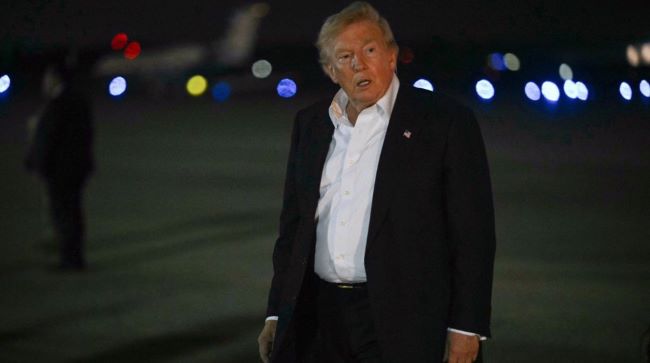
The news even sparked a rare moment of unity in a country often bitterly at odds over Donald Trump’s presidency, the war against Iran and cultural issues.
Trump ordered the lowering of American flags to half-staff across the United States for a week, calling Parton’s passing a “true loss for millions of people.”
“There has never been anyone like her, and never will,” Trump posted on his Truth Social network.
Democratic former president Bill Clinton called her “one of a kind.”
New York’s Empire State Building was to be lit later Tuesday in pink in the singer’s honor.
Born in 1946 as one of 12 children in rural Tennessee, Parton headed for the country music capital Nashville right after graduating from high school.
By 1967, at age 21, she was among the most recognized figures in American music, having joined Porter Wagoner’s syndicated country music television show that broadcast her voice and face into millions of US homes.
During a prolific career that spanned six decades, Parton penned some 3,000 tunes.
They included “Jolene,” “Coat of Many Colors” and the iconic ballad “I Will Always Love You,” which became an international success for Whitney Houston.
Releasing 49 studio albums and more than 100 compilation and collaboration albums, she earned the title of “queen of country music.”
Never one to downplay her striking looks, Parton essentially wrote the book on how a woman can rule the airwaves in a male-dominated industry, ultimately becoming an American treasure with songs covered by everyone from Shania Twain to Sinead O’Connor.
“Instant Sainthood,” Jack White, who covered “Jolene” with the White Stripes, wrote on Instagram.
Last year, Parton postponed a series of Las Vegas concerts, citing ongoing health concerns. In May, she canceled them altogether, sparking new fears.
In videos posted to her social media accounts, she said that while treatment for an unspecified illness was going well, she was not ready to perform.
Just last week, she said in a statement to People magazine: “I still have so many things I want to achieve, so I’m gonna keep on working as long as I can to see everything come to life.”
“She brought so many people together, we will all miss her so much,” said Rolling Stones frontman Mick Jagger.
Source: AFP



















26, August 2026
Yaoundé steps up road safety enforcement, but deadly crashes persist 0
Cameroon has stepped up road safety checks and prevention measures on major highways, but deadly crashes continue to expose the limits of enforcement efforts aimed at reducing fatalities over the long term.
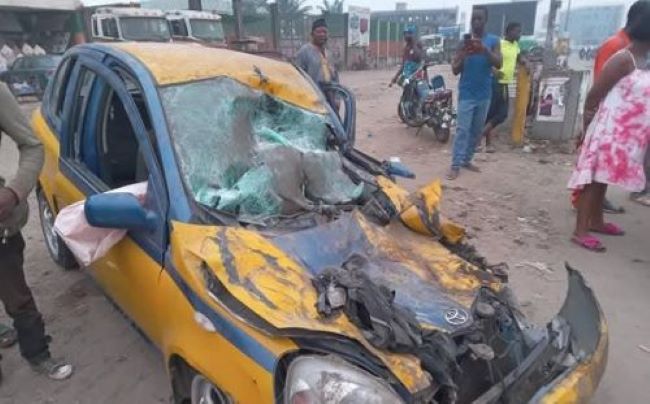
The latest accident occurred Sunday, Aug. 23, in Sikoum, between Douala and Edéa, killing seven people and injuring 10, according to an official toll reported by state-owned newspaper Cameroon Tribune. The crash came in the middle of a special nationwide road safety campaign and has renewed questions about how effectively current measures can address persistent risks on the country’s roads.
The accident occurred in the morning on National Road No. 3, or RN3, the main highway linking Yaoundé and Douala. A passenger bus carrying residents of the same Douala neighborhood was returning from Bafia via Yaoundé after they attended a funeral when it collided head-on with a dump truck, according to the state-owned newspaper.
Esther Ngo Yemba, the Transport Ministry’s divisional delegate for Sanaga-Maritime, said preliminary information indicated that the bus driver may have fallen asleep at the wheel. The vehicle then reportedly drifted out of its lane and struck the oncoming truck.
All 17 people killed or injured were aboard the bus. Transport Minister Jean-Ernest Masséna Ngalle Bibehe traveled to Edéa after the accident and visited the injured at the city’s regional annex hospital.
A Road Safety Campaign Already Stepped Up
The Sikoum crash occurred during a special road safety and prevention campaign that began June 25 and is scheduled to run through Sept. 30. The nationwide operation is intended in part to reduce accidents during the vacation period and ahead of the start of the school year.
Authorities have recently intensified enforcement on some of the most exposed routes. At the campaign’s halfway point, the Transport Ministry reported 35 accidents on certain highways since June 1 that it attributed to dangerous parking or improper use of vehicles carrying general and hazardous goods.
In response, Ngalle Bibehe ordered a special operation to remove improperly parked vehicles from major highways in a statement signed Aug. 14. RN3, which connects Cameroon’s two largest cities, is among the main roads covered by the operation.
On Aug. 20, the fourth day of the operation between Yaoundé and Douala, ministry teams identified several cases of illegal parking despite earlier awareness campaigns. For the ministry, the objective is not simply to remove vehicles that violate parking rules but to prevent them from creating conditions that could lead to collisions.
The Sikoum accident also came just days after another deadly crash highlighted a different road safety risk. During the night of Aug. 13-14 in Nomalé, in the Ndikinimeki district, 16 people were killed and about 40 injured when a passenger bus collided with a truck loaded with planks that was stopped on the roadway, according to the official toll.
At Nomalé, the stationary truck was one of the key factors in the accident. At Sikoum, preliminary information instead points to suspected driver fatigue.
The Challenge of Lasting Behavioral Change
The two crashes illustrate the range of risks facing road users. Dangerous parking is one threat, but it forms part of a broader chain that includes driver fatigue, behavior behind the wheel, vehicle condition, compliance with transport rules and traffic conditions.
That complexity is one of the central challenges for Cameroon’s current road safety policy. Authorities have increased checks, removed improperly parked vehicles and continued awareness campaigns, yet some high-risk behavior persists.
RN3 illustrates the problem. Even with the Transport Ministry concentrating part of its enforcement efforts on the highway, serious accidents continue to claim lives. The question is therefore no longer simply whether controls exist, but whether they can produce lasting changes in behavior.
The issue is particularly relevant because the government says the current campaign has coincided with a decline in road deaths. While that would indicate an overall improvement, it has not eliminated mass-casualty crashes.
The Nomalé and Sikoum accidents alone killed 23 people in less than two weeks and injured dozens more. That does not invalidate the broader decline in fatalities reported by authorities, but it shows that lower overall road deaths have not eliminated high-risk situations. Some routes remain particularly exposed, while dangerous behavior continues to have deadly consequences.
With the new school year approaching, the special road safety campaign is entering a critical phase. Authorities still have several weeks to turn individual enforcement operations into measures that address the underlying causes of crashes.
The challenge for the government is to ensure that stronger enforcement produces a sustained reduction in serious accidents rather than a cycle of temporary operations followed by the return of the same dangerous practices.
Source: Sbbc