21, August 2026
Football: Djibouti federation accused of misusing funds 0
The tiny Horn of Africa nation of Djibouti is embroiled in a football corruption row after a government audit accused its federation, largely funded by FIFA, of favouritism and inadequate competitive bidding.
The recent success of Cape Verde — which reached the knockout stage of this year’s World Cup — has shown that tiny African nations can succeed with the right organisation.
So Djibouti footballers are furious at their federation over allegations it has misused money from the world football governing body, which provides the vast majority of its funding.
Funds provided by Saudi Arabia for a new headquarters for the Djibouti Football Federation are also said to have been misused.
One local club manager, speaking on condition of anonymity, told AFP his team would boycott this year’s league unless there was a change in leadership.
“The (Djibouti federation’s) resources are not used for the development of football,” he said.
“When I see what Cape Verde is capable of achieving… I tell myself there is a structural problem within our federation,” he added.
The allegations stem from a 2024 government inspector’s report, recently obtained by AFP, that accuse the federation of “favouritism” in awarding the contract for the headquarters, and overpricing for many elements of the contract.
FIFA, which along with the Confederation of African Football (CAF) provides more than $1 million a year to Djibouti’s federation, did not respond to queries from AFP.
A member of Djibouti’s federation, Mohamed Elmi Farah, resigned from its executive committee on August 12, expressing “concerns regarding the management and use of the federation’s resources”. He did not respond to questions from AFP.
Souleiman Hassan Waberi, the longtime head of the Djibouti Football Federation, told AFP it had been cleared of all wrong-doing by FIFA.
“FIFA has officially confirmed to us that, to date, its monitoring mechanisms have revealed no indication of wrongdoing regarding the funds it disbursed,” said Waberi, who also serves on the FIFA Council as a representative of CAF.
CAF is a major supporter of FIFA boss Gianni Infantino, who has recently courted controversy with plans to open FIFA to private investors.
Waberi acknowledged “shortcomings regarding competitive bidding” in “certain operations”, but blamed the limited availability of many items in Djibouti, which has a population of just one million, and said procedures had since improved.
The government did not respond to AFP queries.
Djibouti, ruled by President Ismael Omar Guelleh since 1999, ranks 124th out of 182 countries on Transparency International’s corruption perception index.
Source: AFP












21, August 2026
Yaoundé: Biya returns after 74 days abroad 0
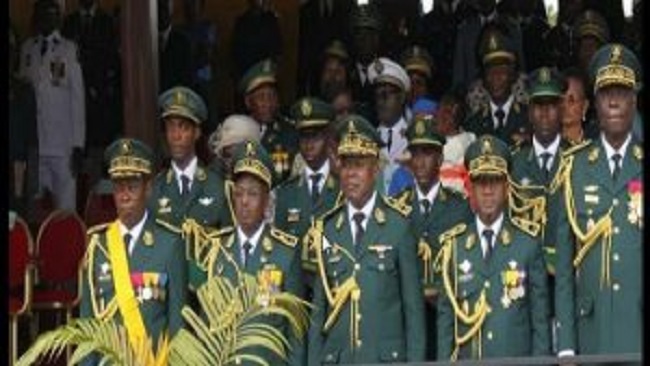
Paul Biya returned to Cameroon on August 20, 2026, after more than 10 weeks abroad. His absence had fueled speculation about his health and raised questions about how the government functioned while he was away.
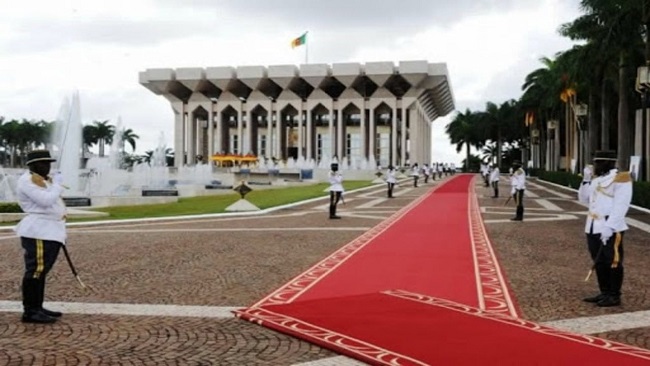
The president, accompanied by Chantal Biya, landed at Yaoundé-Nsimalen International Airport at about 4:45 p.m. before heading to the Unity Palace.
Biya left Yaoundé on June 7. The presidency said at the time that he was leaving for a “short private stay in Europe,” without specifying how long he would be away. In total, Biya spent about 74 days outside the country, his longest recorded stay abroad since taking office in 1982, according to Reuters.
His return ends an unusually long absence. For more than two months, the president’s absence from public view and limited official communication about his stay fueled rumors and questions, eventually prompting the government to respond publicly. Speaking to RFI on August 2, Communication Minister and government spokesman René Emmanuel Sadi said the president was alive and that the presidency was not vacant. He also said Biya would return soon, without giving a date.
At the same time, the presidential camp maintained that Biya continued carrying out his presidential duties while abroad. Several presidential acts were issued during the period, including appointments within the defense forces on August 3.
Biya’s Absence Raises Questions About the Vice Presidency
The episode also exposed a new difficulty in Cameroon’s institutional framework. The constitutional revision of April 14, 2026, created the office of vice president and changed the rules governing presidential succession and continuity of government. Yet more than four months after the reform, no one had been appointed to the position when Biya returned to Yaoundé. Several political parties responded to the situation.
On July 18, the Cameroon Democratic Union (CDU), led by Hermine Patricia Tomaino Ndam Njoya, called for the vice presidency to be filled and for prolonged presidential absences to be more clearly regulated. The party also called for the public to receive more regular information about the functioning of state institutions when a president remains outside the country for an extended period.
The CDU did not argue, however, that Biya’s absence meant the presidency was legally vacant. Instead, the party questioned how the new institutional framework could operate in practice while one of its key offices remained vacant.
Samuel Hiram Iyodi’s Patriotic Movement for the Prosperity of the People (MP3) went further. In a letter sent to the president of the National Assembly on August 6, the party called for a debate on the legal framework governing prolonged presidential stays abroad. It proposed, among other measures, clarifying information requirements and the institutional mechanisms that could be activated when an absence extends over a long period.
Biya’s Return Ends the Absence, Not the Institutional Debate
The political debate is separate from the legal question of whether the presidency is vacant. Cameroonian law does not treat a president’s prolonged stay abroad as creating a vacancy merely because of how long it lasts. The April reform notably sets out provisions governing permanent incapacity and gives the vice president a central role in presidential succession and continuity of government. Biya’s return removes the immediate source of the controversy, but the institutional questions raised during his absence remain.
The episode highlighted the gap between the president’s legal ability to exercise his powers from abroad and public expectations about how the presidency should function during a prolonged absence with limited official communication.
It also brought the office of vice president back to the center of the debate. Although the April reform gave the vice presidency a key role in the new constitutional framework, no appointment has yet been made. Biya’s return therefore ends his 74-day absence, but not necessarily the institutional debate that began on June 7.
Source: Sbbc