
24, May 2020
Biya’s secret plan to weaponize COVID-19 as both a death sentence and an execution squad for Ambazonians revealed 0
Amid the UN’s failure on the conflict in Cameroon, now a specific plea about political prisoners in Paul Biya’s jails has been sent to members of the UN Security Council, beyond Secretary General Antonio Guterres who after taking Biya’s golden statue and UN Budget Committee favors colluded in the jailing and killing.
Among the political prisons are those sent back to Yaounde from Nigeria while Guterres’ Deputy Amina J. Mohammed was there. Inner City Press has been submitted written questions about Cameroon and its prisons amid COVID-19 to Guterres, Mohammed and their spokespeople Stephane Dujarric and Melissa Fleming, with no answer at all. The Security Council members must act on this:
“Ambazonian prisoners of conscience face the gravest risks from COVID-19 due to the unprecedented levels of overcrowding, inability to implement social distancing, lack of hygiene, and poor healthcare. Not suprisingly, many of these prisoners have been sickened by a wild outbreak of the pandemic at the two main prisons in Kondengui, Yaounde, capital of La Republique du Cameroun.
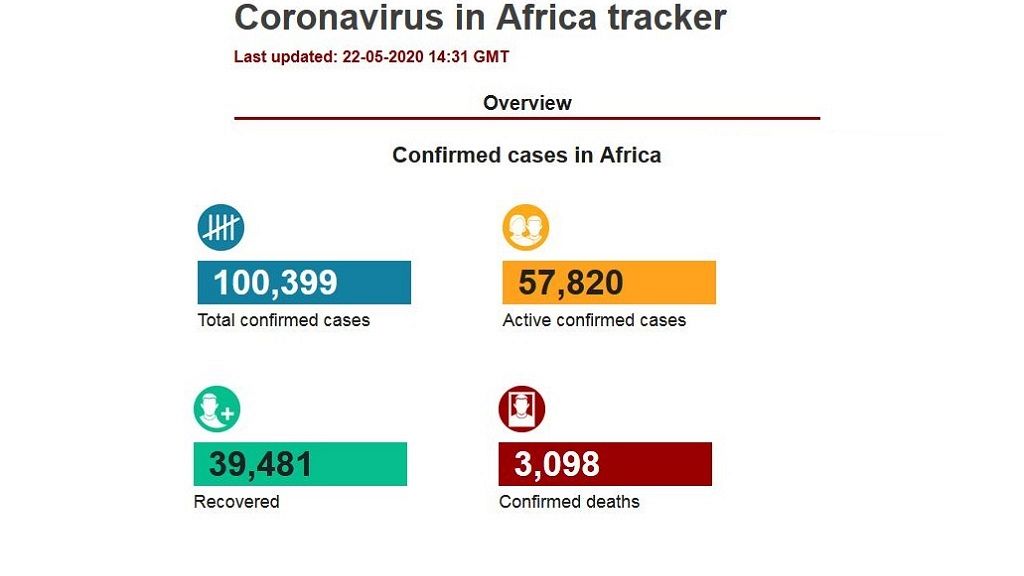
“Recent WHO figures place Cameroun’s COVID-19 ratio per million as one of the highest in Africa with 3,500 confirmed cases. Nigeria, seven times more populated, has 6,400 confirmed cases. The now not-so-secret plan of the regime of Mr. Paul Biya in Cameroun is to weaponize COVID-19 as both a death sentence and an execution squad for these Ambazonians. ACT warns: should any harm befall these Ambazonian political prisoners, the following are to blame:
1. French President Emmanuel Macron, who instructs and Mr. Biya obeys. This is how Macron and the European Union secured the release of Prof. Maurice Kamto and his aides. The silence of France and the EU suggests they endorse Biya’s plan to kill Ambazonian prisoners of conscience.
2. The Secretary General of the United Nations Antonio Guteress, who has not called for their release into the protection of the U.N. refugee agency although many of them were registered as refugees in Nigeria before their abduction and rendition to Cameroun.
3. The leaders of Cameroun, Paul Biya, and of Nigeria, Muhammadu Buhari, for their role in the rendition. In addition (in the case of Buhari), his failure to comply with the ruling of an Abuja High Court calling for the prisoners’ immediate release and transfer back to Nigeria. And (in the case of Biya), the abduction in Ambazonia and deportation to Cameroun of thousands of Ambazonians. These prisoners have been systematically denied medical attention. One of them who was admitted in a military hospital in Yaounde, suffered an attack by soldiers in mufti in the dead of night even as he is locked in a fight for his life agaomst COVID-19. The prison superintendant has prison gangs and other officials targeting and brutalizing Ambazonian prisoners.
Access to these prisons by the International Commission of the Red Cross (ICRC) remains restricted. ACT calls on the U.N. Security Council, President Macron, the United States government, the European Union and the African Union to request the immediate release of all Ambazonian political prisoners and vulnerable people within the prison population in Cameroun and Ambazonia, particularly Barrister Shufai Blaise Berinyuy currently hospitalized. This will not only be an act of goodwill, but it will help curb the spread of the pandemic Time is, indeed, of essence!
Culled from Inner City Press





















24, May 2020
Israel’s PM Netanyahu goes on trial for corruption 0
A new page in Israeli history opens Sunday as Prime Minister Benjamin Netanyahu becomes the first sitting premier to face criminal charges, accused of a string of corruption allegations he denies.
After more than 500 days of electoral deadlock in which he fought for his political survival Netanyahu is to take his seat in the Jerusalem District Court for a new battle — to stay out of prison and avoid a stain on his legacy.
The 70-year-old is used to setting precedents: he is the first Israeli prime minister born after the foundation of the state in 1948 and the longest-serving in its history.
But the impending trial is a deeply-unwanted first.
In 2009, prime minister Ehud Olmert stepped down after police recommended he be indicted for graft.
He was later tried and convicted of taking bribes and sentenced to 27 months in prison, but was paroled after less than a year and a half.
Like Netanyahu, Olmert came from the right-wing Likud party, although he subsequently defected to the centrist Kadima.
Netanyahu is fighting tooth and nail to avoid Olmert’s fate.
Among the charges he faces is that he sought to illegally trade favours in exchange for positive coverage for himself in Yediot Aharonot, Israel’s top-selling newspaper.
He is also accused of accepting cigars, champagne and jewellery worth 700,000 shekels (180,000 euros) from wealthy personalities in exchange for favours.
Perhaps most serious of all is the claim that Netanyahu offered media mogul Shaul Elovitch regulatory changes worth millions of dollars to his telecom giant Bezeq in exchange for favourable reporting on the Walla! news website.
That charge is also the most complex, said Amir Fuchs, a researcher at the Israel Democracy Institute, who says it differs from “classic” bribery cases where money changes hands.
‘It is unprecedented’
In this case, Fuchs argued, the allegation is that Netanyahu “is getting only media coverage,” rather than cash.
“It is unprecedented,” he told reporters.
But in the Bezeq case, Fuchs adds, Netanyahu is accused of doing far more than seek flattering write-ups.
“It was actually complete editorial control of this site even on the specifics of which posts to make, or which pictures to make.”
Netanyahu denies all the accusations and claims he is the victim of a witch hunt by the media and legal officials.
After months of suspense and repeated police questioning of Netanyahu, Attorney General Avichai Mandelblit in January filed charges against the premier.
Many commentators considered this the premier’s political death warrant.
But Netanyahu retained the Likud leadership and after three inconclusive general elections managed to hammer out a power-sharing deal with his chief rival Benny Gantz.
Under the agreement, Netanyahu will continue to lead the government for 18 months before handing over the premiership to Gantz.
‘Conflict of interest’
Netanyahu’s trial had been due to open in mid-March, but the COVID-19 pandemic lead to a postponement to May 24, and the proceedings will be marked by social-distancing and other hygiene measures.
Netanyahu’s lawyers requested that he be excused from appearing in person on Sunday afternoon (1200 GMT) at the opening of a trial that will stretch over months or even years with possible appeals.
They argued that his attendance, to hear the formal reading of the charges against him and confirm that he has read and understands them, was merely technical.
But the court rejected the request, citing a clause in Israeli criminal law stating that “a person may not be tried on criminal charges except in his presence.”
Under Israeli law, a sitting prime minister does not have automatic immunity from prosecution but also is not obliged to resign when charged, only when convicted and after all avenues of appeal have been exhausted.
Yuval Shany, professor of law at the Hebrew University of Jerusalem, argues that there is “a basic incompatibility” between Netanyahu’s role as head of the government and his status as a criminal defendant.
In the latter role, Shany says, the premier will be “fighting very aggressively and maybe effectively to weaken the government authorities that are prosecuting him”.
“There is a very serious conflict of interest situation,” he said.
Once the trial is under way the three judges selected by the Supreme Court will be able to demand Netanyahu’s presence in court when they consider it necessary.
At any time before the verdict Israeli law allows Netanyahu to change his plea in exchange for lesser or fewer charges.
Such plea bargains are common in Israeli courts.
(AFP)