
8, April 2020
French Cameroun: Bombing Kills 10, Triggers Renewed Boko Haram Fear 0
Cameroon is calling on people living in two villages bordering Nigeria to return from their hideouts after two teenagers detonated explosives and killed at least 10 civilians. The military says it has secured the area, but civilians maintain that the villages have been infiltrated by Boko Haram terrorists.
Speaking via a messaging app from the northern village of Blama Kamsoulou, community official Adamu Sidiki says dozens of people have fled since Sunday night’s suicide bombing, fearing Boko Haram.

About 70 people have escaped to the bushes and nearest towns because they believe Boko Haram is making a powerful comeback, Sidiki said, adding that barely two weeks ago, the terrorist group killed at least 90 Chadian soldiers in the nearby Boma peninsula. It is high time Cameroon protected its citizens by redeploying its military to border zones that terrorists are again occupying, he said.
Cameroon’s government said in a release Monday that two male suicide bombers were spotted by civilians Sunday near the Blama Kamsoulou village primary school. When the attackers noticed that they were being monitored, they rushed to the traditional ruler’s palace and detonated the explosives they were carrying.
Roger Saffo, secretary general of the Far North Region governor’s office, said the blasts took the lives of many villagers.
“On the spot, there were nine people killed and 15 people wounded,” Saffo said. “I want to seize this opportunity to appeal to our population to be more vigilant, to be cautious, to collaborate with the forces of law and security.”

Suffo said the wounded were transported to a hospital in the nearby town of Mora, where one person died. Nine others are in critical condition.
Midjiyawa Bakary, governor of the Far North region, said he has ordered soldiers to deploy to the border villages that Boko Haram fighters have allegedly infiltrated.
Local vigilante committees should be reinforced immediately and civilians should work in collaboration with the militias to make sure both the military and administrative authorities are informed anytime strange people are found in their villages, Bakary said.
On March 24, Chad’s president, Idriss Deby, announced that 92 Chadian troops were killed in a Boko Haram attack that lasted several hours. He said 24 army vehicles were destroyed, and captured military arms were taken away in speedboats by Boko Haram.
Boko Haram has also renewed attacks on the Nigerian military, with the killing of at least 50 soldiers in an ambush near Goneri village in Nigeria’s northern Yobe state in March.
Cameroon has not reported a large-scale Boko Haram attack for the past two months, but the Islamist militant group invades the territory regularly for supplies or to kidnap citizens for ransom.
Source: VOA

















9, April 2020
Cameroonians are worried about coronavirus but also about an absent president 0
Like elsewhere, Cameroonians at home and abroad are very worried over the novel coronavirus which has been rapidly spreading across the country.
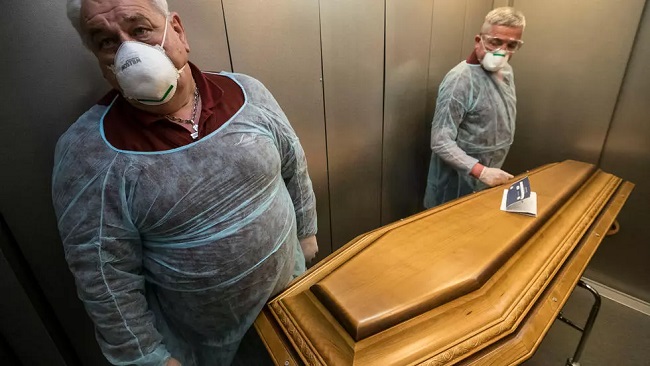
By the close of April 7, Cameroon had registered 685 cases of Covid-19, with nine deaths, overtaking other countries to become the second hardest hit in Sub-Saharan Africa after South Africa. Cameroon now has over 15 times as many confirmed cases as any other country in the central African sub-region and one of the highest numbers of daily new cases on the continent. Like many other African countries, Cameroon is not well-equipped to handle a major outbreak of the disease.
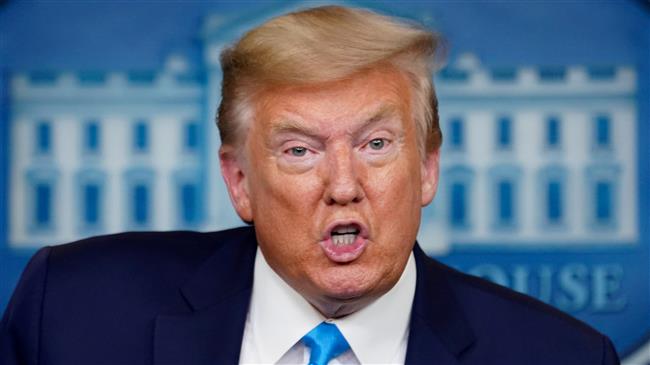
But as Cameroonians grapple with the spread of Covid-19, they are also preoccupied with the absence of their leader. President Paul Biya, 87, who in 2018 secured another mandate to extend his 36-year rule to 2025, has not publicly addressed his compatriots since the country registered its first case on March 6. His next-door peer, Ali Bongo Ondimba of Gabon, with just 30 confirmed cases, has addressed his people on at least three occasions, despite still recuperating from a stroke.
Biya was last seen in public on Mar. 11, when he received the US ambassador to Cameroon at the Unity Palace in Yaoundé. No official mention has been made of his whereabouts thereafter. Even pressure from activists and opposition leaders has not forced the African strongman out in public.
Two weeks ago, Cameroon’s main opposition leader, Maurice Kamto issued an initial seven-day ultimatum, calling on president Biya to personally address the nation. On April 3, Kamto called on the population of coronavirus-affected regions to stay at home—a move the runner-up of the 2018 presidential election said he took because “the Head of State has refused to assume his functions in the fight against the coronavirus.”
The Popular Action Party on its part expressed concerns over the inaction of President Biya and accused Yaounde authorities of playing “a hide-and-seek game.” The party promised to seize the country’s constitutional council to make a declaratory statement on the vacancy or not of the presidency.
Despite his country exhibiting multiple layers of vulnerability to Covid-19, Biya has stuck with his reticence for public speaking. He however instructed the prime minister to put in place a 13-point response strategy and has through social media called on Cameroonians to respect the measures put in place. From wherever he is, the president has also signed several decrees, including one instituting a national solidarity fund to fight COVID-19 and another appointing officials to lead the reconstruction of the conflict-ravaged English-speaking regions in the country’s southwest.
It isn’t unprecedented for Biya to be unseen or silent during critical moments in the life of the country. Even recent widespread rumors of his demise on social media have not forced his hand. His aides and supporters have described this phenomenon as “presidential silence” and have often argued that “his attitude is a sign of maturity and wisdom.”
Biya’s “private visits” to his usual retreat at the Intercontinental Hotel in Geneva has often been a source of political controversy and quiet embarrassment. One estimate is that he’s spent 15% of his time in power, abroad.
Over the last decade, Biya has made the top floor suites of the five-star luxury hotel into his home away from home spending months at a time even as his country has slowly descended into conflict from Boko Haram Islamic terrorists in the north and an Anglophone-led insurgency in north- and southwest of the country.
Culled from Quartz Africa