7, April 2020
WHO warns against easing COVID-19 measures ‘too early’ 0
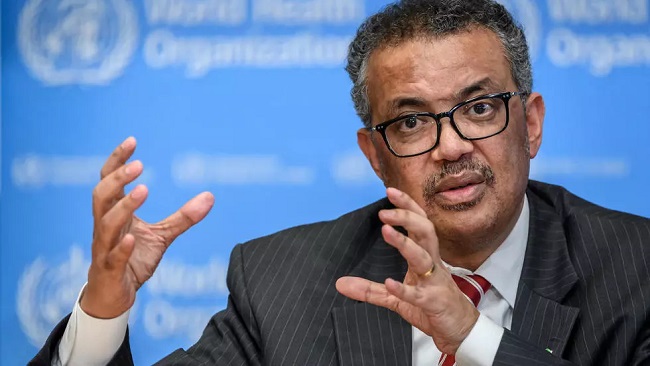
The World Health Organization (WHO) has warned that the precautionary measures enforced by governments to curb the COVID-19 epidemic should not be lifted “too early” as health risks still largely persist.
In a statement on Tuesday, the UN agency said that it could not come up with a blanket recommendation for all countries and regions across the globe on easing the precautionary measures, but urged them not lift them prematurely.
“One of the most important parts is not to let go of the measures too early in order not to have a fall back again,” said WHO spokesman Christian Lindmeier in a virtual briefing. “It’s similar to being sick yourself; if you get out of bed too early and get running too early, you risk falling back and having complications.”
The COVID-19 disease, caused by a new coronavirus, is believed to have transmitted from wildlife to human beings in the Chinese city of Wuhan late last year and is currently affecting 209 countries and territories across the globe. It has so far affected more than 1,362,040 people and killed over 76,340. The WHO has already declared the coronavirus outbreak a global pandemic.
The United States leads all countries and territories affected by the highly contagious virus across the world with 367,720 confirmed infections as of Tuesday. Italy remains the country with the highest death toll, now at 16,523.
The WHO warning comes as many European countries such as France, Spain, Belgium, and Finland are already looking to ease the crippling lockdowns imposed across their territories.
They have established expert committees to work out a gradual easing of stay-at-home orders for some businesses and schools while trying to avoid a likely second wave of the pandemic that could overwhelm their health services.
Source: Presstv




















7, April 2020
Cameroon at stage 2 of coronavirus epidemic with 658 confirmed cases! Biya won’t talk 0
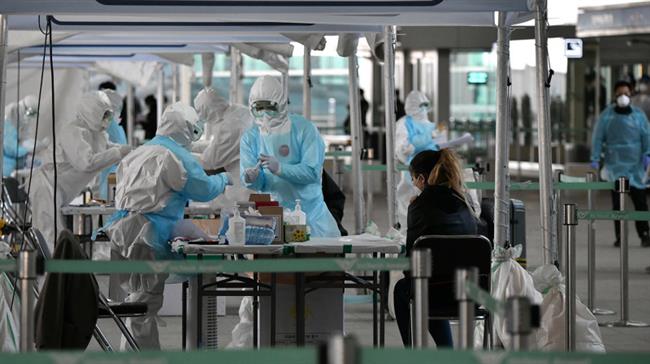
Cameroon is in stage 2 of the COVID-19 epidemic, with the main objective to curb the spread of the virus in the national territory, health minister Manaouda Malachie said Sunday evening.
“I am afraid that we are to this day, already in a community transmission therefore at stage 2 of the epidemic,” said on twitter the minister answering questions by netizens on the extent of local transmission in Cameroon.
The Central African country announced its first COVID-19 case on March 6, and a month later, counted until Monday morning 658 confirmed cases including nine deaths and 17 cured cases, according to the latest official report.
In epidemiology, stage 1 is where the priority is to stop the introduction of the virus, followed by stage 2 whose objective is to slow down the spread.
The peak of the epidemic is in stage 3 characterized by an active circulation of the virus, and the strategy becomes the mitigation of the effects of the epidemic before it ends at stage 4.
“Although (the number of cases are) growing, the situation remains under control because we are looking for cases and putting them in isolation,” reassured Manaouda via twitter.
Cameroon is currently the second country in sub-Saharan Africa most affected by the new coronavirus after South Africa, which has 1,655 cases, according to official statistics.
In the capital Yaounde, two new care centers are under preparation at the military stadium and in the old building of the Orca supermarket, which should make it possible to increase the reception capacity up to 3,000 beds, according to the health ministry.
Since March 18, a series of barrier measures have been put in place by the Cameroonian government. These include closing of borders, isolation of people at high risk, the restriction of mass gatherings and movement. However, these measures have not been scrupulously respected by the population.
“Some of our compatriots do not make our job easier, thus endangering the lives of others,” said Manaouda, calling on the populations to remain confined as long as possible, and to cover their noses and mouths when leaving their house.
Recently the wearing of a protective mask has become mandatory for all those wishing to approach certain hospitals and public services, like the General Hospital of Yaounde, and government bodies in the Cameroonian region of Southwest.
Source: Xinhuanet