31, December 2019
Former Ivory Coast political leader Blé Goudé says sentenced in absentia to 20 years jail 0
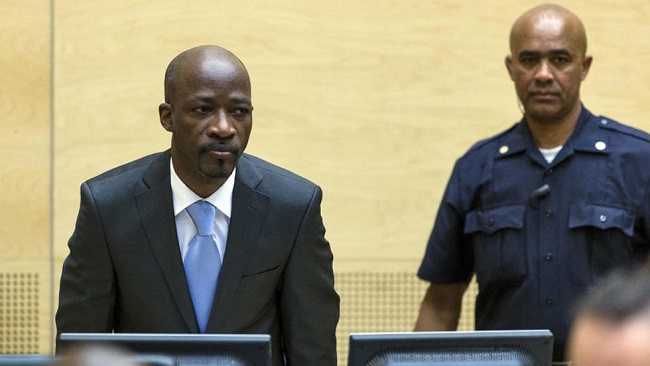
Former Ivory Coast political leader Charles Blé Goudé said Monday he had been sentenced in absentia to 20 years in prison by an Ivorian court over murder, rape and torture charges.
Blé Goudé was cleared of crimes against humanity at the International Criminal Court in the Hague this year, along with his former boss, Ivory Coast ex-president Laurent Gbagbo.
But following his acquittal, an Ivorian court brought a fresh trial against him over the 2010-2011 bloodshed which followed a disputed vote in the West African nation.
The former aide to Gbagbo, who has remained in the Netherlands following his ICC trial pending a possible appeal by the prosecution, told AFP the Ivorian court had convicted him on Monday.
He said he was “surprised by the verdict”, adding that he had been sentenced to 20 years in prison, 10 years deprivation of his civil rights, and a fine of 200 million CFA francs ($340,000) to be paid to the victims.
The court has issued an arrest warrant for him, he added.
About 3,000 people died in the turmoil that swept Abidjan — once one of Africa’s most cosmopolitan cities — in the aftermath of the November 2010 presidential polls when Gbagbo refused to accept defeat to bitter rival Alassane Ouattara, who remains in power.
Leonard Lebry, the prosecutor general at the Court of Appeal in Abidjan has previously said the case against Blé Goudé — once dubbed the “general of the streets” for his ability to mobilise Gbagbo supporters during the conflict — was “wider” than the ICC prosecution and covered different events.
“The court will try him (Blé Goudé)” for allegations of “torture, murder, rape”, Lebry said last month.
Gbagbo, the first former head of state to stand trial at the ICC, and Blé Goudé were tried over responsibility for murder, attempted murder, rape, persecution and “other inhumane acts” during five months of violence, both pleading not guilty.
They were released by the ICC to live in Belgium in February under conditions including that he would return to court for any prosecution appeal against his acquittal.
Blé Goudé is living in the Netherlands under similar conditions.
Last month the Ivorian court rejected an appeal over the January 2018 sentencing of Gbagbo and three aides for the “robbery” of the Central Bank of West African States (Bceao) during the post-election crisis.
The opposition has claimed Ouattara is attempting to prevent Gbagbo returning to the country ahead of 2020 elections expected to be a crucial test for Ivory Coast, which has long been west Africa’s top economic performer and is the world’s leading cocoa producer.
The court conviction comes in the same month that an arrest warrant was issued for former rebel leader and would-be Ivory Coast presidential candidate Guillaume Soro, who aborted his planned return to the country at the last minute.
(AFP)


















31, December 2019
4,000 trapped on Australian beach as wildfires approach 0
Four thousand people have been trapped on a beach in southeast Australia after being forced to flee their homes as huge fires encircled swathes of territory and left no escape route by land.
The figure included tourists and locals who had sought refuge on the foreshore of the Australian town of Mallacoota, in the state of Victoria, on Tuesday as wildfires raged across the region.
Smoke in Mallacoota was reported to have turned day to night, with local authorities saying nearby fires were causing extreme thunderstorms and “ember attacks.”
Early in the morning, town officials had ordered the activation of emergency sirens to warn of the imminent fire threat, which prompted residents to rush to the seaside following an evacuation plan previously outlined in community meetings.
But the plan was to merely shelter people at the beach.
“We’ve got three strike teams in Mallacoota that will be looking after 4,000 people down on the beach there,” said Andrew Crisp, Victoria’s Emergency Management commissioner. “We’re naturally very concerned about communities that have become isolated.”
Large numbers of residents and visitors, enjoying summer holidays, were also forced to seek refuge in towns up and down a 200-kilometer strip of coast in southeast Australia, with some taking to the sea with boats in the hope of surviving from the country’s months-long bushfire crisis.
Australian media reports said dozens of properties had been destroyed since late Monday and at least seven people were missing in New South Wales (NSW) and Victoria states.
“In some places the flames were so intense, the smoke so thick, and the fire-provoked dry lightning storms so severe that aerial reconnaissance and waterbombing had to be halted,” the Rural Fire Service in NSW was quoted as saying by AFP.
More than 900 homes have been destroyed in NSW alone, and the number will likely increase as firefighters struggle to contain the massive fires.
Australia’s bushfires have been burning for months, destroying more than 10 million acres and killing nine people since October, including three volunteer firefighters.
The crisis has also impacted the major cities of Sydney and Melbourne, home to several million people.
Bushfires are common in Australia’s hot, dry summers, but the ferocity and early arrival of the fires in the southern hemisphere this year is unprecedented, with experts saying climate change has left bushland tinder-dry.