
21, December 2021
Omicron now dominant Covid-19 variant in US 0
The fast-spreading Omicron variant is now the dominant strain of Covid-19 in the United States, health authorities reported Monday, as the WHO called for greater efforts to ensure the pandemic ends next year.
The new variant has helped fuel record case surges, forcing a return to harsh restrictions in some countries. But in the United States, President Joe Biden does not plan on “locking the country down”, press secretary Jen Psaki said earlier in the day.
Omicron now accounts for 73.2 percent of new US cases over the past week ending Saturday, the Centers for Disease Control and Prevention said. In some regions of the country – the Pacific Northwest, South and parts of the Midwest – it already comprises more than 90 percent of new infections.
With Biden set to deliver an address on Covid-19 Tuesday, the White House reported that a mid-level, fully vaccinated and boosted staff member had tested positive for Covid-19 after spending 30 minutes in proximity to the president three days prior. Biden has so far tested negative.
Early data suggests Omicron could be more infectious and possibly have higher resistance to vaccines, despite indications that it is not more severe than the Delta variant.
Since it was first reported in South Africa in November, Omicron has been identified in dozens of countries, dashing hopes that the worst of the pandemic is over.
WHO director general Tedros Adhanom Ghebreyesus called for nations to redouble efforts to help end the pandemic, calling for new year events to be cancelled because it was better to “celebrate later than to celebrate now and grieve later.
“We have to focus now on ending this pandemic,” he said.
More restrictions
The European Union approved its fifth Covid-19 jab Monday – from US firm Novavax – with Europe already far ahead of other parts of the world with its rollout of vaccines and booster shots.
Authorisation of the jab, which uses a more conventional technology than other Covid vaccines, has raised hopes that people worried about getting vaccinated might now come forward.
The other vaccines approved in the bloc are from Pfizer, Moderna, AstraZeneca and Johnson & Johnson, and the EU has already signed a deal to buy up to 200 million doses of the two-shot Novavax vaccine.
“At a time where the Omicron variant is rapidly spreading… I am particularly pleased with today’s authorisation of the Novavax vaccine,” EU chief Ursula von der Leyen said in a statement.
London on Monday announced it had cancelled a New Year’s Eve event in the central Trafalgar Square for 6,500 people.
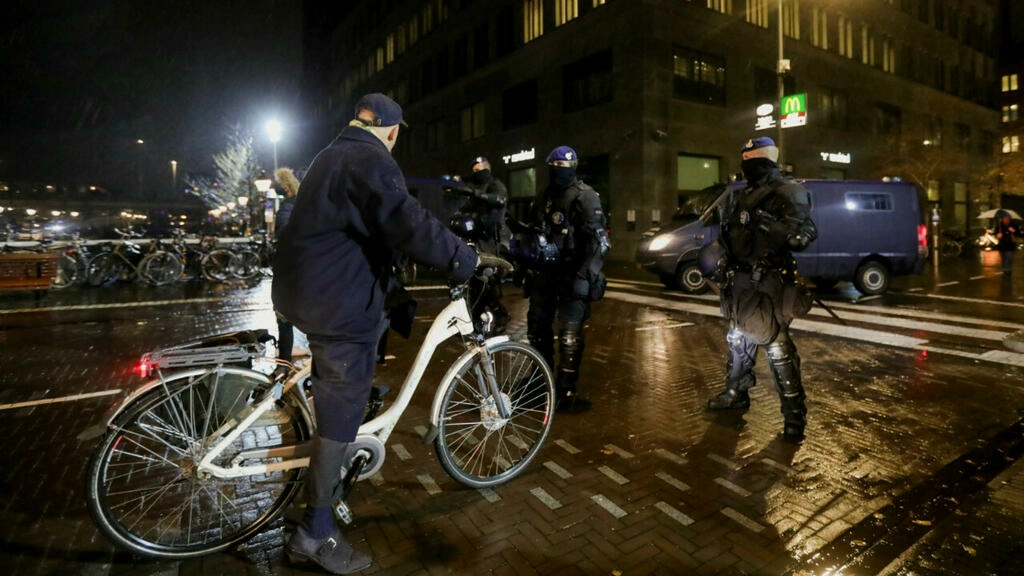
Paris has already cancelled its new year celebrations, and Germany is expected to roll out tight restrictions on private parties and close nightclubs, according to a proposal seen by AFP.
“New Year’s Eve celebrations with a large number of people are unjustifiable in the current situation,” reads the draft document.
Morocco has announced a blanket ban on New Year’s Eve celebrations.
But British Prime Minister Boris Johnson ruled out any further tightening of England’s coronavirus rules over Christmas, while pledging to keep the situation “under constant review.”
Queen Elizabeth II is nonetheless understood to have cancelled plans to spend Christmas at her Sandringham estate and will instead take “sensible precautions” and stay at Windsor Castle, according to British media.
The Netherlands has already imposed a Christmas lockdown, and von der Leyen has warned that the Omicron variant could be dominant in Europe by mid-January.
World Economic Forum postponed
As the pandemic gathers pace, weary populations are faced once again with new rounds of restrictions and cancellations of big events.
The World Economic Forum said it was postponing its annual January get-together of the world’s rich and powerful in the Swiss ski resort of Davos because of the new variant.
“Despite the meeting’s stringent health protocols, the transmissibility of Omicron and its impact on travel and mobility have made deferral necessary,” the WEF said Monday.
Israel’s health ministry recommended banning nationals from traveling to the United States, and added several European countries to its Covid “red list.”
The world of sport continues to be buffeted by the virus spread, with several English Premier League football teams recording outbreaks that forced games to be abandoned in recent days.
However, the Premier League said after a meeting on Monday it had rejected a plan to temporarily halt the season, saying: “It is the League’s collective intention to continue the current fixture schedule where safely possible.”
Tennis also continues to suffer major blows, with Spanish star Rafael Nadal the latest player to test positive, throwing his participation in next month’s Australian Open into doubt.
Source: AFP





















23, December 2021
Booster campaigns won’t end the pandemic, WHO chief warns wealthy nations 0
The World Health Organization chief warned Wednesday that the rush in wealthy countries to roll out additional Covid-19 vaccine doses was deepening the global inequity in access to jabs and thereby prolonging the pandemic.
The UN health agency has long warned about the glaring inequity in access to Covid vaccines, which has left many vulnerable people in poorer nations without a single jab as richer countries roll out booster programmes.
“Blanket booster programmes are likely to prolong the Covid-19 pandemic, rather than ending it, by diverting supply to countries that already have high levels of vaccination coverage, giving the virus more opportunity to spread and mutate,” WHO Director-General Tedros Adhanom Ghebreyesus told reporters.
“No country can boost its way out of the pandemic,” Tedros added.
The WHO’s Strategic Advisory Group of Experts (SAGE) on Immunisation said Wednesday that at least 126 countries around the world have already issued recommendations on boosters or additional vaccine doses, and 120 had started implementing those programmes.
“No low-income country has yet introduced a booster vaccination programme,” it said in a statement.
Without ‘coordinated strategy’, world will ‘always be chasing’ Covid-19 variants
Health experts have long warned that failure to expand vaccinations globally would pave the way for more variants of the coronavirus to develop.
Tedros’s comments came as the Omicron variant’s lightning dash around the globe since it was first detected in South Africa last month has dampened hopes the worst of the pandemic is over.
The new variant is spreading at unprecedented speed and has already been detected in 106 countries, the WHO said.
Early data indicates that the heavily-mutated variant is not only more transmissible than previous strains, but could be better at dodging some vaccine protections, although additional doses appear to push protection levels higher.
Tedros said Wednesday that the existing vaccines continue to provide significant protection against severe disease from Omicron.
“It’s important to remember that the vast majority of hospitalisations and deaths are in unvaccinated people, not un-boosted people,” he said.
He also stressed that we all must take all necessary precautions to halt the spread of Covid as we head into the Christmas holiday.
“Boosters cannot be seen as a ticket to go ahead with planned celebrations,” he said.
Earlier this week, the WHO chief urged people to postpone holiday gatherings, warning that festivities would in many places lead to “increased cases, overwhelmed health systems and more deaths”.
“An event cancelled is better than a life cancelled,” he added.
Source: REUTERS