2, March 2026
Unending attack on medics and healthcare professionals in Cameroon’s separatist war; an unacceptable disgrace 0
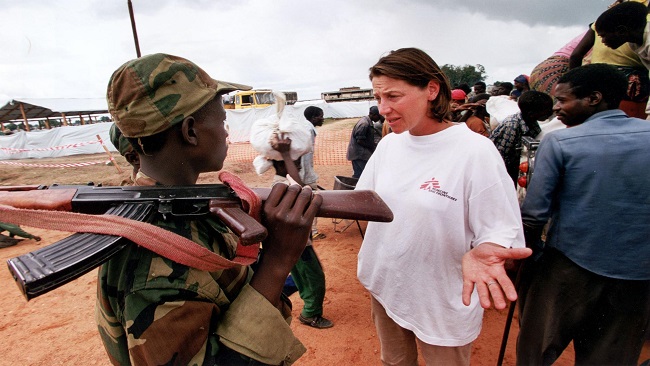
In the shadow of nearly nine years of war in Cameroon, the line between professional medical practice and armed conflict has grown dangerously thin. What should be a neutral commitment to saving lives have, for many healthcare workers, become grounds for suspicion, arrest, and abuse. The conflict is pitting the separatist movement of Southern Cameroonians (Ambazonians) against the government of 93-year-old Paul Biya, who has been in power since 1982. The conflict has created an environment in which doctors, nurses and many other health professionals are increasingly forced to choose between their ethical duty and their personal safety.
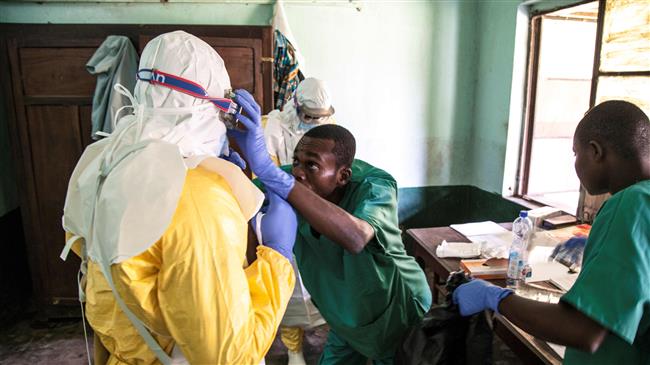
In July 2020, Cameroon Concord News interviewed Peter Ngute in Kumba and Mary Tata in Bamenda, both practicing medics who had been arrested and detained for five months by Cameroonian security forces. In 2022, we spoke with many healthcare professionals and nurses, among them Enow Arrey Lucy who was harassed by government authorities for doing their jobs. Authorities accused them of aiding and abetting separatist fighters in Kumbo and other parts of the two English parts of the country. All were ultimately released without charge. However, they all allege that during their detention they were subjected to torture and inhumane treatment. Peter said, “were punished not for taking up arms, but for treating wounded individuals who arrived at their facilities. And this cannot be right because we are only doing our jobs”.
Their accounts mirror a broader pattern documented by Amnesty International, which reports longstanding and serious human rights violations committed by government security forces, militias, and armed groups in the Anglophone regions during the ongoing conflict. These violations include unlawful killings, arbitrary arrests, enforced disappearances and torture. Within this climate of repression, healthcare workers have become particularly vulnerable. Both Médecins Sans Frontières and Human Rights Watch have documented cases in which medical personnel were accused of aiding combatants, detained on terrorism-related charges and harassed simply for carrying out their professional duties.
The legal framework protecting them is unambiguous. Cameroon ratified the Geneva Conventions in 1963, along with the First and Second Additional Protocols in 1984 and Protocol III in 2021. Under international humanitarian law, medical professionals must be permitted to treat the wounded and sick without discrimination. Medical neutrality is not optional, it is a binding obligation. Yet multiple testimonies suggest that, in practice, healthcare workers are being criminalised for adhering to that very principle.
Cameroon Concord News has gathered additional disturbing accounts. Dr. Tita Augustine, Susan Ndi, a radiologist, and nurse Adeline Nzouepet Sah are among several healthcare professionals who describe their lives as having been irreversibly altered after being accused of supporting separatist fighters. Arrests, threats, and intimidation have followed allegations that stem solely from the provision of medical care. Their experiences point to a troubling pattern upon which impartial treatment is increasingly equated with complicity.
Despite repeated requests for comment, authorities in Yaoundé have declined to respond to questions from Cameroon Concord News. Security forces have reportedly justified detentions by alleging that certain healthcare providers are supporting terrorism. However, such accusations raise fundamental questions about whether the state is conflating medical duty with political allegiance.
The persistent targeting of medics reflects a broader and deeply troubling reality in a conflict that has claimed more than 9,000 lives. When doctors and nurses are detained, intimidated, or tortured, entire communities lose access to essential and lifesaving care. The erosion of medical neutrality not only violates international law but also deepens civilian suffering.
The cases of Adeline Nzouepet Sah, Dr Tita Augustine and Susan Ndi, among many underscore the urgent need for international scrutiny, credible investigations, and accountability mechanisms. Without meaningful protection for healthcare professionals, the humanitarian cost of the conflict will continue to rise among those who are only stated offence is saving lives.
By Rita Akana in Yaoundé










29, March 2026
Biya regime advances talks with South Korea on Yaoundé emergency care project 0
Cameroon’s Health Minister Manaouda Malachie is in South Korea to fast-track discussions on the rollout of Cury 2, the expansion phase of Yaounde’s Emergency Care Center (Cury).
During his visit, which began on March 25, 2026, the minister met his South Korean counterpart, Jeong Eun-kyeong, to review the project, which authorities say is key to improving long-term emergency care in the capital, with plans for a gradual rollout to other cities.
The project builds on an agreement signed on Nov. 28, 2023, between the two countries. The deal covers the expansion of Cury, with two main objectives: increasing patient capacity and improving care for critically ill patients in Yaounde.
However, Cameroonian authorities say the project goes beyond infrastructure. “We are developing, with the Republic of Korea through Koica (the Korea International Cooperation Agency), phase 2 of Cury. This phase is not just about infrastructure. It includes a full medical emergency management system. This is why we are in Korea,” Manaouda Malachie said.
South Korea has committed 8.5 billion CFA francs in grant financing to support the project. The funds will be used to expand infrastructure and strengthen technical capacity.
The program includes increasing capacity to treat critically ill patients, improving emergency care, training specialists and technicians, and setting up a call center to coordinate emergency responses. The Cameroonian delegation also requested the integration of an automated laboratory to speed up diagnostics and improve response times.
Project already under way
Preparatory work for Cury 2 is already under way. On Feb. 13, 2026, an emergency tender was launched for an environmental and social impact study, estimated at 30 million CFA francs.
According to the Ministry of Public Health, the mission to Korea reflects “the government’s commitment to strengthening healthcare delivery and improving the rapid and effective management of medical emergencies nationwide.”
Inaugurated in 2016, Cury was built with $84 million in financing from Koica. The first center of its kind in Central Africa, it specializes in treating patients in life-threatening conditions, including heart attacks, pulmonary embolisms and severe trauma cases.
The facility introduced more modern standards in emergency care in Cameroon and has since become a leading reference center nationally and across the sub-region.
Authorities now plan to replicate the model in other regions. Koica has proposed a broader initiative to establish a nationwide emergency medical services system, including regional centers.
For now, Yaounde remains the only city with such infrastructure. The goal is to expand access to quality emergency care across the country.
Source: Business in Cameroon