
3, December 2021
Africa: A New Path after the Coronavirus Pandemic 0
In the book ‘The Congo Cables: From Eisenhower to Kennedy,” there is a detailed plan in the presence of a sitting US president to assassinate Patrice Lumumba, whom the US considered a threat to its national interests. Nothing has changed since that plot to assassinate that great pan-Africanist about how the US and western nations operate internationally. It is all about national interests and the concerns of big western businesses. Many governments have figured out how to function internationally, but sub-Saharan African countries have not.”
If any evidence is required that Africa is considered on the global stage as only suitable for supplying vital raw materials for the rest of the world, the COVID-19 pandemic has made that clear. The UK, EU, and the USA’s latest travel bans on travelers from nine African countries have come as no surprise. The ban comes as the Centre for Disease Control announced that no cases of the Omicron virus had been found in the US. Why then was a ban against scientific advice imposed on these nine African countries?
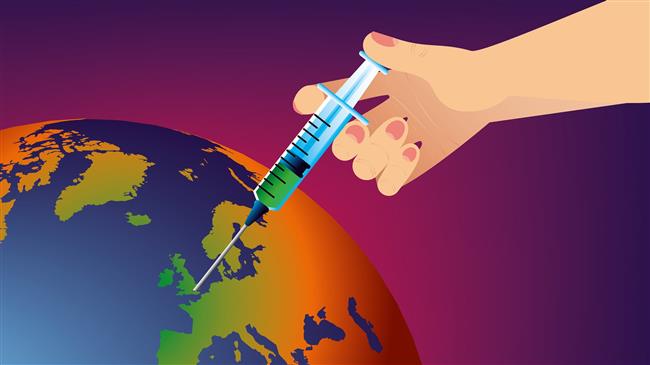
Politics in the international arena have been laid bare since the coronavirus pandemic started. Ever since the Covid-19 vaccine was manufactured over twelve months ago, the rich countries of the West have gone into hoarding and isolationist mode. Internationalism has had to wait as the rich countries look after their citizens and big businesses first, while hundreds of thousands die in Africa, Asia, and South America.
Although governments paid for many Covid-19 vaccine researches, the subsequent vaccine and cures have become the property of the world’s biggest pharmaceutical businesses. And they are waxing fat from the profits and patents. Due to the urgency of the moment and the havoc this global virus is causing worldwide, South Africa and India have led calls for rich nations to suspend intellectual property agreement that allows pharmaceutical conglomerates to monopolize medical knowledge. This proposal, expected to save millions of lives in developing countries, has been blocked by the UK and the EU. This is shameful.
The Omicron virus is the result of vaccine-nationalism, vaccine-apartheid, vaccine hoarding and a neo-colonial mindset. Scientists now say if immediate action is not taken to vaccinate the populations of the developing countries; more variants will make their appearance soon. Western nations have snatched and keep accumulating as many million vaccine doses as they can and are accomplishing some of the highest vaccination rates in the world. According to COVAX, around 100m of the vaccines in Western countries will pass their use-by dates in December while people in developing countries are dying from a global pandemic that was not their creation.
The disparity in vaccination numbers around the globe makes for depressing reading. South Africa has achieved only 27% vaccination rate, while most Western countries have attained vaccination rates higher than 69% with vaccines produced by Johnson & Johnson in South Africa. The vaccination rates in other parts of Africa are lamentable. According to the live tracker at https://africanarguments.org/, Chad has vaccinated 250,000 of its 16.5 million people. Cameroon has vaccinated 924,000 of its 26 million people. Nigeria has vaccinated 10.5 million of its 205 million inhabitants. The numbers are pathetic, but this is not a western problem; this is our—African—problem. The time for a change in Africa is now.
The international community has failed Africa if it cannot put lives before profits in a global pandemic. Our leaders and continent cannot afford to rely on cooperation with a world that values us not. We are better than just supplying raw materials and young qualified professionals to oil the economic wheels of the West. The time has come for Africans to realize that the world order and global institutions created after 1945 have failed our continent.
It is an open secret that African leaders have been nothing short of embarrassments for the last forty years, and their people, at home and in the diaspora, have been rightfully disappointed with them. Africa has had its fair share of self-inflicted injury, from auctioning its raw materials to western companies for private gain for the political elite to butchering constitutions to stay in power forever; our recent past has been unpleasant.
This global pandemic has presented an opportunity for many African leaders to rehabilitate themselves with their people. Many Africans are now prepared to give their leaders another chance. African leaders must start putting African structures and institutions in place to serve their people. China has shown that you can lift 600 million people from extreme poverty within a generation. Africa has 1.3 billion people, and many are young, educated, and hungry for success. We have trillions of dollars worth of raw materials scattered around the continent. No continent is blessed with more natural materials and people potential than Africa.
How can vaccines manufactured cheaply in Africa be cheaper in Europe and the US than in Botswana? This is where political leadership comes in. Presidents Kagame, Nana Akufo-Addo and Ramaphosa must assume leadership immediately and invite African philanthropists, scientists, academics and billionaires to fashion concrete plans on how our continent should shield itself from future pandemics and shocks. This is the first step towards restoring self-pride.
For many in Africa, the lesson from this pandemic is painful as African governments have found it hard to protect their citizens. In contrast, the West has displayed its ruthlessness and selfishness. They might not plot to poison another Lumumba, but Western ways have not changed. It is called self-interest. After this pandemic, it cannot be business as usual. We must seize the moment and build institutions that work for Africa.
By Isong Asu
Cameroon Concord News
Senior Political Researcher in London














4, December 2021
UN says violence in Southern Cameroons impacting over 700,000 children shut out of school 0
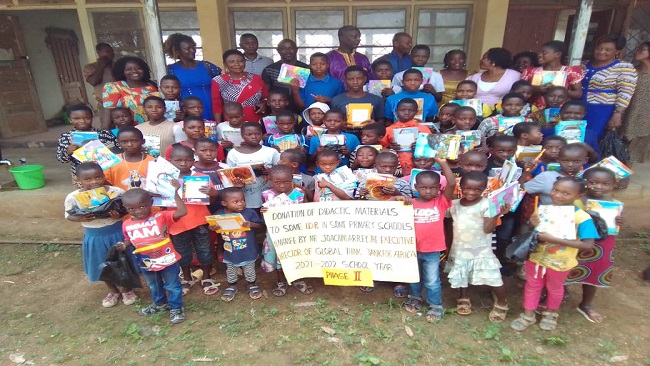
Over 700,000 children have been impacted by school closures due to often brutal violence in Cameroon, according to an analysis released by the UN humanitarian arm, OCHA, on Thursday.
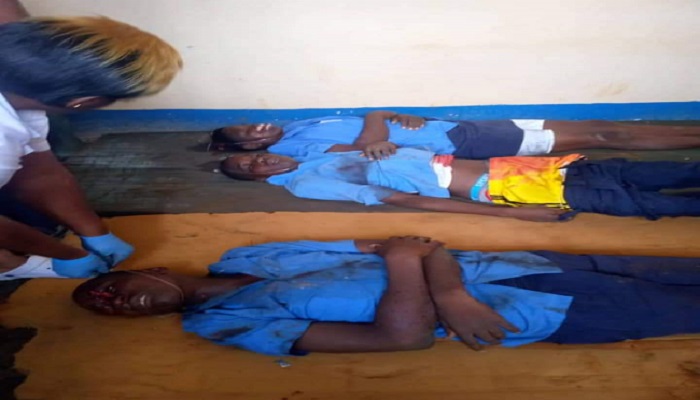
Two out of three schools are closed in the North-West and South-West regions of the country. On 24 November, four children and one teacher were killed in an attack in Ekondo Titi, in the South-West.
Lockdown
A recent lockdown imposed by a non-State armed group, from 15 September to 2 October, limited access to basic services including health and education.
Over 700,000 children have been impacted by school closures due to violence in northwest and southwest Cameroon.
During the period, OCHA reported a series of attacks in the North-West.
Eight students were kidnapped, and a girl’s fingers were chopped off after she tried to attend school. Five public school principals were also kidnapped, including one who was then killed.
All schools and community learning spaces were closed, except for some schools in a few urban areas which operated at less than 60 per cent capacity.
The lockdown and insecurity also forced UN agencies and aid organisations to temporarily suspend the delivery of aid. During that time, about 200,000 people did not receive food.
Multiple crisis
Nine out of ten regions of the country continue to be impacted by one of three humanitarian crises: the crisis in the North-West and South-West, conflict in the Far North, and a refugee crisis, with people fleeing the Central African Republic.
Because of these combined crises, over one million children need urgent education support.
To answer some of these needs, Education Cannot Wait (ECW), the UN global fund for education in emergencies and crises, is working closely with UN agencies, the Norwegian Refugee Council and other civil society partners.
ECW is contributing $25 million over three years and calling for other donors to fill the gap, which is estimated at $50 million.
When fully funded, the programme will provide approximately 250,000 children and adolescents with access to safe and protective learning environments in the most-affected areas.
Just this week, the Secretary-General of the Norwegian Refugee Council, Jan Egeland, and the Director of Education Cannot Wait, Yasmine Sherif, had a joint visit to the country.
In a statement, Ms. Sherif said the situation “is among the most complex humanitarian crises in the world today.”
“Children and youth are having to flee their homes and schools, are threatened with violence and kidnapping, and being forced into early childhood marriage and recruited into armed groups,” Ms. Sherif recalled.
Jan Egeland argued that “putting a schoolbag on your back shouldn’t make you a target”, but unfortunately children in Cameroon “risk their lives every day just showing up for school.”
“Cameroon’s education mega-emergency needs international attention, not deadly silence by the outside world,” Mr. Egeland declared.
Source: News@UN.org