4, August 2018
An SMS car-tracking app inspired by Cameroon’s internet shutdown is set to spread across Africa 0
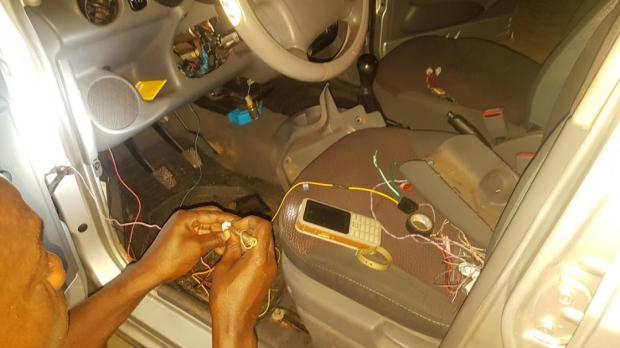
Hampered by an internet shutdown in Cameroon’s troubled English-speaking regions in January 2017, Zuo Bruno, a young ethical hacker, was inspired to develop a car-tracking application using SMS. The application named Zoomed, whose adoption has been fast in Cameroon, is now on the verge of spreading across the continent.
Cameroon has been interrupting internet intermittently in those regions over the last 20 months in an attempt to stifle dissent following mass protests by English-speaking teachers and lawyers which erupted in 2016, first tampered with internet connectivity on Jan. 17, 2017. The internet shutdown lasted 94 days. The internet was again plug off in October same year, taking the duration of the shutdown to a record 230 days, according to Access Now.
“Following the disconnection, I noticed a lot of cars were being stolen and realized these stolen cars had internet-based tracking solutions installed but the owners still couldn’t locate their cars,” Bruno, founder of Zuoix; an information security start-up said. He says the government’s internet shutdown gave him the incentive to conceive the whole idea.

This is why it was especially ironic in February when Bruno’s innovation earned him the President’s 2018 Grand Prize (Gold) for Excellence in Scientific Research and Innovation in Cameroon. The award has a FCFA 10 million ($ 17,500) prize. Another tech enthusiast, 17-year-old Nji Collins Gbah from the same internet-interrupted region managed to emerge champion of the Google Code-in competition in 2017.
With a GPS chip installed in the vehicle, a user can locate a car or fleet, with direction, speed and elevation information. The Zoomed app also has features which supports geofencing, immobilization, ignition alert, voice surveillance, two-way calling and SOS alarm with artificial intelligence. No internet connection is required.
Bruno said rather than create an internet-based version, the app will use USSD technology. A user can dial simple USSD code, such as *XYZ*12# and be able to locate their car, immobilize it or other features. Using that technology means there will be no additional costs to the user. USSD, which stands for Unstructured Supplementary Service Data, is typically used by mobile operators, especially in Africa — where the market is primarily prepaid—for their internal applications such as balance checks, top-ups, data bundles and promotions.
Ever since the Zoomed app caught nationwide attention, it has been upgraded to make cars location-aware; enabling the cars to send distress calls based on their current location to police stations, gas stations, hospitals and emergency services.
In Cameroon, the app already has a large client base; with over 50 enterprises, amongst them the country two top companies, making use of the app. “We are moving forward to other countries including Nigeria, Kenya and Ghana, and hoping for good results. Our plan is to send this application Africa-wide so that more people can enjoy the services we offer, secure their cars and have a good night rest knowing that their cars are safe.”
Source: Quartz


















6, August 2018
Congolese Refugees Risk Infecting Neighboring Countries with Ebola 0
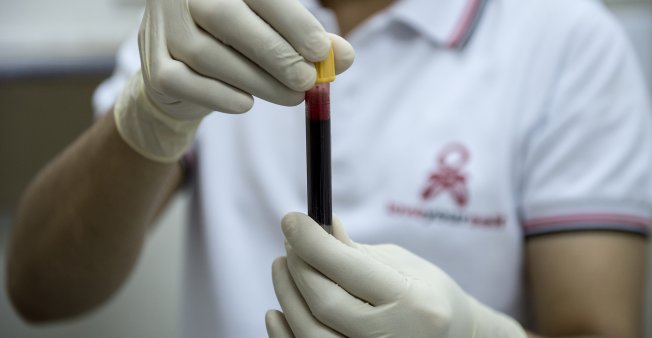
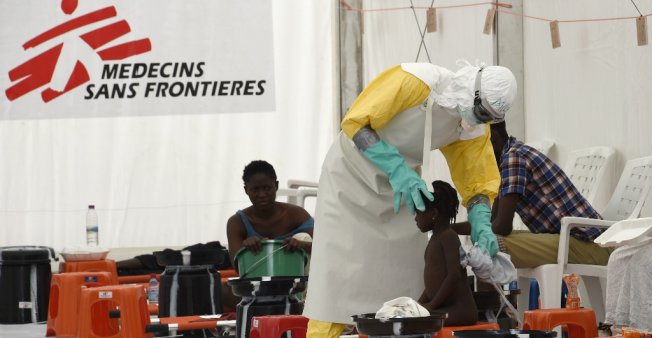
U.N. officials warn the deadly Ebola virus could be spread by refugees leaving the Democratic Republic of Congo’s North Kivu province. Officials are urging neighboring countries to increase surveillance at border crossings.
The number of confirmed cases in Congo’s new outbreak of the virus has risen to 13, including three deaths, the nation’s health ministry said late Saturday.
This latest outbreak was announced Wednesday with four confirmed cases, a week after the previous outbreak in DRC’s northwest had been declared over, having killed 33 people. It was not clear whether the new outbreak, more than 2,500 kilometers (1,553 miles) away, was related.
More than 100 armed groups are involved in long-standing conflicts in DRC’s North Kivu province. Ongoing fighting and instability in the region are adding layers of complexity and difficulty to international efforts to combat an Ebola outbreak in the region.
At least two decades of conflict has displaced more than 1 million of the province’s 8 million inhabitants. Peter Salama, World Health Organization emergency response chief, told VOA an additional threat was posed by refugees. He warned that some of those fleeing into neighboring Uganda, Tanzania and Burundi might be taking the infection with them.
“So, not only do you have the problem of tracking that internal displacement, but then you have the potential exportation of infection across borders,” Salama said. “And, that is why we are already working with the government of Uganda, particularly, but also Rwanda, which shares a border as well with northern Kivu, to be fully prepared for any eventualities across the border.”
The U.N. refugee agency is lending its expertise to this situation. It is preparing shelters for at least 1,000 vulnerable internally displaced persons and other extremely vulnerable people in the Ebola-affected Beni area. It also is undertaking protection and monitoring activities.
UNHCR spokesman Andrej Mahecic said his agency’s staff in Uganda, Rwanda and Tanzania were on Ebola alert.
“Specifically, in Uganda, we have a continuous influx from the DRC. Our operation has intensified the awareness-raising among the refugee and host communities. We have also increased the infection control and outbreak preparedness measures,” Mahecic said. “And, we also are preparing for entry screening. That could be the temperature checks for arriving Congolese refugees at the borders.”
Mahecic said around 92,000 Congolese refugees have fled to Uganda so far this year. He said they are continuing to arrive at an average rate of between 100 and 200 a day.
Source: VOA