23, July 2018
AIDS experts gather in Amsterdam amid fears epidemic could still spiral out of control 0
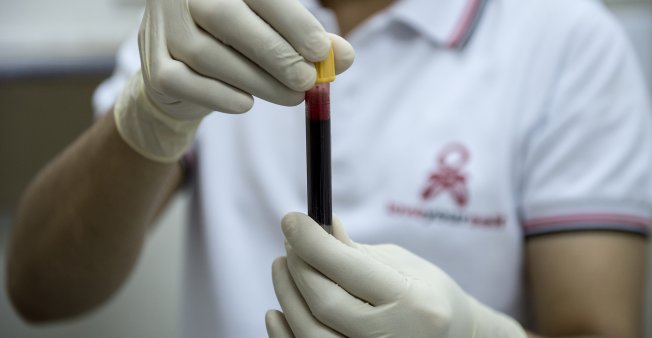
A world AIDS assembly opens in Amsterdam on Monday hoping to harness the star power of activists Elton John and Prince Harry to bolster the battle against an epidemic experts warn may yet spiral out of control. Thousands of delegates — researchers, campaigners, activists and people living with the killer virus — will attend the 22nd International AIDS Conference amid warnings that “dangerous complacency” may cause an unstoppable resurgence.
In recent days, experts have alerted that new HIV infections, while down overall, have surged in some parts of the world as global attention has waned and funding has levelled off.
And they lamented that too sharp a focus on virus-suppressing treatment may have diverted attention from basic prevention programmes such as condom distribution, with the result that the AIDS-causing virus is still spreading easily among vulnerable groups.
“The encouraging reductions in new HIV infections that occurred for about a decade has emboldened some to declare that we are within reach of ending AIDS,” Peter Piot, virus researcher and founder of the UNAIDS agency, said last week.
However, “there is absolutely no evidence to support this conclusion,” he insisted, and warned: “The language on ending AIDS has bred a dangerous complacency.”
A UNAIDS report warned of a long and difficult road ahead even as it reported a drop in new infections and AIDS deaths, and a record number of people on life-saving antiretroviral therapy (ART).
These hard-fought gains could be reversed, experts said Sunday as the finishing touches were put on the venue that will host some 15,000 delegates — also including celebrities Charlize Theron and Conchita — for five days.
An alarming rate of new infections coupled with an exploding young population in hard-hit countries could spell “a crisis of epic proportions,” said Mark Dybul, a veteran American AIDS researcher and diplomat.
“Bad things will happen if we don’t have more money,” he told a pre-conference, saying the world was “probably at the highest risk ever of losing control of this epidemic.”
‘No’ to war on drugs
Dybul and colleagues said donor and domestic funding has dropped significantly and would likely continue to decline, from about 20.6 billion euros ($24.1 billion) last year — most of it financed from the domestic budgets of nations with the heaviest AIDS burden.
According to UNAIDS, the funding gap is almost $7 billion per year.
Under Donald Trump, the US administration has proposed massive spending cuts, though these have so far failed to pass through Congress.
The United States is by far the biggest funder of the global AIDS response.
The immune system-attacking HIV virus has infected nearly 80 million people since the early 1980s. More than 35 million have died.
Today, data show the infection rate is rising in about 50 countries, and has more than doubled in eastern Europe and central Asia.
Experts regret that the focus on prevention has faded.
Last year’s 1.8 million new infections showed that “unless we did something completely drastic, we will not get anywhere near” the target of no more than 500,000 in 2020, said Nduku Kilonzo of Kenya’s National AIDS Control Council.
“We have a crisis and it is a prevention crisis,” she said.
At high risk are sex workers, gay men and people who inject drugs — many of whom are forced onto society’s fringes by repressive laws in their countries.
At the conference, NGOs will launch a liberalisation campaign titled: “Just say no to the war on drugs,” a direct challenge to the 1980s Reagan administration’s “Just say no” message at the height of America’s “war on drugs”.
The programme’s criminalisation of drug use has compounded the stigma and discrimination experienced by users.
(AFP)















29, July 2018
Nigerian academic union to embark on action over detained Southern Cameroons academics 0
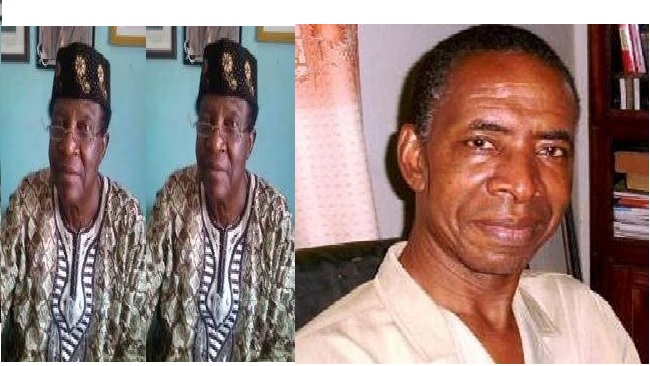
The Academic Staff Union of Universities (ASUU) in Nigeria is to embark upon a campaign on various campuses in Nigeria calling for the immediate release of the six academics deported by the Nigerian government to Cameroon in January.
Since their deportation by military aircraft to Yaoundé on 24 January together with 47 others, followed quickly by news reports announcing they were to appear in court in Cameroon on charges of terrorism, there has been no sign of the detainees. Attempts in May by their legal representative Abdul Oroh to find them in Yaounde also produced nothing.
In an exclusive interview with University World News, barrister Oroh, who is representing the detainees at the bequest of their families, confirmed that those forcefully deported from Nigeria were members of a political organisation demanding reform of Cameroon’s Constitution with a view to returning the country to genuine federalism.
Such an arrangement would give Francophone and Anglophone components equal status. It would also give equal recognition to French and English Languages.
“This liberal reform is what the central government of Cameroun is equating to terrorism. My clients are peace-loving gentle men and women. We would do everything legally possible to secure their immediate release so that they can go back to their campuses and resume their teaching and research work,” he said.
‘Fearless scholars’
Dr Baiyah Quodus, an academic in the Economics Department of Ado Bayero University, Kano, said he knew some of the expelled academics and described them as “fearless scholars and sound intellectuals who have contributed to the academic development of Nigeria”.
Professor Akintan Onileara of the Philosophy Department at Obafemi Awolowo University said he knew two of the expelled lecturers. “They are hard-working teachers, Pan-Africanist and unrepentant promoters of African Development. At conferences and seminars, they kept reminding all of us about the need for Africa to invest in education and vocational training.
They never hid their sadness over the poor human rights records in Cameroon and elsewhere on the African continent.”
Dr Ekong Akpan of the Philosophy Department at the University of Uyo said he knew three of those detained and some of them had been married to Nigerians and living in Nigeria for more than 29 years. “So, Nigeria has committed a crime against her own citizens,” he said. “More worrisome is the fact that Nigeria has no extradition treaty with Cameroon. This has added another dimension to the injustice and disrespect for international law.”
Seeking to travel to Yaounde in search of the academics and out of concern for their health and safety, Orah and his colleague Femi Falana approached the Cameroonian High Commission in Abuja earlier this year.
“We were armed with a letter for such visit. We met with the High Commissioner, Ambassador Ibrahim Salaudeen, who received us warmly and promised that he would transmit our request to Yaoundé and that we would surely get a reply,” Oroh said.
After waiting for four weeks without a reply from the Ambassador, Oroh flew to Cameroon on 14 May 2018 accompanied by a bilingual Nigerian journalist who had previously worked in Yaoundé.
“We spent five days in Yaounde visiting the ministries of justice, foreign affairs and the headquarters of Cameroon’s Human Rights Commission. Those we talked to could not confirm or indicate the whereabouts of our clients,” he said.
Safety concerns
The two men left the country without meeting the detainees and without establishing their safety. Oroh said if the detained lecturers were not sent for trial, their safety could not be guaranteed. “I sincerely hope that they would be released as soon as possible,” he said.
According to diplomatic sources in Abuja, the United Nations High Commission in Charge of Refugees and Amnesty international is pressuring leaders of Western democracies to ensure that these detained university teachers are released as soon as possible and sent on voluntary exile to countries of their choice.
According to Dr Adewale Suenu, Accademic Staff Union of Universities secretary based at Lagos State University, the union is shortly to commence a campaign on various campuses in Nigeria appealing to both the Nigerian and Cameroonian government to effect the immediate release of the university teachers.
Meanwhile, university teachers on various campuses, including Professor Bissong Harstrop of the Law Faculty at the University of Calabar, say the deportation is a clear violation of human rights. “The unlawful repatriation of lawful persons is a clear case of rights violation,” said Harstrop.
Dr Abdullahi Ango from the Psychology Department at Ado Bayero University, Kano compared the expulsion of the academics to the similar treatment of Professor Patrick Wilmot in the 1980s. Wilmot was a sociologist working at the Ahmadu Bello University, Zaria.
“He was expelled for reasons we are yet to be told. We should note that the sudden arrest and illegal repatriation of these university teachers of Cameroonian nationality is against the fundamental human rights to which Nigeria is a signatory,” said Ango.
Unclear rationale
Professor Richard Anselm of the Sociology Department in Umaru Musa Yar Adua University, Katsina, noted that the rationale behind the repatriation of the academics was unclear and called on civil rights organisations and movements in both Nigeria and Cameroun “to rise up and defend these university teachers”.
Dr Schwarnang Ankhol Law Faculty, University of Jos accused the Nigerian government of contravening the basic tenets of ECOWAS, which supports free movement of citizens to work and reside anywhere within West Africa. “The Nigerian government must be made to realise that she has a duty to protect the rights of all foreign residents working and residing in Nigeria,” he said.
Dr Ahmed Akwanga of the Political Science Department at Benue State University, Makurdi, urged ASUU to take up the matter urgently, while a number of other academics canvassed noted the fact that the deportations were in in violation of human rights.
Professor Ishaq Bawwana from Afe Balola University’s Criminology Department, for example, said both Nigeria and Cameroon should be reported to ECOWAS and the African Union’s Human Rights Commissions for violation of the individuals’ rights.
Professor Sheriff Ikhman, based at the Law Faculty at the University of Maiduguri, called on Amnesty International to intervene.
Source: University World News