17, July 2021
Southern Cameroons Crisis: Yaoundé says Amba fighters disguised as military kill, loot 0
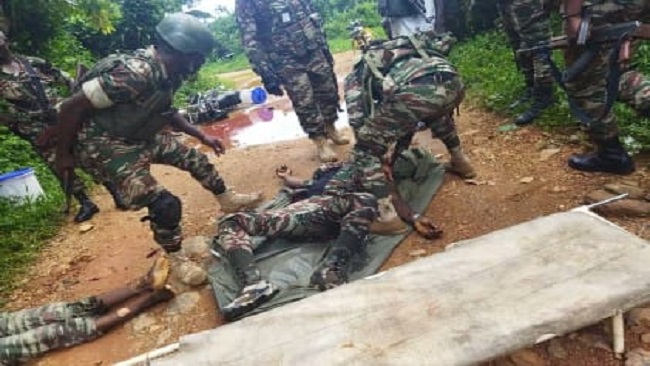
Cameroonian officials say anglophone rebels are taking a new tack in their fight to break away from the country’s French-speaking-majority. Officials say the separatists have started disguising themselves as military troops to infiltrate villages and launch attacks.
In a video widely circulated on social media platforms, including Facebook and WhatsApp, a group of 10 men armed with AK-94 assault rifles claim they are separatist fighters. The men, in civilian clothing, appear to brandish Cameroonian military uniforms, guns, ammunition and bulletproof vests they say they seized from Cameroon military. The men display a man’s head claiming it is that of a government soldier they killed and beheaded.
Cameroon’s military says the head displayed by the fighters as a trophy is that of one of its troops deployed to Babadjou, a French-speaking commercial town on the border with the English-speaking North-West region.
Awah Fonka, governor of Cameroon’s West region, where Babadjou is located, said more than 20 English-speaking separatists from Pinyin, a town in the North-West region, infiltrated the French-speaking West region Wednesday. He said the fighters attacked government troops and looted Babadjou shops.
Fonka said two government troops were killed by fighters disguised in Cameroonian military uniforms to fool the government troops.
Fonka visited Babadjou on Wednesday. He encouraged civilians who fled into the bush to return home.
Fonka said more government troops have been deployed to Babadjou and neighboring villages to find fighters hiding in the bush or among civilians.
The Cameroonian military warned both separatists and civilians against wearing military uniforms in a statement.
Separatists claim on social media they are in possession of several hundred Cameroonian military uniforms removed from the bodies of government troops they have killed. The fighters said some of the uniforms were seized from military camps they have attacked in the English-speaking western regions.
The military acknowledges that the fighters seized uniforms and military weapons from government troops but says the number of weapons and uniforms seized is low.
Peter Ngumulah, a 38-year-old college teacher, has been living in Babadjou for two years and says he fled fighting between government troops and separatists in the town of Bambili in the North-West region. Ngumulah says the government should increase the number of its troops in Babadjou.
“For heaven’s sake, how can just two soldiers be at the border [post between the West and North-West regions], knowing the sophisticated weapons the separatist fighters now possess?” he said. “Everything is going out of hand, and I pray the international community will step in and force both parties to sit at a roundtable for an unconditional dialogue.” Fonka said five troops were at the military control post at Babadjou when the fighters attacked. Three troops escaped, with one suffering injuries from the shooting. The military said he is responding to treatment in a hospital.
This is not the first time English-speaking separatists have infiltrated the French-speaking region. The fighters attacked the French-speaking village of Galim three times this year and killed at least seven government troops. The military said the rebels stole weapons and deployed additional forces to kill or arrest the fighters.
Cameroon’s separatists have been fighting since 2017 to create an independent English-speaking state in the majority French-speaking country’s western regions.
The conflict has cost more than 3,000 lives and forced 550,000 people to flee to French-speaking regions of Cameroon or into neighboring Nigeria, according to the United Nations
Source: VOA


18, July 2021
Geneva: Protesters Rally Outside President Biya’s Hotel 0
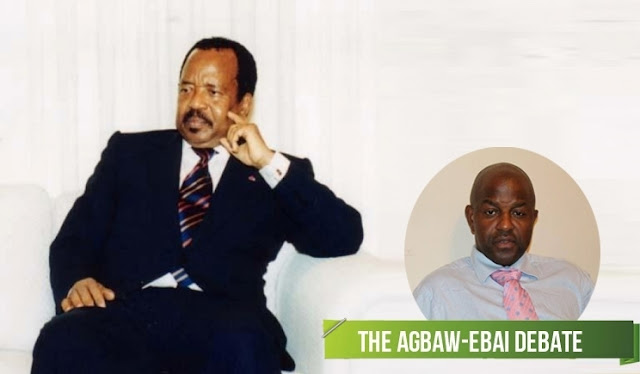
Around a hundred protesters demonstrated in Geneva on Saturday against Cameroon President Paul Biya, who is staying in one of the Swiss city’s top hotels.
Demonstrators rallied close to the Intercontinental Hotel, where the 88-year-old leader has been staying since at least Sunday.
The hotel is regularly used by visiting foreign leaders and was where US President Joe Biden stayed before his summit with Russian President Vladimir Putin last month. Biya is an occasional private visitor.
A bitter independence struggle by English-speaking rebels has been raging in Cameroon’s Northwest and Southwest (NOSO) regions since 2017.
Members of the anglophone minority in the country’s westernmost provinces have long complained of being marginalised by the French-speaking majority and Biya, in power for 38 years.
From 2017, their protests devolved into a bloody conflict.
Saturday’s demonstration in Geneva was initially authorised and then banned.
The police warned on Wednesday that as had happened two years ago during Biya’s last visit, when pro- and anti- demonstrators clashed, the protest could spill over and “cause inconvenience”.
The police urged local residents to close their windows and avoid moving around in the area.
Traffic restrictions were imposed around the Intercontinental and the Place des Nations square in front of the main United Nations building in the city.
Demonstrators were faced with a line of police officers in riot gear blocking the road from the square to the hotel.
They held up home-made signs saying, “Switzerland supports dictator Biya”, “Paul Biya: eternal dictator”, “We don’t want you in Switzerland anymore as long as NOSO is at war”, and “Biya get out”.
One man wore a t-shirt reading “Stop genocide on Cameroonians”.
Another man was pulled down by police after attempting to scale the gates of the UN.
Since Biya’s visit began, several small groups of opponents have been dispersed.
Three people were arrested at the start of the week, while a dozen others were detained on Friday.
In Cameroon, since the unrest erupted in 2017, the rebels have extended their violent attacks against police and soldiers to civilians.
UN and international aid groups say both army troops and anglophone rebels have committed abuses and crimes against civilians. In the past four years, more than 3,500 people have been killed and over 700,000 have fled their homes to escape the conflict.
Source: AFP