
14, April 2021
Ambazonia Interim Government slam silence on French Cameroun crimes 0
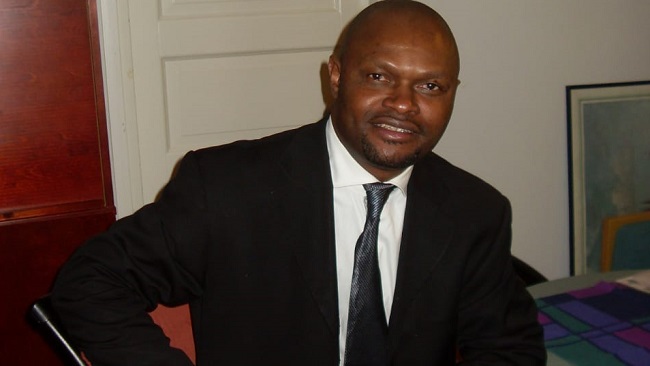
The Vice President of the Southern Cameroons Interim Government Dabney Yerima has slammed the international community’s silence in the face of French Cameroun’s illegal acts in Ambazonia homeland.
During a recent trip to four Southern African states, the exiled Southern Cameroons leader echoed the position of President Sisiku Ayuk Tabe, leader of the Ambazonian nation that Southern Cameroonians should be strong, determined, courageous and steadfast and that freedom and the independence of Southern Cameroons is priceless.
Vice President Yerima called for international action amid the continued detention of the Ambazonia leader and his top aides including thousands of innocent Southern Cameroonians in French Cameroun jails and detention facilities. Yerima also slammed the French government of President Emmanuel Macron as a key partner in exacerbating the suffering of millions of Southern Cameroonians.
In Namibia and Tanzania, Yerima told local MPs and civil rights leaders that La Republique du Cameroun’s military onslaught on Southern Cameroons has caused a severe shortage of basics, including fuel, food and water, leading to numerous deaths.
The mineral-rich but poverty-stricken Southern Cameroons territory has been unstable since the forced unification with French Cameroun.
Thousands of people have died since President Biya declared a war against the English speaking people four years ago and more than a quarter of the population have fled their homes. Of these, 75,000 are refugees in neighbouring Nigeria.
Even though bloodshed has receded in intensity over the last few months, violence remains chronic as Ambazonia Restoration Forces and militia groups hold sway over two-thirds of the rural areas.
By Chi Prudence Asong in London














15, April 2021
Much of Cameroon is losing power daily in massive blackouts 0
A war of words has reportedly erupted between Cameroon’s Electricity Regulatory Agency (Arsel) and the concessionaire for the distribution of electrical energy in Cameroon (Eneo). The regulator has accused the company of numerous acts of abuse against defenseless Cameroonian consumers, serious breaches and recurrent violations of the law.
Most of French and Southern Cameroons, including the capital Yaoundé and many major towns, lost power for days recently in one of the biggest blackouts to affect Cameroon ever since President Biya took office. The cause is not immediately clear as power failure continues to affect the entire nation.
Cameroon Concord News understands the Arsel-Eneo tug-of-war is a CPDM crime syndicate technique to shift the blame from failed government policies and corruption deep within the energy sector to Eneo.
On Monday, the Francophone dominated regulatory agency said in a statement that Eneo was involved in what it painted as non-respect and violation of the public electricity distribution regulations; abusive suspension of electricity supply to customers; untimely cuts in electricity supply, over-billing and imaginary frauds.
Added to this complex relationship between Arsel and Eneo, some customers, supplied by delivery points regularly connected to the metering equipment fixed outside their homes or offices have also been accused of fraud and gross violation of Article 13 of the energy regulation.
It is a common practice in French Cameroun particularly in the cities of Douala and Yaoundé for French speaking Cameroonians to take electrical energy outside the quantities measured by the meter by falsifying the indications of the meter, as well as breaking of the seals.
The so-called Cameroon energy regulator has given Eneo a warning notice to comply with the law within a week. However, every aspect of the Cameroonian life is linked to the ruling CPDM crime syndicate where no one takes responsibility, no one apologize, and no one resigns.
Also playing the game of the consortium of crime syndicates, the Cameroonian League of Consumers (LCC) in a publicized declaration, congratulated Arsel for the formal notice against Eneo. A copy of the LCC statement signed by its executive president Delor Magellan Kamgaing was sent to the presidency of the republic.
For several months now, all major towns and cities in Cameroon have been suffering from untimely power cuts, causing serious economic repercussions and considerable domestic damage.
The company Eneo attributes these blackouts to the collapse of the electricity transmission network, the maintenance of which is a source of much ink and spit.
By Soter Tarh Agbaw-Ebai