9, October 2020
Southern Cameroons Crisis: Cross River State in Nigeria urges UNHCR to solve Ambazonia refugees’ influx 0
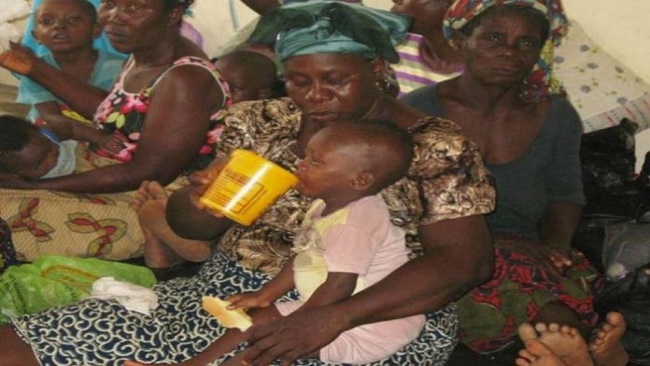
CROSS River State government on Wednesday urged the United Nations High Commissioner for Refugees (UNHCR) to find a lasting solution to the increasing number of Cameroonian refugees in the state.
Commissioner for International Development Cooperation, Dr. Inyang Asibong, spoke yesterday in Calabar, the state capital, when a team from UNHCR visited her.
The News Agency of Nigeria (NAN) reports that the visit was to discuss the state of response on Cameroonian refugees and to seek collaboration with the Ministry.
Asibong stressed that there was need for urgent actions to address the disturbing situation.
She added that the state government had continued to be a “bed net” for both Cameroonian refugees and other migrants in neighboring countries that have a common border with Cross River.
The commissioner assured the team of the state government’s continued support for Cameroonian refugees and immigrants in spite of its lean resources.
“Cross River under Governor Ben Ayade has continued to provide support for Cameronian refugees and immigrants in spite of the state’s lean resources and these responsibilities should be supported by all institutions involved,” she said.
Earlier, Ms. Janet Okello of the UNHCR had praised Ayade for providing an enabling environment for the commission to operate effectively over the years in the state.
Okello noted that the stepping up of engagement with International partners through the establishment of Ministry of International Development Cooperation to coordinate their activities was highly commendable.
She assured the state government of UNHCR’s commitment to find long term solutions to the problem of Cameroonian Refugees in due course.
Source: News Agency of Nigeria




















9, October 2020
Systemic poverty in Cameroon illustrates the complex barrier poor people face 0
Nodem, who’s from Cameroon, is the Presbyterian Hunger Program’s Associate for International Hunger Concerns. Serving in Lima, Peru, Koball is a mission co-worker serving with the Peru Joining Hands Network.
Nodem spoke about colonization and globalization. He said that although Cameroon gained its independence from Great Britain and France 60 years ago, it’s as if colonizers are still present. In part that’s because Cameroon’s natural resources — including oil, timber and coffee — are exported. Value is added in other countries, and the money made by selling those products remains outside Cameroon’s coffers.
He identified three drivers of colonization in Cameroon: gold, God and glory. The first two are fairly well-known: colonizers had a financial interest in extracting natural resources and were also interested in converting people to Christianity. The “glory” part “was about showing your influence,” Nodem said. “What resources did you find there? It was about showing power.”
As a result of the 19th century “Scramble of Africa,” countries were sliced up arbitrarily, he said. “They weren’t thinking about the consequences” of the warfare those practices would help bring about.
“Colonization makes people feel powerless in their own country,” he said. “The system is still strongly governed by foreign powers who robbed countries of a lot of resources. It’s ripped up regions that used to live in peace.”
As a college student in Cameroon, Nodem “was always going to pretty much any demonstration,” he said. “My parents were always upset. They said, ‘Stay out of trouble and don’t do anything.’” Later they told him it’s because they feared for his life.
Source: Presbyterianmission