
2, August 2024
Cameroon Bribery Scandal: UK billionaire charged with corruption over role 0
Alex Beard, the billionaire former head of oil at Glencore Plc, was charged with corruption by the UK’s top fraud agency, alongside four other ex-employees from the commodities trader.
The UK’s Serious Fraud Office accused Beard of conspiring to make corrupt payments to benefit Glencore’s oil operations in West Africa. The agency alleges he conspired to make the payments to government officials and employees of state owned oil firms in Nigeria between 2010 and 2014, and Cameroon between 2007 and 2014.
Beard, 56, who was one of Glencore’s top executives for more than a decade before his departure in 2019, is the highest profile individual to be charged in a sweeping series of investigations into corruption and market manipulation at the company – and one of the most senior commodity traders ever to be charged with wrongdoing.
Also facing criminal prosecution is Andy Gibson, 64, Glencore’s ex-head of oil operations and for years Beard’s second in command. The SFO charged him with four conspiracies of making corrupt payments in Nigeria and Cameroon between 2007 and 2014, and Ivory Coast between 2007 and 2010. He was also alleged to have conspired to falsify invoices between 2007 and 2011.
Additionally, Paul Hopkirk, Ramon Labiaga and Martin Wakefield, former Glencore employees involved in trading West African oil, stand accused of conspiring to make corrupt payments to government officials and employees at state owned oil companies in Nigeria, Ivory Coast and Cameroon.
Wakefield is separately charged with one conspiracy to falsify documents between 2007 and 2011.
All the men are scheduled to appear at Westminster Magistrates Court in London on Sept. 10. Lawyers for Beard and Gibson declined to comment. Lawyers for the other men didn’t immediately respond to requests for comment.
“Today’s action is an important step toward exposing overseas corruption and holding those who are responsible to account,” Nick Ephgrave, director of the Serious Fraud Office, said Thursday.
Glencore in 2022 pleaded guilty to corruption and market manipulation cases in the US and UK, admitting that it had paid bribes to win business in eight countries from Brazil to South Sudan and paying about $1.5 billion to resolve the investigations against it.
“Glencore cooperated with the SFO in its investigation into this past conduct and resolved its SFO investigation in 2022,” a Glencore spokesperson said noting the charges. “We are committed to acting ethically and responsibly across all aspects of our business and have taken significant action towards building a best-in-class Ethics and Compliance Programme.”
Until his departure from Glencore in 2019, Beard was part of the inner circle of former chief executive Ivan Glasenberg as one of a dozen department heads who made up Glencore’s management board. After working at BP Plc, he joined in 1995, becoming head of oil in 2007 and was known for his acumen trading Russian oil. When the company listed in London in 2011 he was revealed to be one of its largest shareholders with a stake worth $2.8 billion.
After leaving Glencore he started an investment company, Adaptogen Capital, to invest in large-scale batteries connected to the UK grid. He has been a major donor to Christ Church College at Oxford University and a trustee of Shakespeare’s Globe theatre in London. His net worth was estimated at £1.2 billion in the latest Sunday Times Rich List.
Beard’s role at Adaptogen Capital ended on July 12, according to a filing at Companies House.
“Alex Beard is no longer a director of the company having resigned in July 2024,” a spokesperson for Adaptogen said on Thursday. “It remains business as usual at Adaptogen.”
Source: BNNBloomberg

















3, August 2024
UN Human Rights Chief en route to Yaoundé 0
UN High Commissioner for Human Rights Volker Türk will conduct an official mission to Cameroon from 5 to 7 August.
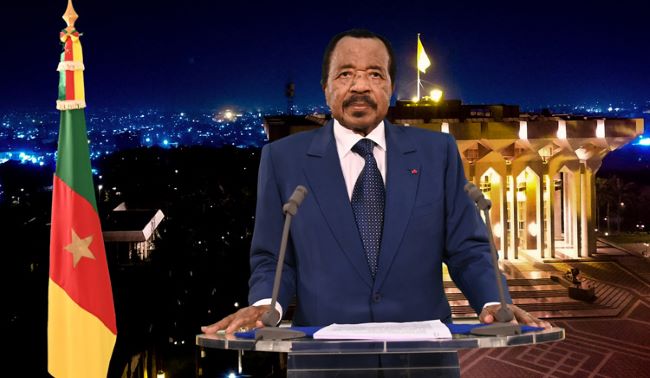
During his visit, Türk is scheduled to meet senior Government officials, including President Paul Biya and Prime Minister Joseph Dion Ngute, as well as members of a wide range of political parties, officials of the Cameroon Human Rights Commission, representatives of civil society organisations, members of the diplomatic corps and UN entities.
The Human Rights Chief will also inaugurate new premises for the Central Africa Regional Office (OHCHR-CARO) in the capital Yaoundé. The Office covers Burundi, Cameroon, Central African Republic, Chad, Congo, Democratic Republic of Congo, Equatorial Guinea, Gabon, Rwanda, and São Tomé and Príncipe.
This is the first visit by High Commissioner Türk to Cameroon. Türk’s predecessor visited the country in May 2019.
A press conference will be held on Wednesday, 7 August in Yaoundé. Access will be limited to accredited media and details will be communicated locally.
Source: ohchr