5, June 2023
40,000 looted artifacts from Cameroon in German hands 0
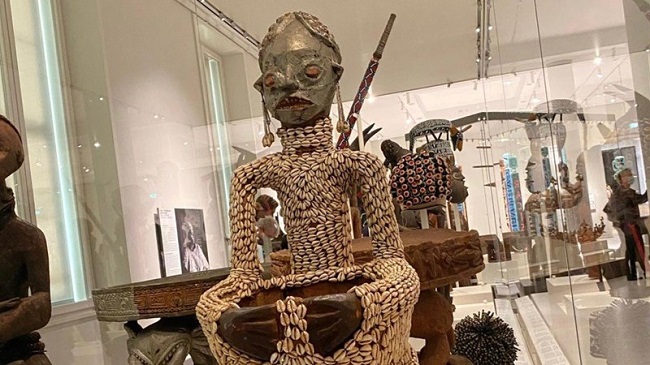
According to a recent study released on Thursday by Bénédicte Savoy of the Technische Universität Berlin and Albert Gouaffo of the University of Dschang in Cameroon, German museums that house world cultures have 40,000 Cameroonian artifacts, which is more than the British Museum’s entire African collection, The Art Newspaper reported.
There are roughly 6,000 pieces in the state collections in Yaoundé, the capital of Cameroon. Savoy stated that the majority of the 40,000 pieces in German museums are in depots and not on display, pointing out that this enormous number excludes, among other things, items in natural history museums, archaeological discoveries in prehistory museums, and any items in private collections.
The new study, titled Atlas der Abwesenheit (Atlas of Absence), was backed by 45 German museum curators and took two years to complete. It is now available to the public via open access.
Germany declared Cameroon a colony in 1884, motivated by the desire to increase commercial prospects. Until the First World War, Germany utilized increasingly violent methods to repress significant local resistance. After the war, the region was divided between the French and the British. Over the course of more than 30 years of German control, colonial troops conducted at least 180 “punitive expeditions” to secure land, destroying communities, farms, and cultural landmarks.
Savoy noted that because the brutal robbery on that occasion was carried out by British troops rather than German troops, it may have been simpler for Germany to concentrate first on returning the Benin bronzes to Nigeria. “Confronting one’s own acts of brutality requires more political and psychological work,” she remarked.
Officials from the Cameroonian embassy emphasized the importance of restitution during a panel discussion to unveil the report in Berlin. According to Maryse Nsangou Njikam, a cultural advisor at the Cameroonian embassy in Germany, “Germany is full,” but “Cameroon is empty.”
“We must have these objects back. We need them to build the future. Restitution is the cherry on the cake, the goal we are heading for,” she noted.
A commission for reparation has been established by the Cameroonian government, including members from the foreign, education, and culture ministries, as well as the traditional royal rulers, civil society, and academia.
“It has started work and meets regularly with museum directors in Germany,” she said, adding, “We are still a long way from restitution because several steps have to be taken first,” Nsangou Njikam said.
The artifacts at German museums of world culture include textiles, musical instruments, ceremonial masks, royal treasures like stools and thrones, texts, tools, and weapons — “none of which were conceived as display objects for vitrines,” Savoy claimed.
Some of the items mentioned in the study include a beaded stool from Bagam that was stolen during a punishment exhibition and returned by an army officer and is now in the Linden Museum in Stuttgart, in addition to a beaded cap that belongs to a Cameroonian leader, in the Linden Museum, that was one of 237 objects plundered over 2.5 years by a German officer.
The Linden Museum, which has more than 8,000 Cameroonian artifacts, the Ethnological Museum in Berlin, and the Grassi Museum in Leipzig each has more than 5,000. German museums “have a lot of homework to do,” according to Léontine Meijer-van Mensch, director of the Grassi Museum, who stated this during the panel discussion.
Source: English almayadeen.net

















5, June 2023
Cameroonian child’s body found in Tunisia after migrant ships sink 0
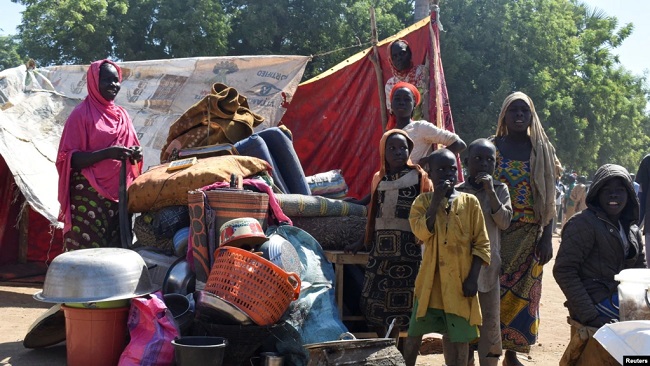
The Tunisian coastguard on Friday recovered the body of a young child thought to have drowned at sea when two vessels carrying migrants sank in the Mediterranean, a journalist working with news agency said.
The child’s body, dressed in a pink jumpsuit and grey woollen cap, was discovered during a patrol off the coast of Sfax, Tunisia’s second city, according to the journalist who was accompanying the coastguard.
The child was likely from Cameroon, as more than 200 Cameroonians had been rescued in the last two days, the coastguard undertaking the operation said.
The child’s mother was believed to have been one of the people missing after the sinking of two boats earlier in the week, they added.
The Cameroonian embassy in Tunis was nonetheless unable to confirm this information when contacted.
Local court spokesman Faouzi Masmoudi meanwhile said that two boats carrying migrants from sub-Saharan Africa sank off Sfax’s coast on Wednesday.
Six people died and 39 were rescued from the first boat, while 12 people from the second boat were rescued and 41 others are missing, he said.
Tunisia, whose coastline is less than 150 kilometres from the Italian island of Lampedusa, has long been a favoured launching point for migrants attempting the perilous sea journey from North Africa to Europe.
The flow of migrants from Tunisia has intensified since President Kais Saied made a fiery speech on February 21 claiming illegal immigration was a demographic threat to Tunisia.
Source: AFP