14, January 2022
Ambazonian insurgency serious concern to us-Nigerian Immigration Chief 0
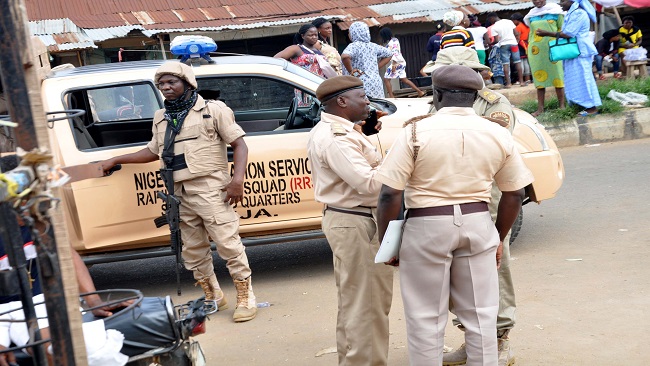
The Comptroller of Immigration Service (CIS), Cross River State Command of the Nigeria Immigration Service, Chris Baikie, has disclosed that the ongoing conflict between South-West Cameroon, called Ambazonia, and President Paul Biya’s soldiers is a serious concern to the service and other security agencies in the state.
In an interview, he stated that the matter is always discussed whenever the state security council meets.
He said Cross River State frequently bears the fallouts of the insurgency which is into its sixth year because it is next to the conflict zone.
“At every state security council meeting with the governor, Prof Ben Ayade, we do not fail to critically look at the insurgency as it impacts on our state and Nigerians.
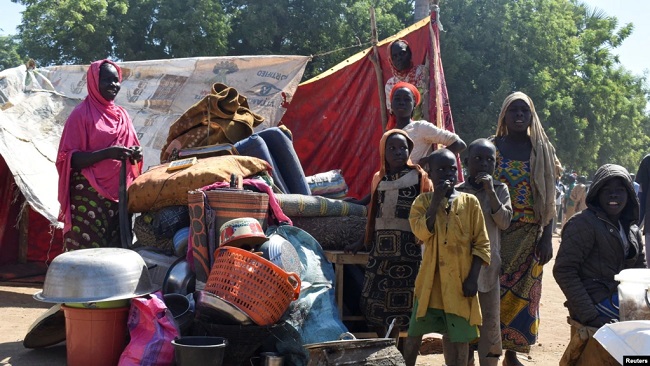
“The conflict is a serious concern to us because of its proximity to our state, not only because of the influx of refugees but other attendant issues,” he said.
He used the opportunity to debunk reports which said that Nigerian traders, seafarers and other maritime persons were being blocked or turned back at the Cameroonian maritime boundary in the Bakassi Peninsula by Cameroonian security forces.
Two weeks ago, reports were rife that traders in Bakassi and Akpabuyo local government areas of the state, who ply the maritime route into Cameroon to buy or sell bags of rice, palm oil and other edibles, were being returned.
It was alleged that the Cameroonians did so because they do not want security issues from Nigeria as they host the Africa Cup of Nations.
“When I got the media enquiries, I immediately got across to our men in Bakassi to critically study the situation and to Interview Nigerian traders going to or returning from Cameroon if the media reports were true.
“The situation report from our man in charge of Bakassi axis is that there is no such development,” he said.
“Nigerian traders are not turned back from Cameroon.
“But Cameroonian security forces are patrolling their borders daily as a way to deter any threats to the ongoing African Nations Cup.”
Baikie lamented that they have only one serviceable boat and are therefore not able to patrol the long stretch of the maritime boundary as well.
Source: Daily Post













16, January 2022
Former president of Mali Ibrahim Boubacar Keita dies at 76 0
Mali’s former president Ibrahim Boubacar Keita, who led the West African country from 2013 until he was ousted in a coup in 2020, died at the age of 76 in Bamako Sunday, his family said.
Keita was two years into his second five-year term when in 2020 he faced widespread street protests against his government and was toppled by the military, which is now under regional sanctions for failing to restore civilian rule.
“President IBK died this morning at 0900 GMT in his home” in Bamako, a family member told AFP, using the former leader’s initials; several other family members confirmed his passing.
The cause of Keita’s death was not given.
In the weeks before the 2020 coup, he had been struggling with protests fuelled by his handling of a jihadist insurgency and failure to turn around Mali’s floundering economy.
Snail-paced political reforms, decrepit public services and schools, and a widely shared perception of government corruption also fed anti-Keita sentiment, driving tens of thousands of protesters into the streets.
Keita was forced out of office on August 18, 2020 by young military officers who staged an uprising at a base near Bamako before heading into the city, where they seized Keita and other leaders.
Under pressure from the West African bloc ECOWAS, the junta that emerged from the rebellion released Keita on August 27 and returned him to his residence in Bamako, under surveillance.
He suffered a mini-stroke the following month, and was sent to United Arab Emirates for treatment.
Campaigning credentials
The ruling junta would stage another coup in May 2021.
ECOWAS this month agreed to sanction Mali after the junta proposed it would to stay in power for up to five years before staging elections – despite international demands that it respect a promise to hold the vote in February.
The son of a civil servant, Keita was born in the southern industrial city of Koutiala, the declining heartland of cotton production.
After studying literature in Mali, Senegal and France – his great-grandfather was a French colonial soldier who died in the Battle of Verdun in World War I – Keita became an adviser for the EU’s overseas development fund before heading a development project in northern Mali.
He campaigned against general Moussa Traore, Mali’s former president ousted in 1991 by a military coup.
He then rose through the ranks under Alpha Oumar Konare, the country’s first democratically elected president.
As a socialist prime minister between 1994 and 2000, he quelled a series of crippling strikes, earning a reputation as a firm leader and helping to set up his landslide election in 2013 – when he finally ascended to the presidency after losing runs in 2002 and 2007.
Source: AFP