3, May 2021
Calabar: Over 200 Southern Cameroons refugees receive vocational skills 0
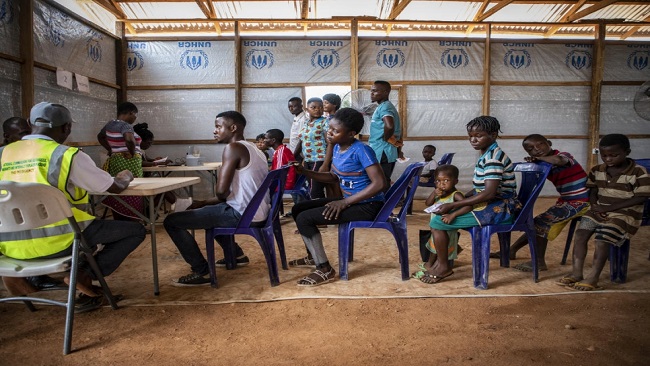
About 200 refugees living in Cross River have been trained on various vocational skills by the Community Refugee Relief Initiative, CRRI in Calabar, Ogoja, and Ikom.
Vanguard learned that they were trained by different professionals on various skills including ICT, aluminum work, tailoring and fashion design, pastries, and cake making amongst others.
Speaking during the graduation ceremony at the weekend at the ICT career empowerment centre in Agagom, Ogoja, the Chairman, Board of Directors, CRRI, Dr. Celestine Atangcho stated that the crisis will surely come to an end and people will go back home, but the essence of empowering them through various skills acquisition programs was to ensure they can take care of themselves independently.
He said the various training was to equip them with the skills that can help them feed their families before and after the crisis.
According to Atangcho, there were a lot of bright and industrious young people who were just languishing at various locations because they left their comfort zones and businesses abruptly and cannot continue their former trade here in Nigeria.
There are many of the Cameroonians who were gainfully employed or working for themselves before the crisis started about 5 years ago, many of such persons may not have the opportunity to go back to the same business again while some would.
” But in the interim, we feel it is pertinent for them to gain knowledge in other files which will become useful to them both here in Nigeria and also when they get home after the crisis.
“A lot of these refugees have been involved in livelihood programmes. Today, some students, trainees who have completed their livelihood programmes have graduated and we will support them in the little way we can.
” So on a brighter side, we’re hopeful that with the skills that they’ve acquired, they’ll be able to fend for themselves, feed themselves, feed their families and we’re hoping that we will continue with that kind of empowerment programmes.
” So that is one area that we’re very happy that it’s happening today with these trainees graduating from Calabar, Ikom, Ogoja and hopefully in a few months to come, we’re going to go to Taraba to do the same exercise there.
“One year ago, I was talking to you, we were launching the center, and today, we’re happy to know that a few refugees have gone through that training and their lives, hopefully, will never be the same.
“We are trying to open up some workshop so that they will go in and get busy and hopefully attract some revenue to sustain themselves and hopefully that workshop will serve as a future training ground for more refugees so that is the plan going forward. We’re just praying that we have the resources to follow through.
Speaking earlier in Calabar, Administrative Assistant of CRRI in Nigeria, Mr. Allan Agbor said the training was a continuous process as various trainees come in batches and different phases too with ICT, barbing, Aluminum works, catering, pastry, and cake baking amongst others.
“We are here today at the Calabar office at Caritas to graduate the students that we’ve trained in various vocational areas here in Calabar precisely tailoring, hairdressing, barbing and some persons are still continuing their training.
Agbor said:” Over 180 persons took part in various training from different fields, we have 38 persons from the fields of tailoring, hairdressing,
“Over 156 persons in ICT, Furniture, and glassworks here in Calabar, as well as motor mechanics and they, would be put into workshops fully equipped workshops sponsored by CRRI where they will practice as business persons operating the place and they will also be like coaches to train subsequent batches of trainees.
“Also, we have a monitoring team to take make sure they become resourceful, besides the coordinator for CRRI here in Calabar, we have selected persons who go round to ensure they are useful and effective at their job.
For his part, Mr. Ojong Samuel who spoke on behalf of the refugees, lauded CRRI for their magnanimity describing the training as a life transforming experience.
” We are very excited and elated about this huge gesture by CRRI, it’s not an everyday thing, and we don’t take it for granted, we really want to commend the entire CRRI team , especially Dr. Celestine Atangcho for his big heart .
” As for me, I used to be a driver while in Cameroon, but I can no longer do that here with ease unless I have my own vehicle, but with my training in glass and Aluminum works, I can train my six children and pay my bills,” he said.
Vanguard News Nigeria













4, May 2021
Southern Cameroons Crisis: Africa’s Forgotten War 0
Cameroon is concurrently fighting an internal war commonly known as the Anglophone Crisis.
After World War I the country was divided into 80 percent French and 20 percent British territories. The latter was further separated into Northern and Southern British Cameroons.
In the 1960s, part of the British territory joined Nigeria, and the rest was annexed to French Cameroon. Both territories retained a certain level of autonomy as a federation. In 1972, the federation was dismantled, giving French Cameroon executive power over both English and French regions.
When the current president, Paul Biya entered into power in 1982, he changed the country’s name to La Republique du Cameroun. A progressive erosion of the Anglophone culture began to take place, with English speaking teachers being replaced by Francophones; and French magistrates taking over the English common-law judicial system.
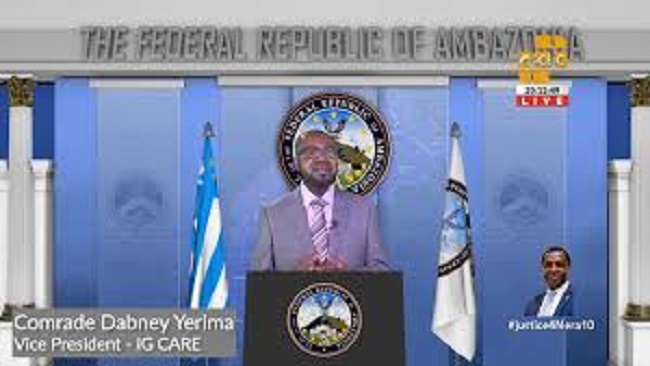
Protests by teachers and lawyers in 2016 turned violent when French military officials were sent in response to the uprisings. A new wave of separatists was formed, declaring independence over the Anglophone side. They refer to this self-declared country as Ambazonia, in reference to the Ambas Bay, a body of water separating the Southern Cameroons region from the republic of Cameroon.
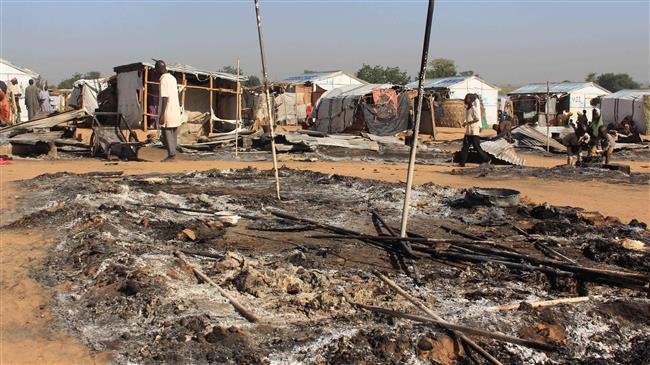
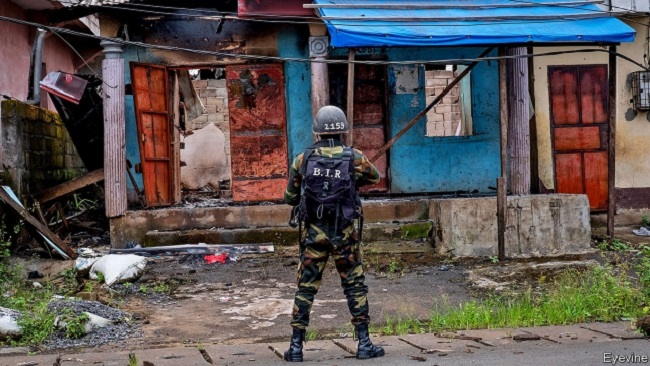
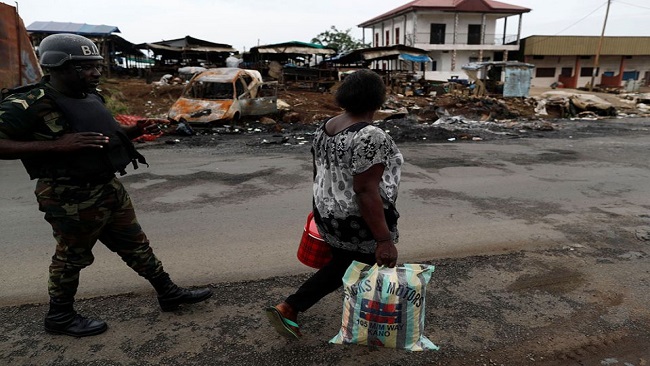
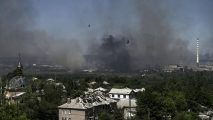
The violence has escalated to the point where civilians often get caught in the cross-fire between military and armed separatists in the country. Villages have been burned, and hundreds of thousands have been displaced. Many are forced to live in the jungle and seek asylum in neighbouring countries. Others have made it further afield, entering countries like South Africa through the Kruger National park, facing natural predators like lions, leopards and rhinoceros along their journey.
“Humans of the Forgotten War” is an umbrella project created by Reframe House for the Victoria Relief Foundation, that will be released in staggered stages to raise awareness on the current situation on the ground. It makes use of conceptual photography and film to interpret the stories of asylum-seekers, refugees, Internally Displaced People (IDPs), and prisoners of war through artistic means.
Collected here are some of the photographs that feature in the project. These images are part of the “Humans of the Forgotten War: Stories” series, with some of the real names changed for safety purposes.
Many have been living hiding in the jungle for months. Those who manage to escape to neighboring countries often live in exile. “For the past ten years I haven’t had a home. I’m still under refugee status, which makes it very difficult to do certain things. It’s like you’re in an open prison. You feel that you’re free but you’re not free because you’re limited in so many things,” said Ben, one of those who spoke to Reframe House for the project.
The United Nations Office for the Coordination of Humanitarian Affairs has identified 4.4 million people in need in Cameroon, with 53 percent of those being children. “There is a complete lack of visibility of the crisis,” said Carla Martinez, Head of Office, OCHA Cameroon.
“The underfunded response means that many of our humanitarian partners are having to close down because they don’t have funds to continue,” added Martinez. The loss of resources will translate into a population that continues to live without adequate medical support, education, shelter or food.
Journalists on the ground are often targeted and turned into victims of torture and violence. They operate in fear, often risking their life to get the stories out. Most people in the anglophone region feel caught up between two evils—the separatists who say they’re fighting for independence, and the soldiers who say they’re trying to protect them.
The already complex conflict of the Anglophone Crisis is further compounded with a rather vast number of belief systems at play in the area. There are those who wish for independence and the creation of an Ambazonian nation, others advocate for effective decentralisation, there are federalists who wish for two, four to six, and ten state federation, as well as con-federalist view points.
As a result of the conflict, there are many who have become prisoners of war — such as journalists, separatists and civilians. Conditions in prison are deplorable, with food being used as a means to control inmates.
The following conceptual images were created with South Cameroonian displaced people representing the sentiments and emotions that prisoners in Cameroon have expressed.
They wear animal masks predominantly from Cameroon, alluding to the feeling of despair and abandonment that many of them experience behind bars. Those being photographed need to protect their identity out of fear of being targeted. They wear Ndop cloth, traditional Cameroonian attire which was once exclusively used for nobility, but later popularised in other regions of the country.
For this project, contact with the French military was established, but they refused to comment. The government did not respond.
Culled from Newsweek.com