7, September 2018
France accuses Russia of trying to spy on Franco-Italian military satellite 0
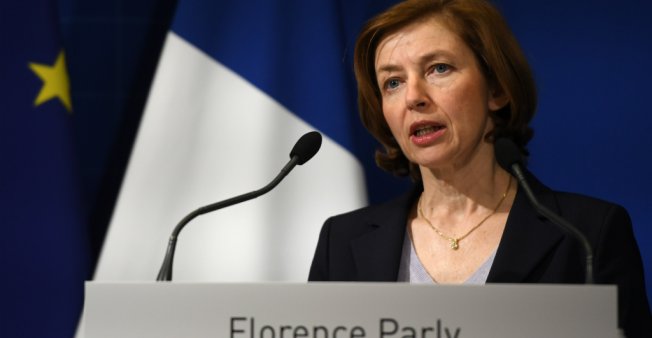
Russia last year attempted to intercept transmissions from a Franco-Italian satellite used by both nations’ armies for secure communications, French Defence Minister Florence Parly said on Friday, describing the move as an “act of espionage”.
In a speech outlining France’s space policy for the coming years, Parly said Russian satellite Louch-Olymp had approached the Athena-Fidus satellite in 2017. Parly said it came so close “that anyone would have thought it was attempting to intercept our communications”.
“Attempting to listen to your neighbours is not only unfriendly, it’s an act of espionage,” she said. Parly said officials took the “appropriate measures” and continued to monitor the satellite after it left, and observed it manoeuvring near other targets as well, she said.
Last month Washington accused Moscow of developing anti-satellite weapons and cited “very abnormal behaviour” of a “space object” deployed by Russia last October.
“We are well aware that other major players in space are deploying intriguing objects into orbit, experimenting with potential offensive capabilities, conducting maneuvers which leave no doubt as to their aggressive intent,” Parly said.
Next year, French President Emmanuel Macron plans to lay out plans for a “space defence strategy” for France, with an advisory committee expected to make proposals by November. “We’re at risk, our communications, our military maneuvers and our daily operations are at risk if we don’t react,” Parly said.
(FRANCE 24 with AFP, REUTERS)



















7, September 2018
Prosecutor confirms probe into Italian minister’s treatment of migrants 0
Prosecutors in Sicily on Friday confirmed a probe into far-right Italian Interior Minister Matteo Salvini for illegal confinement after he refused to allow more than 100 rescued migrants off of a coastguard ship for 10 days.
The public prosecutor’s office in Palermo notified Salvini in a letter that the minister opened and read in a video broadcast live on his Facebook page.
“An organ of the state is probing another organ of the state. With the small difference that you (the voters) elected this organ of the state,” Salvini said in the video.
“The others have not been elected by anyone and are not answerable (for their actions) to anyone.
“It is you who asked this minister to control the borders, to control the ports, to limit arrivals, to limit the departure of illegal migrants,” he added.
The migrants on the Diciotti coastguard ship had been stranded at a port in Sicily before Salvini finally allowed them to disembark on August 26 after Ireland, Albania and the Italian Catholic church agreed to take most of them in.
The 10-day blocking of the Diciotti migrants followed a number of similar standoffs in which Italy turned away ships with migrants rescued at sea in a campaign to make EU countries take their share.
The government has also threatened to stop billions of euros of EU funding over the issue, accusing Europe of turning its back as Italy grapples with seemingly endless migrant arrivals.
– Hard line on migrants –
Salvini, who is also deputy prime minister and the leader of the far-right League party, said on Wednesday that 50 of the 144 Diciotti migrants had since disappeared without trace from reception centres.
These migrants “were so in need of protection, a roof and a blanket that they decided to leave and disappear,” he said on Facebook.
“This is the umpteenth confirmation that those who arrive in Italy are not skeletons fleeing war and famine,” he added.
Since Salvini’s League formed a government with the anti-establishment Five Star Movement (M5S) on June 1, the minister has implemented his party’s hard line on migrants.
Within days of becoming interior minister, he delivered on a campaign promise to close Italian ports to immigrants and asylum-seekers, starting with 600 plucked from the Mediterranean by NGO boat Aquarius, which was instead forced to take them to Valencia in Spain.
That crisis was only resolved after a meeting between Conte and his French President Emmanuel Macron.
Most of those aboard the Diciotti were Eritreans, along with a small number of Somalians, Syrians, Sudanese and Comorans.
Since the start of the year, 3,000 migrants from the former Italian colony of Eritrea have arrived in Italy but less than a thousand have applied for asylum, according to interior ministry figures.
Many Eritreans prefer to continue by land to Germany, Sweden or Britain, despite the heavy controls encountered at the French, Swiss and Austrian borders as well as the EU’s Dublin regulation under which a migrant can only make an asylum claim in the first European country the reach.
AFP