1, September 2025
Douala Port is now the most congested on the West African Coast 0
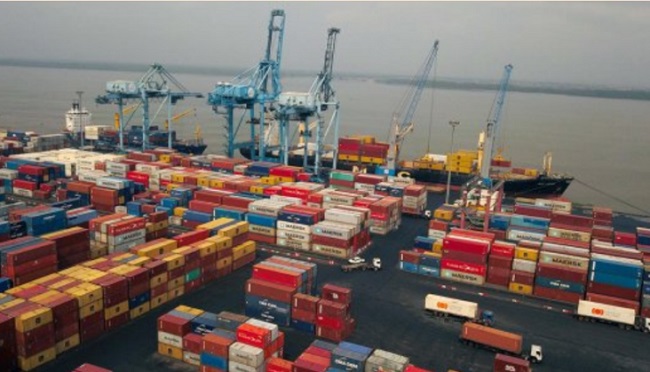
The Douala port is now the most congested port on the West African coast, according to shipping-intelligence platform Gocomet. Vessel delays at the facility reach as long as nine days—two days longer than at Conakry in Guinea, Abidjan in Côte d’Ivoire, or Lekki in Nigeria, where waiting times stand at about seven days.
The bottleneck comes at a port that handles between 75% and 85% of Cameroon’s trade, as well as imports for landlocked Chad and the Central African Republic. Authorities have offered no official explanation. However, data reviewed by the Ecofin Agency suggest that seasonal and logistical factors, starting with vessel navigation, are at play.
Ships calling at Douala must sail up the Wouri River, a route that depends on dredging operations and favourable tides. Heavy rains in Douala may also have complicated conditions, further slowing vessel movements in and out of the channel.
Another factor could be a seasonal surge in traffic. August marks the start of cocoa exports, and demand from Chad and the Central African Republic is also expected to rise. In such cases, the structural weaknesses of the port become more visible. The Port Authority of Douala has announced new investments, but these upgrades have yet to alleviate pressure on facilities that are already stretched to their limits.
Business news outlet Investir au Cameroun noted at the end of 2023 that the port authority planned to invest CFA 12 billion ($21.4 billion at the period’s exchange rate) in 2023 in acquiring eight-yard cranes. However, years of reliance on outdated equipment had created inefficiencies that could still be affecting operations in 2025. Operational inefficiency also extends to management and port users.
Douala’s southern neighbour, the Kribi port, offers a potential alternative with delays averaging just two days and a more effective administration. However, routing cargo through Kribi presents its own challenges, including weaker hinterland connections and higher logistics costs. Among 15 West African ports surveyed, a few post far lower delays, often less than a day. That includes Pointe-Noire in the Republic of Congo, Tema in Ghana, and Onne in Nigeria.
Port congestion across West Africa reflects a complex mix of aging infrastructure, surging cargo volumes, bureaucratic inefficiencies, corruption, tidal and environmental constraints, and global supply-chain pressures. These forces combine to create bottlenecks that prolong vessel turnaround and cargo handling.
Modernization programs and new port developments bring some hope, yet chronic underinvestment and governance shortcomings continue to hold back progress. Easing congestion will require coordinated investments in complex infrastructure, digital systems, and regional logistics to meet West Africa’s rising trade demands.
Source: ecofinagency




















1, September 2025
Yaoundé: US State Department says 14,300 Cameroonians held in pre-trial detention for minor offenses 0
A recent U.S. State Department report on human rights, released August 25, 2024, indicates that approximately 14,300 individuals in Cameroon are currently held in pre-trial detention for minor offenses. The report, citing the Cameroonian Bar Association, estimates that nearly 75% of those awaiting trial are incarcerated for offenses considered minor under local law. The document also highlights the disproportionate impact on minors, raising significant concerns regarding child protection and adherence to international juvenile justice standards.
Cameroonian law stipulates a maximum pre-trial detention period of 18 months. However, the report notes frequent violations of this legal limit, with many detainees awaiting trial for years. This discrepancy between legal provisions and practical application represents a serious breach of fundamental rule of law principles. The case of independent journalist Kingsley Fumunyuy Njoka exemplifies this issue; arrested in 2020 for articles related to the Anglophone crisis in the Northwest and Southwest regions, he was held for over four years before being sentenced in September 2024 to ten years in prison. Charges against him included secession and complicity with armed groups, despite his initial arrest being linked to his writings.
Structural factors contribute to these prolonged detentions, according to the report. Key issues include pervasive corruption within the judicial system and a severe shortage of court personnel. Additional challenges encompass mismanagement of case files, leading to delayed or lost procedures, and detainees’ frequent inability to cover legal costs. The report also points to systematic denials of bail, even when legal conditions for release are met. Furthermore, some legal proceedings are reportedly influenced by political considerations, requiring directives from higher authorities before judgment.
Despite these practices, the Cameroonian Constitution prohibits arbitrary arrests and detentions. It also guarantees citizens the right to challenge the legality of their arrest or detention before an independent court and to seek compensation for damages resulting from unlawful detention. These constitutional safeguards, though clearly articulated, are largely disregarded in the daily operations of the judiciary.
Criticism regarding the state of justice in Cameroon is not new. For several years, lawyers, local and international non-governmental organizations, and multilateral institutions have raised alarms about the widespread abuse of pre-trial detention. Organizations such as Amnesty International and Human Rights Watch, alongside national legal stakeholders, denounce a system characterized by slowness, high costs, opacity, and, in some instances, political manipulation.
In response to this judicial crisis, several long-awaited reforms are necessary. These include modernizing criminal procedures, increasing judicial staff, depoliticizing judicial actions, and implementing alternative measures to incarceration for minor offenses. Options such as community service, penal mediation, or fines could alleviate prison overcrowding while ensuring appropriate legal responses. Beyond legal aspects, the credibility of the entire Cameroonian judicial system is at stake.
The misuse of pre-trial detention, particularly in politically sensitive cases, erodes public trust in institutions and threatens social stability. An efficient, swift, and equitable justice system remains a cornerstone of any democracy. Cameroon now faces a critical choice: undertake profound reforms or continue to tolerate a system that deprives thousands of citizens of their fundamental rights.
Source: Sbbc