19, September 2024
Southern Cameroons Reconstruction: Minister Tasong says only a third of funding raised since 2020 0
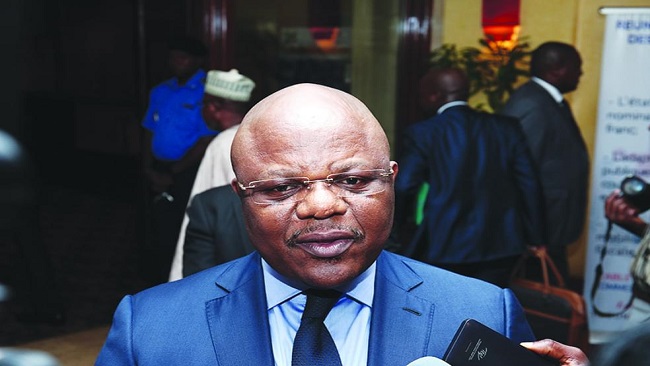
Minister Paul Tasong, head of the steering committee for the Presidential Plan for the Reconstruction and Development of the North-West and South-West Regions (PPRD-NO/SO), revealed during the 14th session of the North-West Regional Assembly that only 50 billion CFA francs of the 154 billion CFA francs expected since 2020 have been raised. Initially, the plan was scheduled to last two years.
Since its launch in 2020, the Presidential Plan has struggled to attract significant support from Cameroon’s international partners. Countries like France and the United States conditioned their participation on the implementation of a genuine dialogue to resolve the ongoing armed conflict in the separatist regions. As a result, only a few partners, such as Japan and the United Nations Development Programme, have released funds to support infrastructure rehabilitation projects in these regions.
Paul Tasong, who also serves as Minister Delegate to the Minister of Economy, Planning, and Regional Development, reported that 258 projects have been completed in areas such as providing agricultural inputs to farmers, building schools, and setting up water supply systems. Additionally, 38 projects are still underway, while 2 have been suspended.
He thanked the partners who have contributed to the Presidential Plan, noting that an estimated 2,500 billion CFA francs would be needed for the complete transformation of the North-West and South-West regions, according to a communication from the North-West Regional Assembly.
Source: Business in Cameroon
















20, September 2024
Major jihadist attack in Mali’s capital killed more than 70 0
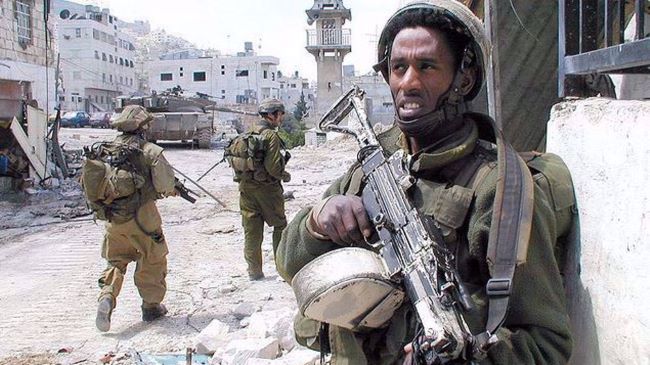
A jihadist attack in the Malian capital targeting a military police training camp and airport left more than 70 people dead and 200 wounded, one of the highest tolls suffered by the security forces in recent years.
A security source speaking on condition of anonymity told AFP that 77 people had been killed and 255 wounded in Tuesday’s attacks in Bamako.
An authenticated confidential official document put the toll at around 100, naming 81 victims.
Thursday’s edition of Le Soir daily reported that the funerals of around 50 military police students would take place that day.
Mali’s military-led authorities have so far not released a precise death toll from the attacks, claimed by the al Qaeda-linked Group to Support Islam and Muslims (JNIM).
The operation was the first of its kind in years and dealt a forceful blow to the ruling junta, experts say.
The Malian capital is normally spared the sort of attacks that occur almost daily in some parts of the West African country.
The general staff admitted late Tuesday that “some human lives were lost”, notably personnel at the military police centre.
JNIM claimed that a few dozen of its fighters had killed and wounded “hundreds” from the opposing ranks, including members of the Russian paramilitary group Wagner.
The attack came a day after junta-led Mali, Niger and Burkina Faso marked a year since the creation of their breakaway grouping, the Alliance of Sahel States (AES).
The trio, which have been under military rule following a string of coups since 2020, have broken ties with former colonial ruler France and turned militarily and politically towards other partners including Russia.
The Sahel states in January said they were turning their backs on regional bloc the Economic Community of West African States (ECOWAS).
Mali has since 2012 been ravaged by different factions affiliated to al Qaeda and the Islamic State group.
‘Condolences’ and condemnation
Volleys of gunfire interspersed with explosions broke out in Bamako at around 5:00 am (0500 GMT) Tuesday.
JNIM fighters attacked a military police school and stormed part of the nearby airport complex, where a military facility adjoins the civilian one.
The jihadist group broadcast images showing fighters strolling around and firing randomly into the windows of the presidential hangar and destroying aircraft.
Bamako has not seen such an operation since 2016, when gunmen attacked a hotel housing the former European training mission of the Malian army, with no casualties reported among the mission staff.
The flow of information is restricted under the ruling junta and details on how Tuesday’s attack was carried out and its impact are sketchy.
Mali’s neighbour Senegal and African Union Commission Chairman Moussa Faki Mahamat on Thursday condemned the attacks.
The French embassy in Bamako offered its “condolences to the government of Mali”.
Jean-Herve Jezequel, Sahel project director at the International Crisis Group, told AFP one possible hypothesis could be that “the jihadists are trying to send a message to the Malian authorities that they can hit them anywhere and therefore that the big cities must also be protected”.
He said the aim could be to force the state to concentrate its resources in populated areas and have fewer troops in rural areas “where these jihadist groups have established their strongholds”.
Experts say the attack undermines the junta’s military strategy and breakaway rhetoric, which claims the security situation is under control despite jihadists roaming the Sahel region for years.
Tuesday’s events have largely prompted condemnation and calls for unity within Mali.
Against a backdrop of severe restrictions on freedom of expression under the junta, virtually no public figures have spoken out against the apparent security lapse.
The daily Nouvel Horizon, a rare dissenting voice, wrote on its front page that it was “time to apportion blame at all levels”.
Many Malians have taken to social media to call for those responsible for the security breach to be punished.
The events have also raised fears that certain communities could be targeted in retaliation.
Source: AFP