20, June 2024
Israeli army in urgent need of troops amid rising casualties in Gaza 0
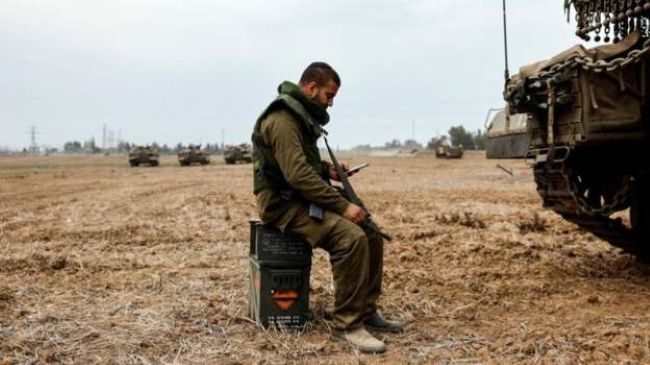
The head of the Israel Defence Forces said the army is facing troop shortages amid rising casualties in the war against Hamas in Gaza. Yet enlisting more troops is difficult due to rising public opposition to the war and an open conflict between Israeli Prime Minister Binyamin Netanyahu and his defence minister.
The Israeli Defence Forces (IDF) is facing increasing challenges as the war against Hamas enters its ninth month. On Monday, Israel lost eight soldiers in an explosion in Rafah, in what Israeli media called the “deadliest incident for IDF” in six months. The number might seem small in the context of the war in Gaza, but the number is far too high for Israeli public opinion.
A week before the explosion, Hamas claimed to have killed an unspecified number of Israeli soldiers after its fighters detonated a booby-trapped house in Rafah.
‘An exhausted army’
The losses underscored Israel’s army chief Herzi Halevi’s warning in recent days about shortages in the military, saying it would prevent Israel from waging the war against Hamas with the same intensity.
Amid a shortage of troops, the army is also facing an unstable political landscape. The relationship between the army and Prime Minister Binyamin Netanyahu has deteriorated significantly, with Netanyahu reportedly criticising plans announced by the military to hold daily tactical pauses in fighting to facilitate the delivery of aid to the Palestinian enclave.
The Israeli army is also facing domestic pressure from a population shocked by the Palestinian death toll caused by the Israeli offensive in Gaza. Skirmishes erupted on Monday night between police and anti-government protesters who took to the streets of Jerusalem, before marching to Netanyahu’s private home in the city, to show their discontent over the handling of the war with Hamas in Gaza.
“The IDF is totally exhausted after more than eight months of war,” said Ahron Bregman, a political scientist and specialist in the Israeli-Palestinian conflict at King’s College London. “The IDF command, and the defence minister too, are desperate for a break to regroup.”
The Israeli army does not officially comment on the state of fatigue of its troops, but the signs are clear. “We are seeing examples of sooner-than-expected rotation of brigades and battalions,” said Steven Wagner, historian and lecturer in international security at Brunel University London. In other words, the soldiers need more frequent breaks.
Many experts say the October 7 attack on Israeli soil and the intensity of the response decided by Netanyahu’s government, which requires a long-term commitment, surprised an army that was “too small” for the task. Israeli military strategists thought that the era of major regional wars – such as the Six-Day War in 1967 or the Yom Kippur War in 1973 – was over, said Bregman. As a result, “the army disbanded six divisions over the last 20 years. Today it is missing approximately two entire divisions, or 10,000 additional soldiers”.
Finding more soldiers
The situation is complicated by increased fighting between Hezbollah and Israeli forces on Israel’s northern border with Lebanon, reported the US public radio NPR. An extension of the war in the north “would be catastrophic for both Lebanon and Israel”, said Bregman.
“In terms of soldiers, tanks and quality of equipment everything is fine on paper for a short war. But in terms of a long war with Hezbollah, no, Israel isn’t ready, and it’s mainly about morale,” said Omri Brinner, a Middle East analyst at the International Team for the Study of Security Verona (ITSS).
Despite this, the Israeli military on Tuesday said that “operational plans for an offensive in Lebanon were approved and validated”. By Wednesday, the military said its warplanes had struck Hezbollah sites in southern Lebanon overnight.
Under the circumstances, the priority of Israel’s defence ministry – as well as the army chief – is to increase troop numbers. “The easiest solution would be to mobilise the ultra-Orthodox, but this would be politically delicate for Netanyahu,” said Brinner.
The contribution to the army would be significant. In 2023, over 60,000 young men from the ultra-Orthodox community received an exemption from military service.
Scrapping this privilege authorised by Israeli law would infuriate the ultra-religious and far-right parties, which currently constitute the main source of support for Netanyahu’s government.
The government is therefore looking for other solutions for the manpower shortage. It is preparing to adopt a new bill delaying retirement for IDF reservists. The proposal would raise the exemption age for reserve military service from 40 to 41 for soldiers and from 45 to 46 for officers.
“It’s clearly a way to deal with the fatigue issue,” said Wagner. But using older reservists in high-risk areas would “bring the quality of the army down”, he warned.
Netanyahu vs Gallant
Even if the army found the resources to sufficiently increase its numbers, “strategic command problems at the highest level” will still exist, said Brinner.
Netanyahu’s dissolution of the war cabinet earlier this week has plunged the army into strategic limbo.
“Netanyahu is under intense pressure from his allies on the right,” said Brinner, noting that the Israeli leader’s reliance on the ultra-religious parties has reduced his ability to maneuver around the thorny issue of enlisting ultra-Orthodox members in the armed services.
The Israeli prime minister could theoretically rely on his defence minister, Yoav Gallant, but “the situation is unprecedented, with the two men cordially hating each other and ready to jump at each other’s throats at the slightest opportunity”, said Wagner.
At a time of serious challenges, the Israeli army needs troops as well as clear direction from above. While the army can hold out for a few more months, experts say the stated goals of destroying Hamas and freeing all the hostages are unattainable under the current circumstances.
Source: France 24
















20, June 2024
Thousands of young Kenyans protest tax hikes 0
Thousands of mostly young demonstrators took to the streets across Kenya on Thursday to protest tax hikes, blowing whistles and chanting slogans in a vivid show of anger by Gen-Z protesters against the government.
Police in the capital Nairobi fired tear gas and water cannon against groups of protesters near parliament, but apart from isolated scuffles earlier in the day, the action — dubbed “Occupy Parliament” — remained mostly peaceful.
Led largely by young Kenyans, the demonstrations began in Nairobi on Tuesday before spreading nationwide on Thursday.
They have galvanised widespread discontent over President William Ruto’s economic policies in a country already grappling with a cost-of-living crisis.
Hours after Tuesday’s demonstrations, which saw hundreds of youth face off against the police, the cash-strapped government agreed to make concessions, rolling back several of the tax hikes laid out in a new bill.
But the government still intends to go ahead with some tax increases and has defended the proposed levies as necessary for filling its coffers and cutting reliance on external borrowing.
On Thursday, protests were held across Kenya, with thousands assembling across Nairobi, the Indian Ocean city of Mombasa, the Rift Valley city of Nakuru and the opposition bastion of Kisumu, according to AFP reporters and images broadcast on TV.
Isolated scuffles broke out in Nairobi between protesters and police, who used tear gas and water cannon at demonstrators gathering near the parliament, which began debating the bill on Wednesday.
Despite a heavy police presence and roadblocks erected along several roads leading to parliament, hundreds of protesters gathered in groups, blowing whistles and vuvuzelas, waving placards and chanting: “Ruto must go”.
Ivy, a 26-year-old job seeker dressed in a T-shirt and leggings, told AFP she was prompted to protest for the first time on Thursday because she was “scared” for her future.
“This bill cannot pass. This bill is going to finish us. We don’t have jobs… we can’t even open businesses, we can’t do anything in this country,” she said.
Another first-time protester, Bella, said she had showed up “to make sure the finance bill is rejected.”
The 22-year-old university graduate told AFP she was “not impressed” with the government’s concessions earlier this week.
‘Lying to us’
The presidency on Tuesday announced the removal of proposed levies on bread purchases, car ownership as well as financial and mobile services, prompting a warning from the treasury of a 200-billion-shilling shortfall as a result of the budget cuts.
The government has now targeted an increase in fuel prices and export taxes to fill the void left by the changes, a move critics say will make life more expensive in a country already battling high inflation.
“They are just trying to lie to us, the taxes that they have removed on bread they have added somewhere else,” Bella said, describing it as a tactic to “blindfold” citizens.
A parliament source told AFP that a vote on the proposals was expected on June 27, three days before the deadline for passing the bill.
The taxes were projected to raise 346.7 billion shillings ($2.7 billion), equivalent to 1.9 percent of GDP, and reduce the budget deficit from 5.7 percent to 3.3 percent of GDP.
High inflation
The protest in Nairobi on Tuesday saw black-clad protesters forced into cat-and-mouse chases with police who fired volleys of teargas.
At least 335 people were arrested, according to a consortium of lobby groups including the human rights commission, KNCHR, and Amnesty Kenya.
“We have changed tack. Today we will be in colourful and defiant clothing to avoid a repeat of them arresting everyone in black,” said an organiser of the march, who requested anonymity due to fear of reprisals.
Overall inflation has remained stubbornly high, at an annual rate of 5.1 percent in May, while food and fuel inflation stood at 6.2 percent and 7.8 percent respectively, according to central bank data.
Source: AFP