30, May 2018
UN Emergency Response Plan and Overview of the crisis in Southern Cameroons 0
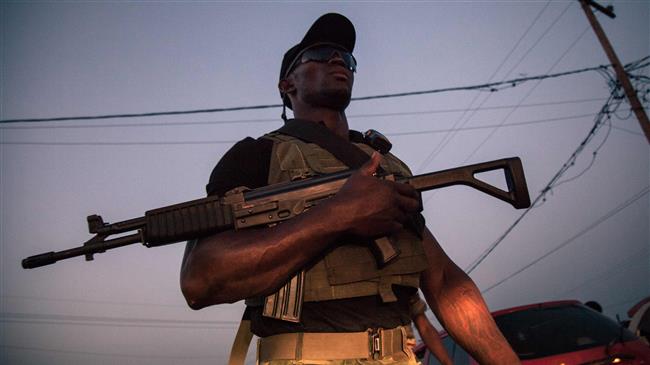
The crisis in the South-West and North-West Regions of Cameroon has compounded pre-existing vulnerabilities. Since 2016, political and social instability, exacerbated by sporadic violence, has had a negative impact on the civilian population of Cameroon’s South-West and NorthWest Regions, hosting four million inhabitants (16% of the total population). In November 2017, the sociopolitical crisis progressively translated into insecurity and armed violence. Since then, the escalation of tension and upsurge in hostilities between non-state armed groups and defence and security forces have triggered humanitarian needs across the two regions, linked to significant internal displacement.
In recent months, the epicentre of the crisis moved from Bamenda (North-West) to Mamfe and Kumba (SouthWest). All divisions in the South-West region, host to more than 1.4 million inhabitants, are affected by the crisis.
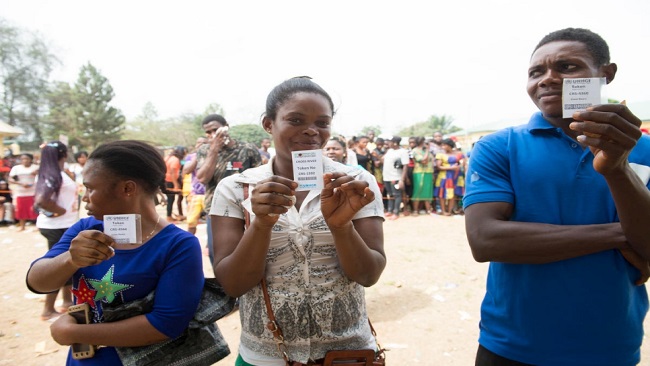
The number of households forced to flee their villages – or the country – in search of safer areas has rapidly and steadily increased since November 2017. Recent needs assessments report that at least 160,000 people have been internally displaced in the two affected regions and would need humanitarian and protection assistance over the next three months. In addition, more than 21,000 Cameroonians have been registered as refugees in Cross River, Benue and Akwa Ibom States in Nigeria.1 This crisis is taking place against a backdrop of several other humanitarian emergencies affecting 3.3 million people across Cameroon.
Most affected areas
The South-West Region has become the hub of the crisis as it is home to more than 90% of the 160,000 internally displaced persons (IDPs) in need of humanitarian assistance; 135,000 are located in Meme Division and 15,000 in Manyu Division. The remaining 10,000 are displaced in the North-West Region.
Simultaneously, dozens of villages in Mbongue and Konye Subdivision (Meme Division) have been emptied of their populations. The situation is similar in the NorthWest, especially in Boyo Division.
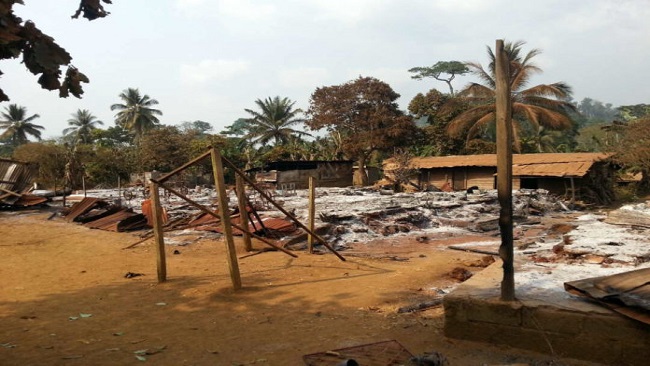
Many villages have suffered significant material damage in Mbongue and Konye Subdivision (Meme Division), and in Eyumodjok and Akwaya Subdivision (Manyu Division). 1 This Response Plan does not include the need of Cameroonian refugees who found refuge in Nigeria Recently, insecurity has spread to new divisions in the South-West (Ndian, Lebialem, Fako) and North-West (Boyo).
Who are the most vulnerable?
Clashes between non-state armed groups and defense and security forces have displaced the civilian population into the surrounding forests and villages – 80% of the displaced population have found refuge in the forest.
The two regions has experienced a deterioration of living conditions – primarily affecting school-age children, women and the elderly – and a collapse of livelihoods as well as heightened abuses.
The crisis and subsequent displacement have prevented people from accessing their fields and markets. For most of the affected population who relied upon agriculture or livestock as their main sources of livelihoods before the crisis, dependency on external assistance will be inevitable in the short-term.


















30, May 2018
Africa’s next civil war could be in Cameroon 0
On May 20, Cameroon’s national day, citizens in the capital of Yaounde marched in parades, and President Paul Biya congratulated members of the armed forces on their commitment to peace and safety. At the same time, in the country’s unstable Anglophone regions, separatists kidnapped a mayor, killed two police officers and intimidated people who tried to celebrate the holiday.
Such incidents have human rights activists worried that Cameroon could soon be the site of Africa’s next civil war.
“We are gradually, gradually getting there,” said Agbor Nkongho, an Anglophone human rights lawyer and director of the Center for Human Rights and Democracy in Africa. “I’m not seeing the willingness of the government to try to find and address the issue in a way that we will not get there.”
Since late 2016, Cameroon has faced an increasingly violent uprising in the bilingual country’s minority Anglophone regions, where English speakers say they have been marginalized by the French-speaking majority for decades. When peaceful protests started 18 months ago, government forces opened fire on protesters and looted and burned down villages. Now an armed separatist movement is gaining traction, kidnapping government officials and killing gendarmes.
Some observers say the situation has already reached a point where it could be considered a civil war.
“If you look at what is going on now, you can call it a civil war,” said John Mukum Mbaku, a professor at Weber State University in Utah and a nonresident fellow at the Brookings Institution. “The government is shooting down defenseless villagers, and many have decided to defend themselves and are fighting back.”
At the end of World War I, the League of Nations divided the German colony of Kamerun between France and Britain. The French-controlled territory won independence in 1960, and the British territories that now make up the southwest and northwest regions of the country joined the next year.
On paper, Cameroon is now the only country in the world other than Canada where both French and English are official languages. But only one-fifth of the country’s 22 million people are Anglophone. Biya, who has ruled for 35 years, is Francophone, as are most of the country’s elites.
“The fact of the matter is, if you don’t speak French, you cannot survive in the country,” Mbaku said.
Anglophones say they are being forced to assimilate into Francophone culture, and their frustrations reached a boiling point in 2016.
A protest movement was launched with teachers and lawyers at the forefront, attacking the “Francophonization” of their home towns. A particular complaint was the growing number of non-English-speaking teachers being sent to Anglophone areas.
“It’s not just about language,” Nkongho said. “It’s a culture, it’s a way of life, it’s the way they’ve been raised.”
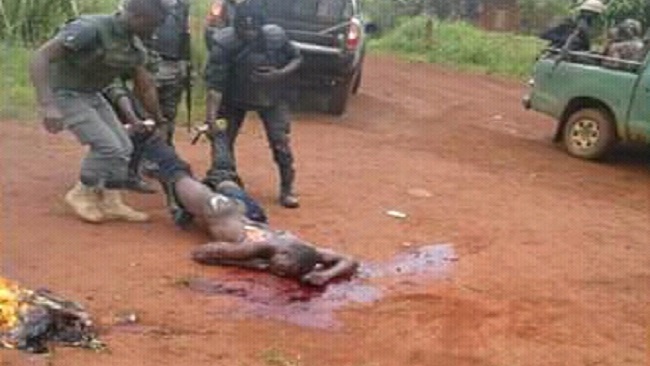
The Cameroonian military responded to the protests with brute force. Videos emerged of the security forces kicking university students and dragging them through mud. They also opened fire on protesters, killing some of them. As the movement gained momentum and evidence of police brutality circulated on social media, the government cut the Internet in Anglophone regions. Julie Owono, executive director of Internet Without Borders, said the months-long shutdown “convinced people that, indeed, Anglophones are treated differently.”
Support for armed separatists, who want to establish a new Anglophone nation called Ambazonia, started to grow. “You talk to people who were very moderate but they are now supporting the separatist movement,” Nkongho said.
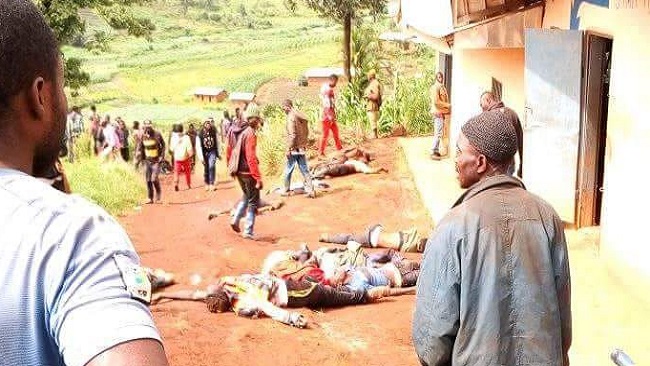
Last week, he said, civilians counted around 40 dead bodies in Anglophone regions of the country — at least 27 of which were allegedly killed in a standoff with government forces. That made for one of the bloodiest weeks since the unrest began 18 months ago. Col. Didier Badjeck, a Cameroon Army spokesman, said government troops engaged in a firefight with separatists and that “several terrorists were neutralized.”
A recent count by the International Crisis Group said at least 120 civilians and 43 members of security forces have been killed since the conflict began. Some 20,000 people have fled to Nigeria as refugees, and 160,000 are now displaced within Cameroon, according to the U.N. Office for the Coordination of Humanitarian Affairs.
A presidential election looms in October, with Biya expected to run again. Akere Muna, an Anglophone presidential candidate and prominent lawyer, hopes that better governance could keep the country unified. But he said the government has only ignited tensions and dismissed Anglophone calls for more autonomy.
Muna said he recently visited an Anglophone village that is normally home to 6,000 people. Only a handful of people were left, he said. “If [Biya] gets reelected, the country will become ungovernable,” Muna said. “By the day, it’s getting worse.”
Culled from Washington Post