2, February 2018
Yaounde: Sisiku Ayuk Tabe’s lawyer unable to see him, govt mute 0
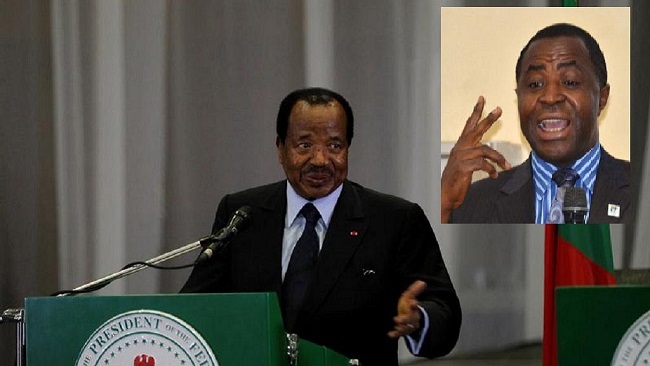
The Cameroonian government has refused to respond to communication from a lawyer representing detained separatist leader, Julius Ayuk Tabe. According to lawyer Abdul Oroh, he has been unable to communicate with his client who he says is being illegally held by the government.
Yaounde confirmed early this week that Ayuk Tabe and 46 others had been extradited from Nigeria and that they had been handed over to the judiciary for the necessary processes. Nigeria and Cameroon have no extradition treaty, they do not have that relationship, and these people are not terrorists.
Speaking to the BBC Focus on Africa Radio the lawyer said he has written to several authorities including the national security chief and defense ministers but has yet to get a response.
He also expressed worry that the Nigerian authorities who arrested Tabe and others had also been tight lipped on the matter.
He slammed Cameroon’s Information Minister, Issa Tchiroma-Bakary for referring to the arrested nationals as terrorists in his statement announcing their deportation earlier this week. He has also demanded that his client and the others be released.
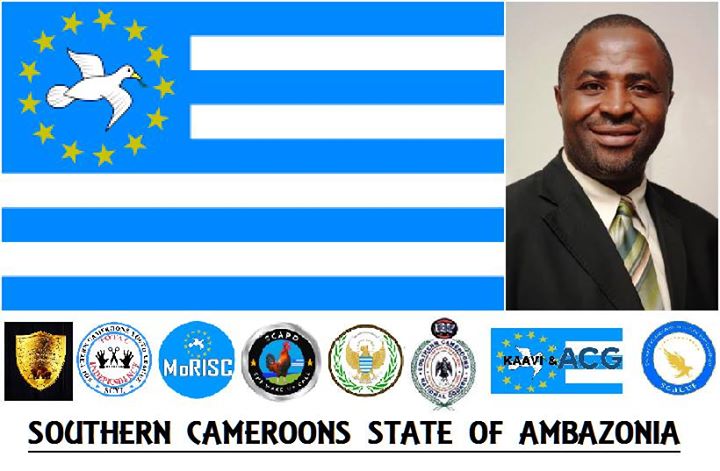
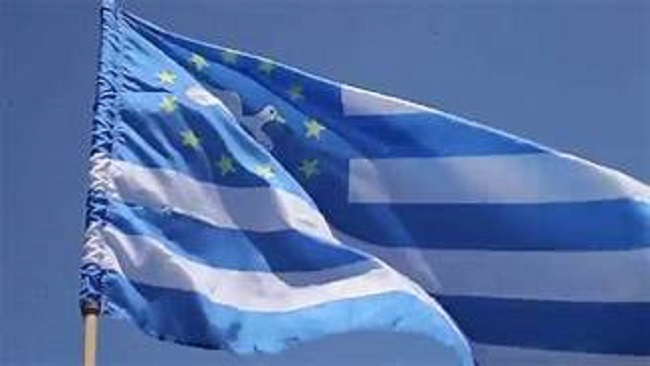
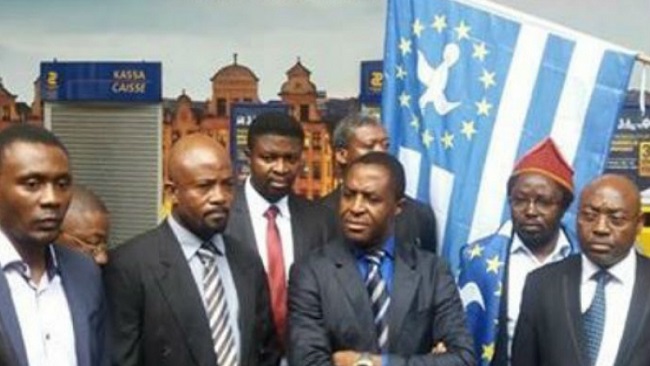
Ayuk Tabe is widely referred to as the leader of the Republic of Ambazonia – a group in Cameroon’s Angolphone region, pushing for a breakaway from French-dominant Cameroon. Its defense wing has claimed responsibility for deadly attacks on security officials deployed to the region.
The group said it classified all security personnel – be they soldiers, gendarmes or police as occupiers of their land. Over a dozen officers have been killed in guerilla style attacks especially at checkpoints. Tabe and six others were arrested in a hotel in the Nigerian capital Abuja in early January. Reports differed over whether they were arrested by Cameroonian operatives or Nigerian security.
Nigeria’s Department of State Security is believed to have been behind the raid leading to their arrest. He was one of fifteen others who Cameroon issued an international arrest warrant for in November 2017.
Ayuk, a former businessman who had lived in Nigeria, is seen as a moderate voice in the separatist movement and has in the past promoted dialogue over violence. Nevertheless, he has been the target of Cameroonian authorities as a leading member of a resurgent movement to break away from French-speaking Cameroon.
Source: Africa News

















2, February 2018
Cameroon boils: 3 police, one civilian killed in restive after extraditions 0
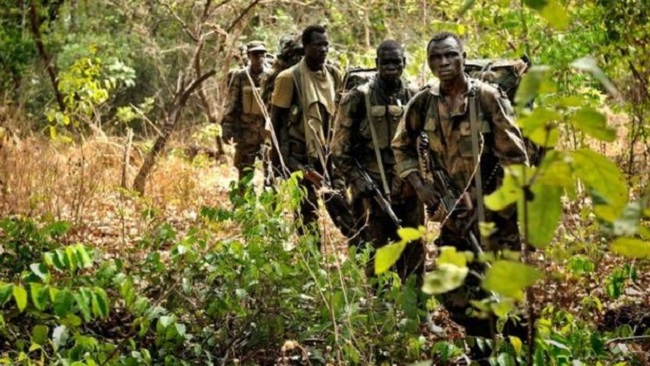
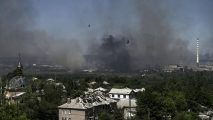
Three policemen and a civilian were killed on Thursday in separate incidents in a region of Cameroon roiled by separatist violence, three days after dozens of activists were extradited from neighbouring Nigeria, sources said.
“Armed separatists this morning attacked a checkpoint” in the village of Bingo, in the country’s Northwest Region, according to a source familiar with military activity in the area.
“Two wounded gendarmes were taken to hospital, where they died of their injuries,” the source said.
In Bamenda, suspects riding a motorcycle also shot dead an officer, a government spokesperson told AFP. A civilian also died after being shot by soldiers during an operation in the nearby city of Santa, sources said.
The violence marked the first casualties among the security forces in the troubled region since Nigeria extradited 47 separatists on Monday, including their self-proclaimed president, Sisiku Ayuk Tabe.
– “Escalation of violence” –
“There is an escalation of violence, undoubtedly,” said Minister of Communication Issa Tchiroma Bakary, citing “a campaign on social networks where they (separatists) invite people to resist and kill.”
“These calls can have an amplifying effect of violence,” he said.
The separatists previously warned the extradition of the 47 from Nigeria to Cameroon would lead to an escalation.
“The abduction (of Ayuk Tabe) is throwing petrol on the flames of the revolution,” Chris Anu, a member of the self-described “government”, told AFP.
The UN refugee agency (UNHCR) on Thursday criticised Nigeria for breaching international agreements over the extraditions, saying “their forcible return is in violation of the principle of non-refoulement”.
Non-refoulement, a French term, is the practice of not forcing refugees or asylum-seekers to go back to a country where they could be persecuted.
The UNHCR said most of the 47 had submitted asylum claims in Nigeria.
Amnesty International has also expressed concern about the fate of the arrested separatists, saying they could face torture and an unfair trial.
The separatists are demanding independence for two regions that are home to most of the country’s anglophones, who account for about a fifth of the population.
Their campaign draws on widespread resentment over perceived discrimination at the hands of Cameroon’s French-speaking majority.
On October 1 last year, the breakaway movement issued a symbolic declaration of independence for “Ambazonia,” their name for the putative state.
Cameroon’s president, Paul Biya, has responded with a crackdown, including curfews, raids and restrictions on travel.
His government has also forged closer cooperation with Nigeria, where around 30,000 Cameroonians have sought refuge from the violence.
The anglophone minority in Cameroon is a legacy of the colonial period in Africa. France and Britain divided up the former German colony under League of Nations mandates after World War I.
A year after the French-ruled territory became independent in 1961, the southern part of British Cameroons was integrated into a federal system, scrapped 11 years later for a “united republic”.
Cameroon is due to hold general elections, including for the presidency, this year. Observers say the ballot could be badly affected by the crisis in the English-speaking regions.
Source: The Citizen