5, August 2025
2025 Presidential Election: if Kamto cannot run at the ballot, millions will run to the streets 0
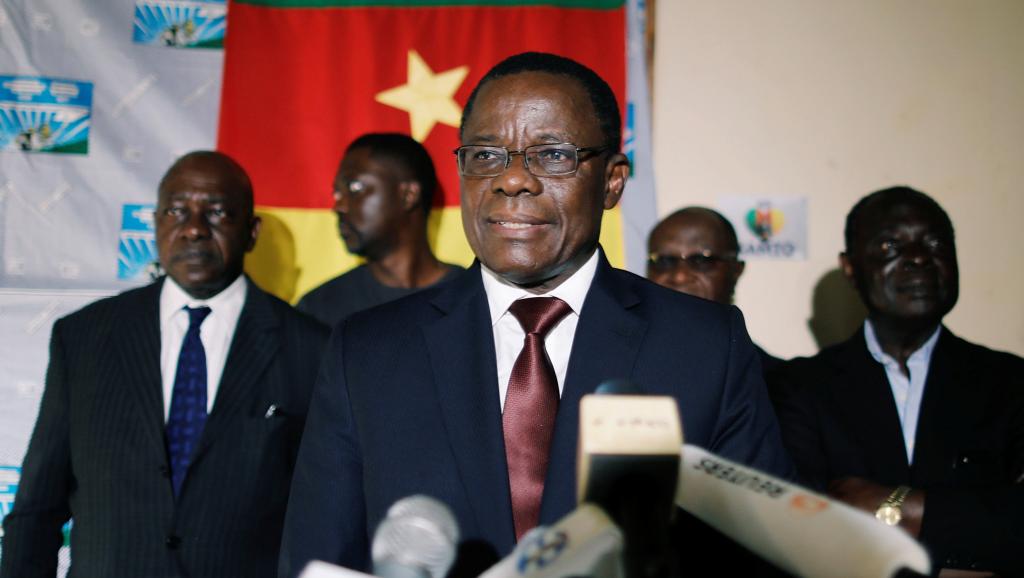
In a calculated act of cowardice dressed in political theater, the electoral umpire, ELECAM, on Saturday, July 26, 2025, invoked the “double investiture” clause, selectively and maliciously, to disqualify Maurice Kamto from contesting the upcoming presidential election. Let us call this what it is: a constitutional coup against the Cameroonian people. The law was not applied; it was weaponized. The investiture pretext – that MANIDEM fielded two candidates – is a ridiculous, electoral farce that is laughable and should attract no further comment. Anicet Ekane was the party’s legitimate leader. The Ministry of Territorial Administration (MINAT)’s website confirmed it; until demons crept in and rewrote digital reality to install a mendicant political jobber, Yebga Dieudonné, as party head. MINAT’s fingerprints are all over this digital crime scene. ELECAM and MINAT have committed a crime against the nation and Cameroon is now teetering on the edge of institutional collapse and civil explosion. By blocking Kamto, the regime is lighting a fuse it cannot control. Repression has never birthed peace; it births resistance. If Kamto cannot run at the ballot box, millions will run to the streets. If choice is denied at the polls, it will be demanded elsewhere. If the Constitutional Council has one atom of independence left, it must annul this grotesque electoral perversion and injustice. But if it too kneels to power, then let the people rise. For when democracy is betrayed from above, it must be reclaimed from below. ELECAM and MINAT have declared war on the Cameroonian people. The Biya regime has set fire to the social contract. And when the flames reach Etoudi, let them not pretend they weren’t warned.
And let us not forget: while Kamto is disqualified over a fabricated procedural excuse, Paul Biya – 93 years old and in power for 43 years – remains a candidate. ELECAM’s own website confirms that the CPDM submitted two candidates: Biya and Onana Leon Theiler. Univers also fielded two: Akere Muna and Membouet Chantale Adelaid. So why were Biya and Muna cleared, but Kamto rejected? Because only Kamto poses a real threat to Biya’s lifelong grip on power. The message is clear: only Kamto must fall, because only Kamto can win. ELECAM is not an electoral umpire; it is a political hit squad. It doesn’t count votes; it butchers hope. It doesn’t defend democracy; it buries it. With MINAT as its accomplice, ELECAM has turned the 2025 election into a funeral for Cameroon’s democratic dreams. Let there be no illusions: this is not democracy. It is gangsterism disguised as governance with a ballot box for a mask. Cameroon is ruled by a cabal of power mongers and their cronies; draining the state and now destroying even the idea of electoral choice.
At the head of this cabal is Ferdinand Ngoh Ngoh, secretary general at the presidency and the true power behind the empty throne. Unelected and deranged by delusions of grandeur, Ngoh Ngoh suffers from incurable money-mindedness, and he will stop at nothing in his quest for personal financial gain! The palace’s invisible hand, has proven himself the true head of state; Biya is now just the ceremonial ghost of a bygone dictatorship. Ngoh Ngoh rules by proxy, bypassing state institutions and dictating who lives or dies politically; while Paul Biya, the embalmed relic of tyranny, is wheeled out for ceremonial deception. Alongside Ngoh Ngoh is the MINAT boss, Paul Atanga Nji, a political vandal with neither conscience nor competence. In 1997, Atanga Nji, (then head of a money-laundering outfit called Highland Corporation Bank) paid The Herald newspaper FCFA 1,000,000 to run a fake story, alleging Fru Ndi had ordered the kidnapping of the wife of then Ambassador Christopher Nsahlai in Bamenda. The reason was to frame Fru Ndi with bogus charges that will disqualify him from contesting the 1997 presidential election; after his victory in 1992 was stolen. The plan did not materialize because the SDF boycotted the election after their demand for an independent electoral commission was ignored. Today, the same Atanga Nji repeats that script; now with state institutions as his weapon. This is not just déjà vu – this is systemic political cannibalism.
And then, there’s first lady, Chantal Biya, the unelected queen of opulence, who struts through Etoudi like Marie Antoinette with a wig and no throne. Her only credential is proximity to the corpse of power, but she has turned the presidency into a private estate; wielding influence like a scepter showcasing her addiction to conspicuous consumption, primitive accumulation and material aggrandizement. Together with Jacques Fame Ndongo, a Beti ethnic supremacist and pseudo-intellectual mercenary, they have formed a quartet of ruin throttling the soul of the nation- a criminal syndicate, dragging Cameroon deeper into the abyss of lawlessness, tyranny, and impending collapse.Kamto was not disqualified – he was politically lynched. His only crime? Being viable, principled and electable. He represents the last hope of democratic redemption, so they decided to bury him beneath a mountain of fabricated procedure. This must not stand. If the constitutional council; that hollow chamber of cowards and sycophant careerists, dares to rubber-stamp this injustice, it will be acting as an accomplice. And if voters are denied their right to choose, they must reclaim it with every tool of resistance available. For no regime, however entrenched, can survive the fury of a people united in their quest for freedom.
Let it be shouted from every rooftop: ELECAM’s rejection of Kamto’s candidacy, aided by MINAT, is not just a legal abomination – it is a national scandal, and a disgrace. But this is no error; it is a calculated strategy. ELECAM has declared war on Cameroonian democracy, transforming from electoral umpire to regime enforcer and hit man. With a single contrived technicality, it erased not just a candidate, but the hopes of millions who believe in change. Kamto posed a threat to the crumbling oligarchy, which is why he was rejected for the same infraction that Univers and the CPDM were exonerated. Kamto wasn’t eliminated by justice, but by a political death squad masquerading as an electoral umpire. Even more damning is MINAT’s role. Anicet Ekane, MANIDEM’s legitimate leader, endorsed Kamto. Yet overnight, Yebga Dieudonné emerged from the shadows as party leader and presidential candidate. It stretches credulity for Atanga Nji to blame hackers for the name swap on MINAT’s website. Really? This isn’t just administrative incompetence; its fraud, and political treason. What we’re witnessing is a coordinated demolition of electoral integrity and a betrayal of democracy’s core principles; that casts doubts over the credibility of the electoral process.
Let it be clear: Biya’s Cameroon is not a functioning state; it is a prison, where the rule of law lies buried in unmarked graves. Here, law serves power, truth is forged in secret backrooms, and the people are spectators to their own disenfranchisement. To ELECAM and Atanga Nji: your names will be recorded in the book of betrayal, alongside traitors, and enablers who helped murder the dreams of a nation. History will not remember you as public servants, but as arsonists – you drenched the constitution in gasoline and struck the match. When the flames consume what remains of the nation, your names will be written in the ashes. To Cameroonians: do not despair. This is your moment of reckoning. Do not plead for dignity; demand it. Do not wait for justice from compromised institutions; deliver your own verdict. Do not sit idle while democracy is strangled. In 1992, Fru Ndi was robbed and bribed into silence by regime apologists like Enow Abrams Egbe – now ELECAM Board Chairman – who, in the manuscript of his unpublished memoir, admits that as Secretary General at the Northwest Governor’s Office, he received billions of francs from Yaoundé to buy Fru Ndi’s silence, leading to the Chairman’s ultimate betrayal of the cause for change. The monies exchanged hands at Fru Ndi’s farm, sometimes, in the presence of then-Northwest Governor, Bell Luc Rene.
Knowing how the regime operates, Cameroonians must now ask themselves: are we citizens, or captives? Will we watch silently as a vampire elite devours the nation’s soul, or will we rise and reclaim our stolen future? Fru Ndi was silenced. Kamto is being sidelined. Who will be next? Without Kamto, the 2025 presidential poll will not just be a stolen election; it will be a stolen nation. Let us speak plainly: ELECAM and MINAT are now enemies of the Cameroonian people. They have not just failed in their duty; they have betrayed it. The people must now become liberators. To all Cameroonians of conscience and goodwill; let your anger be righteous. Let your resistance be relentless. Let your voices be the thunder that breaks 43 years of Biya’s kleptocratic dictatorship. Cameroon belongs to its people; not to tyrants or their parasitic cronies that defile it. Rise. Resist. Reclaim. A new Cameroon must be born, and those who try to bury it will face the judgment of history.
By Ekinneh Agbaw-Ebai















6, August 2025
Biya: how an aging despot’s grip on power could unravel Central Africa 0
A few weeks ago, 92-year-old Cameroonian President Paul Biya announced his intention to run for an eighth term in the country’s forthcoming election. This announcement, shocking, albeit widely anticipated, is already fueling fear that the country’s stability could be at risk, with wider implications for regional security.
The aged leader, who has ruled Cameroon with an iron fist since 1982, is easily the oldest president anywhere in the world. Indeed, only a few Cameroonians alive remember a time without Biya in power. Yet recent health scares seem to suggest that he may have reached the limit of his natural abilities. In 2008, his regime carried out a constitutional amendment to annul the two-term limit — clearing Biya’s path to rule for life through elections that, although regular, have been neither free nor fair.
Under his 43-year rule, the country of 29 million has gone from a period of relative stability to one of crisis and conflict. Approximately four in 10 Cameroonians live below the national poverty line, while unemployment, especially among school leavers, is high. This is in spite of Cameroon’s rich endowment of natural resources, including oil and natural gas, aluminum and gold.
Since 2014, Cameroon has also come under attack by Boko Haram in the far north while a secessionist insurgency is devastating the country’s Anglophone regions. Cameroon is divided into French and English-speaking regions — a development rooted in the country’s colonial past. The conflict, now in its seventh year, was precipitated in late 2016 by the state’s mishandling of peaceful protests that erupted against the application of the French civil law system by courts in the Anglophone regions. The crisis has led to over 6,000 deaths and the displacement of a million people internally and to neighboring Nigeria.
In the same vein, the Boko Haram conflict has resulted in numerous deaths and the internal displacement of well over 300,000 people, not to mention the disruption of local economies that has led to widespread food insecurity.
To combat the threat, Biya, who is known for a non-aligned foreign approach that has permitted him to play off multiple great powers, recently has had to lean quite heavily on U.S. support for funding and training of the country’s elite Rapid Intervention Brigade (BIR), as well as troops from the Multinational Joint Task Force that Washington established with Cameroon’s neighbors, Nigeria and Chad. U.S. training of Cameroon’s military personnel is valued at $600,000 annually. Washington also has a drone base with approximately 200 personnel stationed in Garoua, a city in northeastern Cameroon, to support the military in its operations against extremism. Cameroon remains one of the diminishing number of former French colonies in sub-Saharan Africa that permits foreign military bases on its territory.
At the same time, Cameroon weighs heavily on Russian President Vladimir Putin’s expansionist aims in the Sahel and West Africa. The country recently renewed a military cooperation agreement with Moscow while playing host to Afrique Média, a Russia-linked news organization generally regarded as Putin’s mouthpiece in the region. Such great-power attention illustrates Cameroon’s potential strategic importance.
In the meantime, the integrity of the October 12 election is already in jeopardy. Out of 83 candidates who submitted applications to run for president, the electoral body, Elections Cameroon, only approved 13, disqualifying Biya’s main challenger, Maurice Kamto, who was the runner-up in the 2018 elections when he won 14.2 percent of the vote. Although those disqualified from the presidential race can file a legal challenge, many Cameroonians don’t believe that anything will come of it.
With Kamto’s exclusion, Biya and his Cameroon People’s Democratic Movement (RDPC) party will face less popular candidates, including two of the president’s allies, former Prime Minister Bello Bouba Maigari and Issa Tchiroma Bakary, who resigned in early June as employment minister. Unsurprisingly, their qualification has sparked accusations that Biya and the RDPC are orchestrating another sham election to retain their hold on power.
The resulting situation has heightened political tensions and fueled fears of unrest. On June 12, the U.S. Embassy in Yaounde, the capital, called for respect for press freedom and urged all parties concerned with the electoral process to act in a manner that “promotes peace, respects the rule of law, and upholds democratic norms.” But the situation remains uncertain as security forces have been deployed in the economic hub, Douala, and Yaounde, especially around the headquarters of the electoral council in anticipation of protests.
Biya’s insistence on running is, to put it mildly, bewildering. In a now distant era, Africa’s longstanding aging leaders, such as Senegal’s Léopold Sédar Senghor or Kenya’s Daniel Arap Moi, planned for their succession to both ensure a peaceful transition and preserve their legacies.. Biya’s current gambit suggests he has no such plans. His apparent determination to continue to rule until he nearly turns 100 — presidential terms run seven years — spells trouble to many Cameroonians.
Indeed, in a country where more than 60% of the population is under 25, Biya’s ambition may prove too much for the public and for the ambitions of other members of the ruling elite as they jockey for position in a post-Biya period. To a growing number of analysts, the evolving situation, especially if public protests become widespread and militant, could create a pretext for a military coup. Historically, Cameroon’s army has been loyal to Biya who has only experienced a coup once early in his long rule. Reputed as a master-manipulator of the security forces, Biya has managed to keep ambition in check by keeping the armed forces fragmented and through regular reshuffling.
But as the developments witnessed in Gabon just two years ago show, the specter of coup cannot be fully discounted in a situation of political stasis. In August 2023, Gabonese elite presidential guard mounted a coup that ended the half-century rule of the Bongo dynasty. The irony was that the coup occurred just hours after then-President Ali Bongo had pulled out all the stops to win an unconstitutional third term through an election that all observers, local and foreign, agree was neither free nor fair.
Before matters reach that point in Cameroon, regional bodies, including the African Union, the Economic Community of Central African States, and the Central African Economic and Monetary Community (CEMAC) may be able to exert influence on the upcoming electoral process to ensure greater inclusivity and adherence to basic democratic norms in the runup to the October election. The forthcoming poll is not simply a matter for Cameroonians alone but an important question for the region as well.
Culled from Responsible Statecraft