8, January 2022
Southern Cameroons Crisis: Biya regime and the IG have a chance for a ceasefire as AFCON kicks-off 0
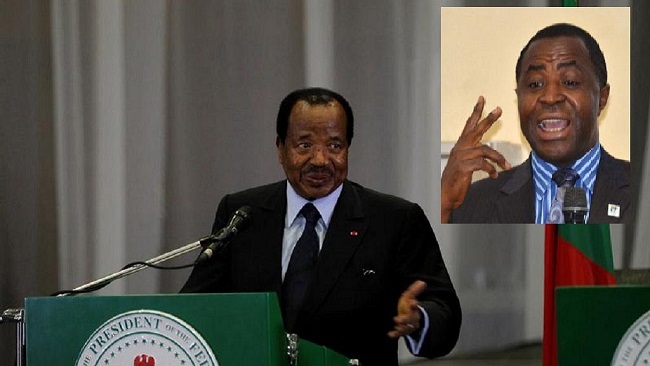
With one billion people around the world expected to watch as the African Cup of Nations (CAN) kicks off in Cameroon on 9 January, a spotlight will shine on the country’s five-year-old conflict between the government and Anglophone separatists.
Matches around the country will include eight games in Limbe and Buea, cities in the English-speaking South West region, and Anglophone militias have announced plans to disrupt the Cup, hoping to showcase their grievances. The government has responded with severe restrictions upon movement and association in the Anglophone regions.
This is a lose-lose strategy: separatist attacks during the month-long tournament may diminish the sympathy that Anglophone Cameroonians enjoy in Africa and elsewhere, and the government’s heavy-handed measures could produce popular backlash and escalate the conflict.
A different approach
Instead, both parties should pursue a dramatically different approach: embrace sports diplomacy and cease hostilities for the Cup’s duration. With outside diplomatic support, such a truce could be the first step in rebuilding trust and moving toward talks after years of bloodshed.
Even without the Anglophone militias’ threats, guaranteeing security for the tournament would pose significant challenges for Cameroon. Nine of the country’s ten regions are mired in humanitarian crisis as a result of violent conflict. Jihadist insurgency and climate change-fuelled inter-communal strife between herders and fishermen have destabilised the north, while rebels from the Central African Republic have crossed into the east.
The country’s political situation is also tense, with five senior officials from Francophone opposition leader Maurice Kamto’s party sentenced to seven-year jail terms for holding demonstrations against the president, Paul Biya, in September 2020.
Anglophone conflict ‘poses most serious security problem’
The conflict in the Anglophone regions poses the most serious security problem though. Disturbances began in October 2016, when lawyers and teachers mounted demonstrations calling for a two-state federation to preserve the Anglophone legal and educational systems.
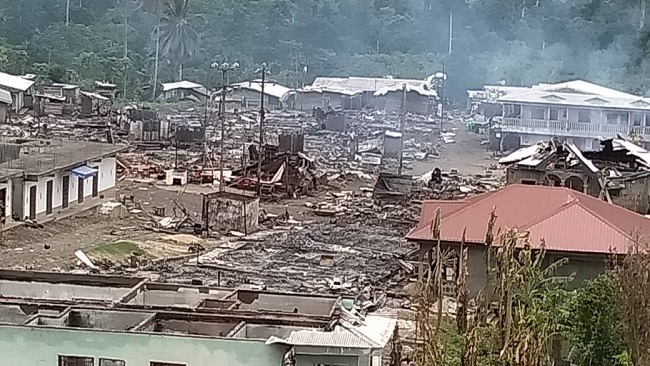
These degenerated into armed conflict following the government’s violent repression, as Anglophones set up separatist militias. Since then, the fighting has killed more than 6,000 people and displaced about one million, ushering in one of the world’s most neglected humanitarian crises amid a deteriorating human rights situation.
Crisis Group and others have repeatedly advocated for talks that might yield a political solution to the conflict. But thus far the government has been unwilling to negotiate in good faith.
It ignored a Swiss dialogue initiative in 2019 that had assembled a dozen separatist groups calling for talks, instead organising its own putative National Dialogue in October of that year. That effort failed to include separatist participation, virtually ensuring it would flop.
As a conciliatory gesture, the government then unilaterally established a special status for the regions, under which it created two regional assemblies with limited powers. This measure fell short of what Anglophones had been demanding and predictably failed to reduce the conflict’s intensity.
Stalemate on both sides
The Anglophone conflict’s escalation in 2021 has not led to a change in either side’s position. Separatists believe they are gaining momentum despite internal divides. The government, for its part, is preparing for a long war, purchasing new military supplies. With neither side clearly ascendant and both reluctant to engage in talks, the conflict has reached a stalemate.
While it would be inconsistent with the separatists’ modus operandi for them to attack venues where the matches are being played, violence could intrude in other ways.
Since 2018, separatist militias have often sought to disrupt sports events in the Anglophone regions:
In January 2021, during another football tournament, the African Nations Championship, militias detonated an explosive device in Limbe, wounding three policemen.
On 21 December, as President Biya met in the capital Yaoundé with Patrick Motsepe, president of the Confederation of African Football, separatist fighters attacked a police checkpoint in Kumba, in the South West, reportedly killing one officer.
In December, clashes between separatist militias and government forces hit Bamenda, Cameroon’s third-largest city.
Tellingly, when a man dressed as the Africa Cup costumed mascot, Mola the lion, toured the city on 16 December, he wore a bulletproof vest and was surrounded by a heavily armed military escort.
‘Propitious moment to seek a truce’
Despite the challenges, the tournament is a propitious moment to seek a truce, under which the parties would pledge to cease hostilities for at least the duration of the Cup and possibly even create the foundation for a new peacemaking effort.
A major diplomatic push by national and international officials will be crucial in the coming days. International actors will need to urgently press the government to reinvigorate the direct channels it developed in 2020 with influential separatist leaders in jail, perhaps underscoring how much it is in Yaoundé’s interests for the games to come off without a hitch. In parallel, Swiss officials could seek to build support for a truce among separatist leaders living overseas and remobilise UN, U.S., British and Canadian backing for their dialogue initiative.
The benefits of even a brief cessation of hostilities would be significant. It would grant the tournament protection while affording humanitarian agencies a chance to deliver critical aid to the thousands endangered by the fighting. It could also help lay the foundation for much-needed peace negotiations and invite near-term measures by the government that might help bring separatists to the table, like the release of Anglophone prisoners being held for non-violent crimes.
Ideally, the separatists would send positive signals of their own by reiterating their commitment to a political solution and making clear their interest in talks.
Whether any of this progress is achievable right now is unclear. Yet the forthcoming tournament presents a rare and welcome opportunity for bringing some creative sports diplomacy to bear on this often overlooked war.
Culled from The Africa Report












10, January 2022
Paul Biya: The falling president! 0
His collaborators have always projected him as the strong man, ordained by God to be eternal not only on earth but also on the throne, but the last years have proven that eternity here on earth is simply a mirage and that no man, including Paul Biya, born of a woman, will ever be physically eternal in a world nobody really understands.
For more than five years now, Cameroon’s president, Paul Biya, has seen his energy waning. Though he seems to believe his own lies that he is still energetic, many events have continued to remind him that time is running out for him.
Cameroonians have seen him struggle to walk and when he dares to walk, he trembles like a 7-month baby who wants to try his luck at walking.
As his energy levels decline, so too do his muscles fall apart and that makes it hard for his clothes to fit him.
Not long ago, his own trousers sought to take French leave of him during an event where there were thousands of guests at the Unity Palace.
The humiliation was huge. His wife, Chantal Biya, who doubles as a live-in care-giver, is permanently on the watch when she is in public with the aging and ailing Biya.
She knows something bizarre might happen anytime as the tired 88-year-old president is gradually losing his mind and his physique, which once gave him the looks of an adonis, is crumbling under the weight of age.
The Unity Palace event wherein his trousers dropped to the floor left Mrs Biya with a pink face. It was a day she wanted to demonstrate that her husband was still alive and strong, but nature had an unpleasant surprise for her and it came in a way she least expected.
Cameroonians who were glued to their TV sets had the ill-luck of seeing Mr. Biya’s colorful pants and his withering legs. Time has a way of diminishing men who think they are indispensable and Mr. Biya has had more than his fair share of humiliation.
But the humiliation is far from over. Since he has opted to stay in the spotlight, he must accept that time will continue to expose him to ridicule.
If he is not sporting a tootless mouth, then know he will show up with a face that has been invaded by age-related scars and it is fair game for his critics to make fun of him, as he has always projected himself as the defiant dictator who will never quit power.
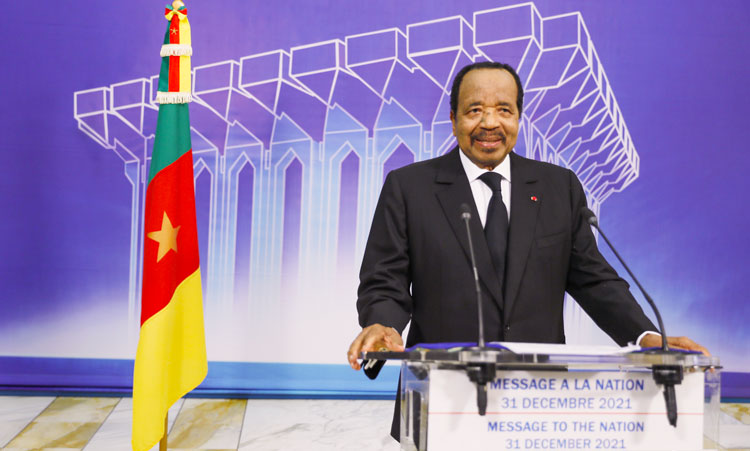
But the greatest humiliation came on January 9, 2022, when the Yaounde strong man finished reading his opening speech at the AfCON 2021 being held in Cameroon.
Things had gone on smoothly until Mr. Biya forgot that though alive, he was not as strong as those around him.
After reading his very short speech, insteading of calling on his guards and nurses to help him take his seat, he proceeded to do things by himself and, of course, he went down like a pack of old and tired cards.
Before his guards could reach out to save him, the old, sick and tired Biya was on the floor struggling to pick himself up.
Nature cannot be cheated. Such an incident was just a nasty reminder to a man who has simply overstayed his welcome and has outlived his usefulness.
Sources close to the president’s entourage said the fall resulted in him urinating, adding that thanks to his thick diapers, he would have left the stadium with a wet trousers.
Many Cameroonians are asking lots of head-breaking questions about Mr. Biya’s health and fitness as a president.
Many think his constant embarrassment of the country in public could be a justification for him to be relieved of his duty, but will the falling Biya ever leave power?
An observer, who spoke to Cameroon Concord News on condition of anonymity said the dying man might only leave on the day he defecates on his trousers.
“We should not think Biya will relinquish power. Power has gotten into his head like a drug and he clearly thinks that he should die in power,” a source said.
“Things have been made all the more challenging because he has surrounded himself with a bunch of emasculated sycophants who cannot speak truth to power,” the source regretted.
Biya may be putting up a strong man image, but it is clear that he is running out of time. Instead of humiliating himself, his family and country, it will be wise for him to exit through the big door.
However, if he insists on dying in power, he might do so in public during one of those events in which he might want to prove that he is physically strong to rule the country.
By Soter Tarh Agbaw-Ebai