
4, February 2021
Cameroon – Nigeria: Will there be a defined border soon? 0
In an effort to resolve the ongoing border dispute between Cameroon and Nigeria, The Cameroon-Nigeria Mixed Commission will hold an important session in Abuja on 15 February, chaired by the UN Special Representative for West Africa, Mohamed Ibn Chambas. He hopes to complete the process of demarcation of borders before the end of his term in 2021.
Born out of the disagreement over the hydrocarbon-rich Bakassi peninsula, the border dispute had led to an armed conflict between the two countries. Following the 10 October 2002 ruling of the International Court of Justice (ICJ) and the subsequent bipartisan agreements signed, the UN secretary-general set up a joint commission in November 2002. It was tasked with facilitating the implementation of legal and political decisions. The process of establishing a border along the 2,100km stretch between the two countries was initiated. It is now almost complete.
However, there is still one problem. The commission’s experts have come up against 13 reference points corresponding to 100km of the route. It is important to bear in mind that it was following an agreement signed in 1913 between the two colonial powers of the time, Great Britain and the Germany, that the land and sea borders between Cameroon and Nigeria were drawn.
Breaking the deadlock
As the Bakassi border dispute arose from disagreements over different interpretations of the results collected from using border demarcation instruments, the countries sought the ICJ’s jurisdiction. The ICJ ruled, but even after announcing its decision members of the two delegations have often proposed interpretations that contradicted those of the Court, creating an impasse.
“At first glance, it is on points of reference that the experts disagree. But beware, on the ground, these reference points can determine on which side of the border this or that village, this or that cross-border ethnic community will be located,” says a member of the commission. According to our information, the two delegations have already given assurances that they agree on five reference points. This successful outcome will be made official in Abuja.
However, there are still eight points of reference to be negotiated during the session in the Nigerian capital. Some of them will have an impact on the types of petroleum exploration permits granted by one or both of the two countries to international companies.
Towards a definitive map
If the session in February succeeds in smoothing out all the contentious issues, Cameroon and Nigeria would then be ready to submit a definitive border map to the UN.
Finalising a clearly defined border between the two countries would be no small achievement on a continent where, according to the African Union Border Programme created in 2007, around 70% of the roads are not clearly demarcated. Some are even considered unknown.
This will be the last session chaired by Mohamed Ibn Chambas, the special representative of the secretary-general for West Africa and the Sahel. His term will end in 2021 and he wishes to complete the dossier before his departure.
Source: Africa Report











5, February 2021
Can Vatican visit to Cameroon break the Ambazonia crisis stalemate? 0
Cameroon’s government displayed an “openness” towards dialogue for solving the country’s ongoing Anglophone crisis, during a visit by the Vatican’s number two earlier this week, according to a top church official from the Anglophone regions.
“There is a kind of openness for dialogue,” said Andrew Nkea, Archbishop of Bamenda. “But how this is going to come about, I think we must also be discreet in the way we handle those things.”
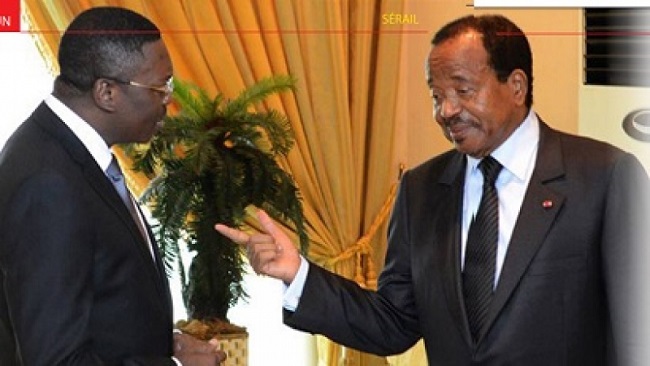
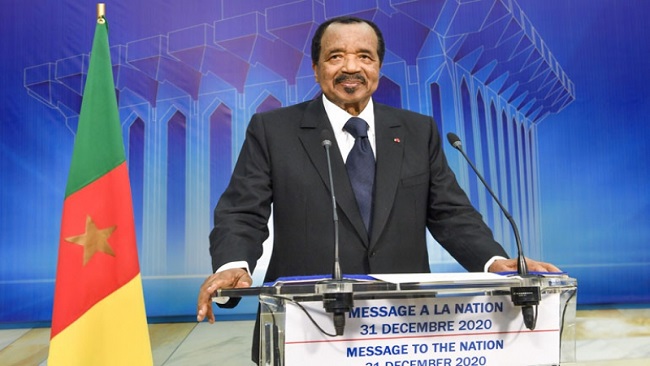
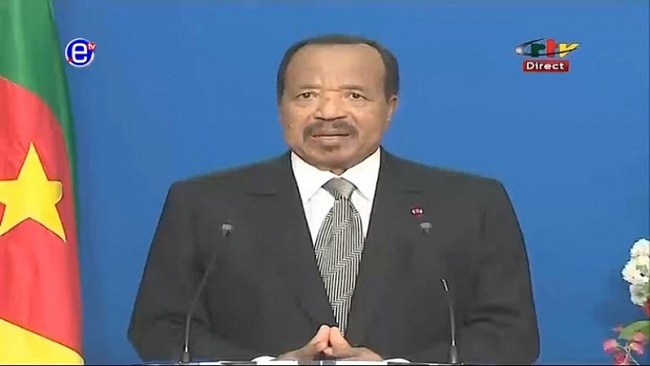
Cardinal Pietro Parolin, the Vatican’s secretary of state, completed a visit to Cameroon on Wednesday, after a five-day trip during which he met President Paul Biya and held mass in Bamenda, the capital of the North West Region.
Fighting between armed separatists and Cameroon’s military continues in the North West and South West regions. The Catholic Church believes the only way to stop fighting and end the conflict is to hold talks between the warring sides.
“The cardinal was able to say to all the powers that be that dialogue was the most important tool for the solution of this problem,” Nkea told Africa Calling podcast, referring to discussions he sat in on between Parolin and the government.
Boycott and continued violence
Parolin’s visit to the Anglophone regions was marked by deserted streets, as armed separatists called for a boycott of his trip to Bamenda, but nevertheless, many church goers showed up at his mass.
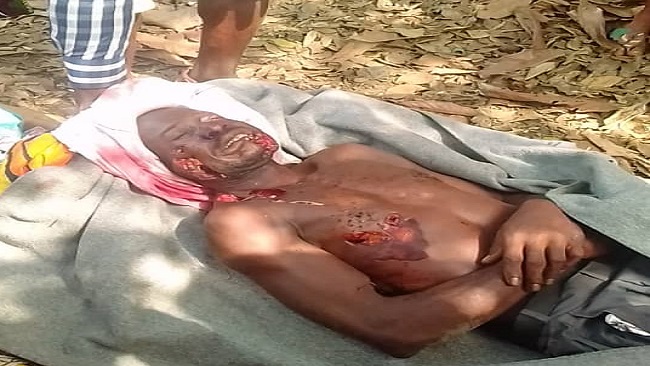
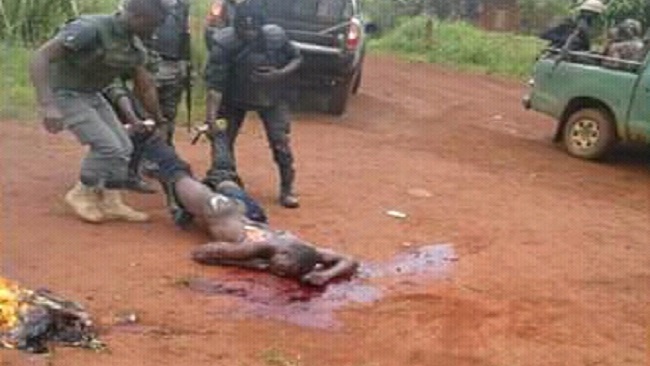
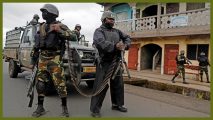
Fighting and violence also continued during Parolin’s visit as three people were allegedly killed by Cameroonian soldiers on 31 January in the village of Semndzen, located in Bui Division in the North West Region.
Troops were searching for separatists, locally known as Amba Boys, and allegedly shot three villagers in the bush who were tapping palm wine, mistaking them for fighters, according to information RFI received.
Cardinal Parolin said during his trip to Cameroon that the Catholic Church, at both a local level and in Rome, is ready to facilitate dialogue between Yaoundé and the separatists.
“This facilitation depends on the actors involved, we cannot force the partners to dialogue,” said Nkea, in an interview.
Both the government and separatists have at times viewed the church’s efforts for mediation with some suspicion.
Local church leader Cardinal Christian Tumi had been trying to help bring fighting to an end, however, he was kidnapped by gunmen in the North West region on 5 November.
“It depends on the openness of the government, and it depends on the openness of the separatists,” said Nkea, discussing the possibility of future peace talks.
Building foundation for talks
Nkea would not be drawn on what the next steps for possible mediation might be, but mentioned steps and instruments that need to be put in place to lay the groundwork for any talks. “Now, it’s modalities,” he added.
“Things have moved at least a step forward,” said Nkea, describing candid talks with the authorities in Yaoundé.
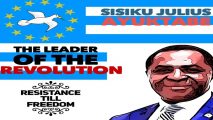
“One of the big problems we’re talking about in this dialogue is there are at least 8 to 10 different leaders of the separatist groups,” said Bamenda’s archbishop, underlining the importance of including everyone.
“This needs time, and that’s the delicate aspect of it,” said Nkea.
Fighting started following protests in 2016 by Anglophones over perceived marginalisation by the Francophone ruling majority.
A crackdown on demonstrations led to a self-proclamation of independence for a state called Ambazonia and ultimately fighting between the army and separatist fighters.
Both separatist groups and Cameroon’s military have been accused of killing civilians and committing rights abuses during the Anglophone crisis.
Human Rights Watch said this week that soldiers killed at least nine civilians in the South West region on 10 January. The human rights watchdog said the soldiers looted homes and threatened residents.
Source: RFI