8, February 2020
US Politics: Iowa winners, Sanders and Buttigieg come under attack in Democratic debate 0
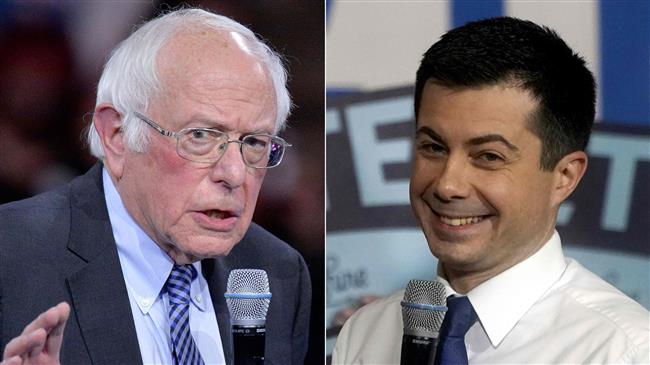
Democratic presidential contenders Bernie Sanders and Pete Buttigieg, the top finishers in Iowa’s first nominating contest, faced a barrage of criticism on Friday from rivals who said they did not have what it takes to lead the party to victory against Republican Donald Trump.
In a heated debate in New Hampshire just four days before the state’s pivotal primary, the two came under heavy fire as their Democratic rivals questioned whether Sanders’ democratic socialist views and Buttigieg’s relative lack of experience made them too much of a risk for the Nov. 3 election.
Sanders, 78, a U.S. senator and leader of the party’s progressive wing, and Buttigieg, the 38-year-old former mayor of South Bend, Indiana, finished in a virtual dead heat in Iowa earlier this week.
Former Vice President Joe Biden, the one-time front-runner who finished a disappointing fourth in Iowa, came out swinging in his most aggressive performance yet, a sign of growing desperation as he looks to rebound.
He said Trump would have an easy time ripping into Sanders in a general election campaign.
“Bernie has labelled himself, not me, a democratic socialist. I think that’s the label that the president is going to lay on everyone running with Bernie if he is the nominee,” Biden said.
U.S. Senator Amy Klobuchar, who finished a distant fifth in Iowa, said Sanders would not attract the kind of centrist voters needed to win.
“Donald Trump’s worst nightmare is a candidate who will bring people in from the middle,” Klobuchar said at the eighth Democratic debate. “I think we need someone to head up this ticket that actually brings people with her instead of shutting them out.”
Biden and Klobuchar also questioned whether Buttigieg had enough experience to face off with Trump. Buttigieg served two terms as mayor of South Bend, a city with a population of 100,000.
“It is easy to go after Washington, because that’s a popular thing to do,” Klobuchar said, telling Buttigieg that “it’s popular to say and makes you look like a cool newcomer.”
‘Turn the page’
Buttigieg said the Washington insider experience of some of his rivals was no longer what was needed, and it was time to “turn the page” on the old Washington politics.
Billionaire activist Tom Steyer said Buttigieg has not been able to show much appeal to the black and Latino voters who are crucial to a winning Democratic campaign.
“Unless you can appeal to the diverse parts of the Democratic Party, including specifically the black community, including specifically Latinos, if you can’t do that, then we can’t beat Donald Trump in November,” Steyer said.
Buttigieg also came under fire for his record on race in South Bend. Asked about an increase in arrests of blacks on marijuana-related charges, he said as mayor he targeted cases “when there was gun violence and gang violence.”
Asked if Buttigieg’s answer was sufficient, U.S. Senator Elizabeth Warren said: “No. You have to own up to the facts.”
Historically, candidates who win the Iowa caucuses see a boost in New Hampshire, and two opinion polls released this week showed Buttigieg within striking distance of Sanders, who has consistently been atop the field in the state.
But with controversy surrounding the Iowa results, New Hampshire’s primary on Tuesday takes on added importance in the race for the Democratic nomination.
Biden did not seem confident about how he would do.
“This is a long race. I took a hit in Iowa, and I’ll probably take a hit here,” he said.
After the performance in Iowa, Biden’s campaign on Friday said that Anita Dunn, a longtime Democratic strategist and former White House aide to President Barack Obama, would assume a larger leadership role within the campaign.
Aides to Biden downplayed the move, noting that Dunn has been advising the campaign all along.
“This is not a reshuffling,” one aide said. “This is giving her a slightly broader portfolio.”
Sanders, who has called for a political revolution that will attract new voters, said “the way to beat Trump is by having the largest voter turnout in the history of this country.”
He said he could appeal to working class voters who have given up on the political process “because they don’t believe anybody is hearing their pain, perceiving their pain, feeling their pain. And we’ve got to bring young people into the political process.”
Notably absent from the debate was Michael Bloomberg, a billionaire former New York mayor, who is not competing in New Hampshire but has been assembling a formidable campaign operation in later voting states. Although Bloomberg has been ascending in national polls, he has been funding his own campaign and not taking donations, so he failed to meet the donations criteria for the debate.
(REUTERS)


8, February 2020
Fear grips Southern Cameroons ahead of voting day 0
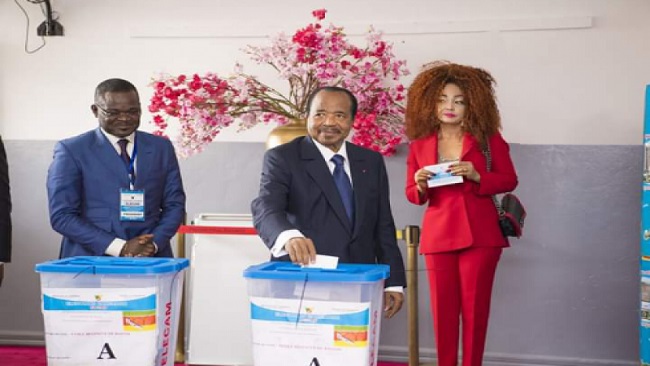
Long-delayed elections are due to take place in Cameroon on Sunday, but in the country’s violence-torn English-speaking areas, the fear is almost palpable.
“Everyone is holed up at home,” a civil servant said in Buea, capital of the Southwest Region, one of two provinces gripped by bloody separatist violence.
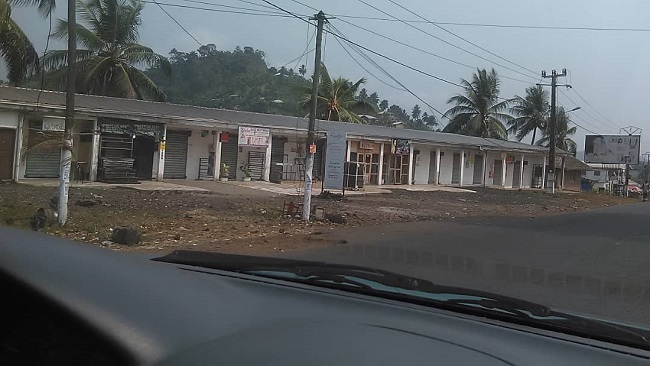
Ahead of polling, the streets were empty except for heavily-armed military patrols; shops and homes were shuttered; and many people were tight-lipped — “there’s fear of reprisals,” taxi driver Derrick Mbua said.
The elections, to renew Cameroon’s legislature and local councils, should have been held in 2017 but were twice postponed.
Their credibility has already been dented by a boycott by the country’s biggest opposition party.
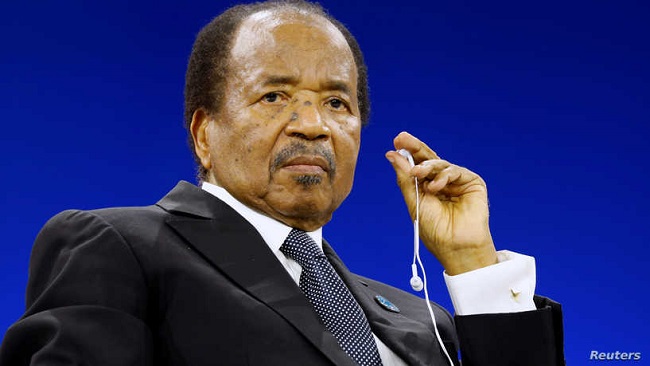
Its leader Maurice Kamto spent nine months in jail after contested presidential elections in 2018 won by Paul Biya, who has ruled Cameroon for 37 of his 86 years.
But Sunday’s vote also faces a mighty security challenge in the Northwest and Southwest Regions.
They are home to Cameroon’s anglophones, who account for around four million of the 23 million population in this mainly French-speaking country — their presence is a legacy of decolonisation in the late 1950s.
Violence
Decades of anger at perceived discrimination, and refusal by the central government to meet demands for autonomy, triggered a separatist movement which declared independence in 2017.
Bitter fighting has claimed more than 3,000 lives and nearly 700,000 people have fled their homes, according to NGO estimates.
Tensions have escalated in the runup to the vote, which the separatists have vowed to block. In the 2018 presidential elections, the turnout in these two regions was just five percent.
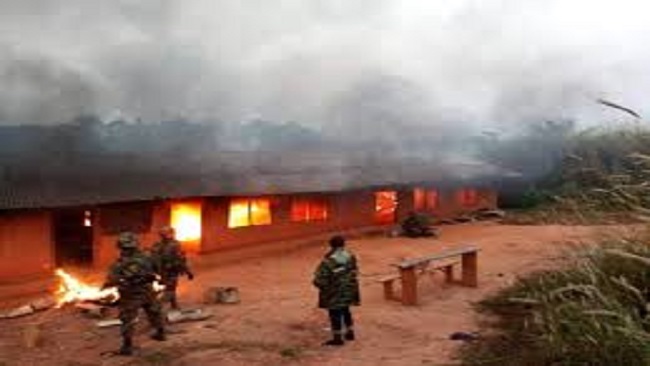
According to a Buea-based NGO, in the past three weeks, an election commission worker has been kidnapped, an election commission building burned down and a candidate’s home torched.
In the Northwest Region, separatists machine-gunned a convoy of election campaign vehicles operated by the ruling Cameroon People’s Democratic Movement (RDPC), injuring five people.
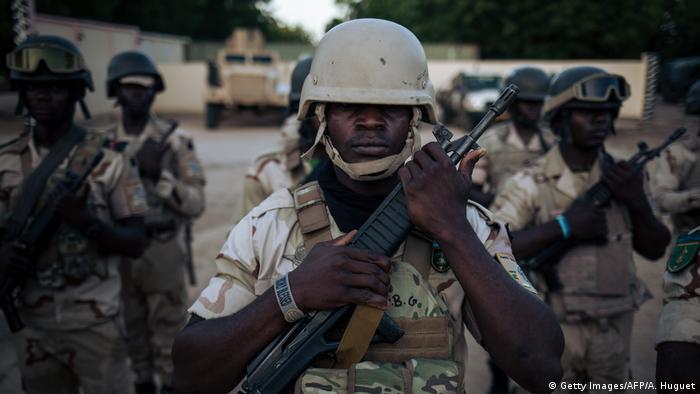
Hundreds of troops have been sent to reinforce the troubled regions.
Police and army roadblocks dot the main highway in Buea, and commandos in balaclavas patrol aboard trucks armed with machine guns or in armoured vehicles.
Amnesty International on Thursday said 14 people were killed in an army attack on the village of Ndoh, in the Southwest Region, on January 23, a day after reports of a killing of a soldier in the area.
More than 50 homes in the region were set ablaze, it said.
“The security measures and increased military presence announced by the Cameroonian government to ensure this weekend’s vote can take place, appear to have been a pretext for a much more sinister operation,” the watchdog’s specialist for the Lake Chad region, Fabien Offner, said.
“(…) Brutal military operations have been conducted while crimes committed by armed separatists continue unabated. Civilians are finding themselves trapped in a spiral of violence.”
Voter fatigue
The ruling CPDM is the only party that is campaigning visibly in the two regions, but its presence is low-key.
Cameroon’s other large opposition party is the Social Democratic Front (SDF), which traditionally draws its support from the anglophone areas.
Prime Minister Joseph Dion Ngute addressed a rally of several hundred supporters in Buea on Thursday, which took place behind a thicket of armed troops.
He said the government had acknowledged anglophone grievances by giving the two regions a special status, the outcome of a “national dialogue” last year.
The forum was boycotted by the separatists and they dismissed its decisions.
“We are going to have to wait for the changes to have an impact on daily life for people to step back from the separatists,” said James Fotabong, a Buea businessman.
Many residents said they would not bother to cast their ballot and were dismissive of voting for representatives who were unable to restore peace.
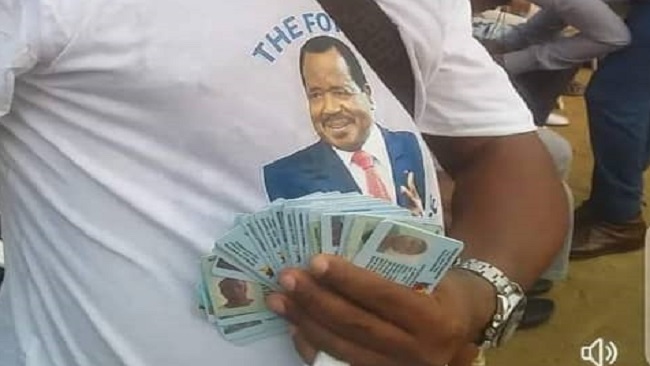
“I won’t go out to vote,” said Francis Mukwele, the manager of a dry-cleaning store. “And I can’t imagine that people will go out to vote here in Buea — I don’t even know where I’ve put my voter’s card.”
Security has been stepped up in the troubled anglophone regions ahead of Sunday’s twice-postponed vote.
Culled from Pulselive