20, January 2020
Polls to be held amid security crisis in Cameroon 0
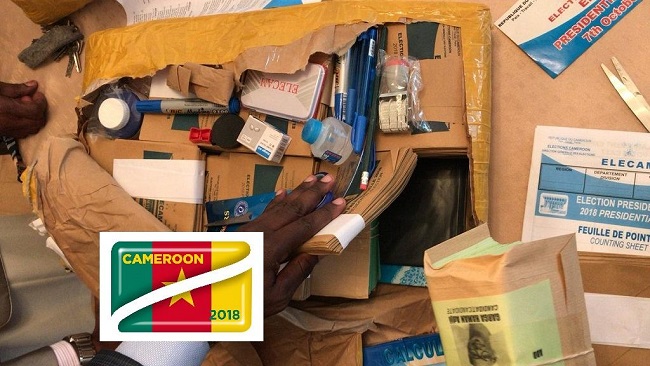
Cameroon on Feb. 9 will host double elections, legislative and municipal, despite worrying socio-political crisis and insecurity in the English-speaking northwestern and southwestern regions of the country.
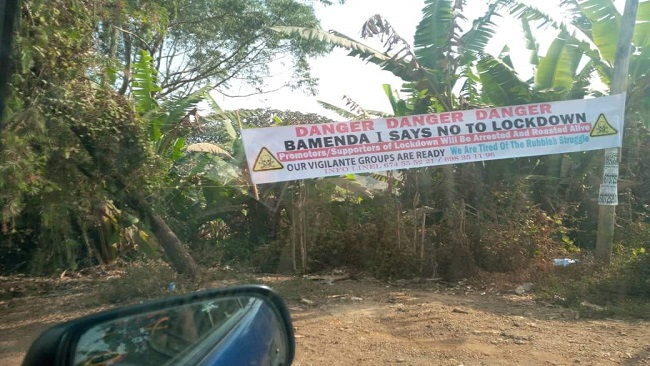
Armed separatist groups have been threatening security in this part of the country for more than three years. A few weeks before the legislative and municipal elections, they are trying to ban people from casting their votes.
“People have to visit the southwest and go down to the fields in the northwest to see if, in a context of war, we can have free and fair elections. I am really going to say no, but I would like someone to prove me wrong,” said Njong Evaristus Ndim, deputy member of the main opposition Social Democratic Front (SDF).
In the country’s northwestern regions, the offices of the Elections Cameroon (ELECAM), in charge of the country’s elections, are not functional, he told Anadolu Agency.
“Prove to me that you can also visit the electoral offices of ELECAM and how functional they are. Apart from Bamenda, the capital of this region, the other offices are not functional. Everyone is on the run. I am a member of the parliament for Boyo in the northwest, but I am in Yaounde. I can’t even get into my riding,” Evaristus Ndim added.
He also said his fellow MPs from the ruling Cameroon People’s Democratic Movement (CPDM) party, “who are supposed to be privileged”, are also unable to reach the areas they are supposed to represent in the conflict zones.
“Several members of our party have been and are being kidnapped in various constituencies. Police stations should be set up in different localities. And yet there are not many of them. Even the agents in charge of organizing these elections are wondering how they will set up the ballot boxes with the armed conflict. But also how will they get closer to the people so that they will have the opportunity to vote?” decried Evaristus Ndim.
According to him, with the level of insecurity, people will be forced to go only to localities with police stations and vote for representatives they do not even know.
“Is this justice? Local people are supposed to vote for those they know, believe in and expect for the development of their aspirations. But in reality, local people are afraid, threatened and lack confidence because the government fails to guarantee their safety. Meanwhile, the armed groups forbid them to take part in voting. How are these people supposed to go and vote? And if they don’t, who will be their local leaders?” asked the SDF representative.
Real dialogue needed before elections
He does not understand why the head of the country decided to give priority to the organization of these elections instead of bringing peace first.
“Peace has not yet been established in the two English-speaking regions, it is a fact,” said Joseph Mbah Ndam, a SDF deputy in the northwest.
“We have submitted our voters’ lists to demonstrate the impossibility for these elections to take place in this context,” he added.
He also marked a factor that hinders the upcoming elections to be held.
“ELECAM asked us to put representatives at the police stations and we did not do so. We can’t do it, because everyone has left the districts. So, those are the peculiarities of the situation. How are the elections going to take place when we can’t put these officers?” asked Mbah Ndam.
But he hopes that the president of the country will allow the elections to take place freely and safely.
“But if, in the end, the pressure is not changed from what we know now, the elections will of course be impossible,” he said.
Evaristus Ndim also wondered how he and voters without protection are supposed to move for election campaigns and voting.
He said: “The barrel of the gun can never bring total peace. What Cameroonians need the most is a real dialogue before addressing the issue of elections”.
Wanlo John Chiamua, a member of the parliament from CPDM, said more optimistically that he trusts the government, and believes it will take the necessary measures for civilians.
“Security arrangements have been made to ensure that, throughout the country, all our citizens can exercise their right to vote. If necessary, they will be reinforced,” said Cameroonian President Paul Biya in his end-of-year speech on Dec. 31. This was also confirmed on Monday by Territorial Administration Minister Paul Atanga Nji at a meeting of governors dedicated to the upcoming elections.
Atanga Nji spoke from Yaounde and he would not dare to venture into conflict zones such as the city of Bamenda without a military escort, said Evaristus Ndim, being skeptical about the security arrangements.
He also reminded the multiple attacks on the governor of the northwest during his displacement in spite of the armored vehicles and all the security protocol.
Culled from aa.com














21, January 2020
Battle For Ambazonia: SDF in turmoil as local elections approach 0
The opposition Social Democratic Front (SDF), destabilised by the mass exodus of its militants, most of whom have become the target of separatist militias, is divided over its participation in the local elections of 9 February.
With close to 40 members held hostage and three cadres’ residences torched, the SDF is suffering the full brunt of reprisals by armed militias operating in English-speaking regions. These militias continue to target those participating in the electoral process, initiated by President Paul Biya at the end of 2019. In the run-up to the February legislative and municipal elections, the SDF’s electoral strategy is causing divisions within the party.
In the North-West and South-West regions, strongholds of the SDF, members of the leading opposition party (in terms of the number of members elected to parliament) are being targeted by the militias, who have openly called for their “neutralisation” since the publication of the candidate lists, which are now closed. As a sign of the extent of the danger, John Fru Ndi, president of the SDF, was forced to abandon his residence in Bamenda and take refuge in Yaoundé “because of numerous death threats”.
While Biya’s historic challenger has often claimed he would be “ready to die in Bamenda if need be”, the aftermath of his last abduction in late June, which forces him to travel regularly to the United States for treatment, seems to have changed his mind.
Fear of further defeat
Within the SDF, the issue of participation in the February local elections is divisive. A fringe of the party, mostly comprising the remaining grassroots in the English-speaking regions, openly opposes involvement in the process. For them, the wounds the last presidential election — in which the SDF conceded a historic defeat by finishing fourth, a first since its creation in 1990 — are raw, and fears of a new setback are uppermost in their minds.
Before leaving Cameroon on 11 January, Fru Ndi reaffirmed his party would take part in the elections.
“The SDF has never had an easy election in Cameroon. We have even often had to win elections, and then we were beaten up and had our victory stolen. But we are competing because we want to let the world know that we are ready for these elections,” he told the press.
Differing opinions
According to internal sources, the SDF’s participation in the elections is a foregone conclusion, although Fru Ndi does not rule out a possible withdrawal from the race.
“If these elections are not held in safe conditions, we will cancel our participation,” he said. “We have until February to see what the situation is on the ground and draw conclusions,” said Joshua Osih, who took the reins of the party in the absence of the chairman.
Several withdrawals
However, on the ground, supporters of the boycott have already thrown in the towel. In Bamenda, Batibo, Bafut, and Bali, announcements of the withdrawal of the SDF candidates have been made one after the other and have provoked numerous comments.
Awabeng Daniel Babila, a former candidate for municipal elections in Bali, chose to resign, saying, “I have lost loved ones in this crisis. I was advised not to run, which I did. I am no longer a member of the SDF nor of any political party.”
These cascading withdrawals could seriously threaten the SDF’s chances — already weakened — in the February elections. Unlike the 2013 local elections, in which the party presented 103 candidates, only 61 candidates were registered for the upcoming polls.
Source: The Africa Report