13, January 2020
Queen gathers royals for crisis meeting with Prince Harry 0
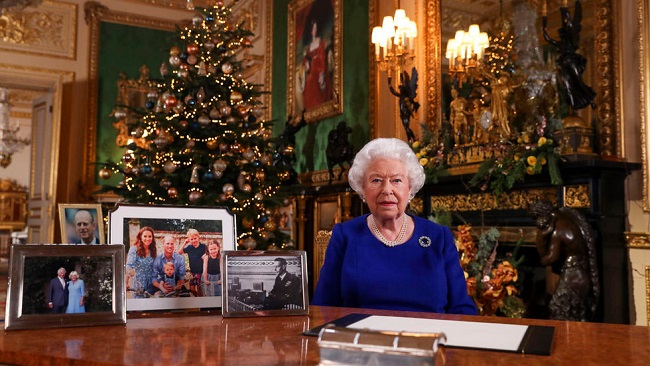
Queen Elizabeth II and other senior British royals were gathering for a meeting Monday with Prince Harry in an attempt to solve the crisis triggered by his bombshell announcement that he and wife Meghan were stepping back from the royal frontline.
Harry’s father Prince Charles and brother Prince William, with whom he has strained relations, will join the monarch at her private Sandringham estate in eastern England, according to British media.
Charles just flew back from Oman, where he attended a condolence ceremony following the death of Sultan Qaboos.
Meghan is expected to join the meeting via conference call from Canada as they attempt to work out the “next steps” towards a compromise and nip the growing crisis in the bud.
Issues up for debate include how much money the couple will still receive from Charles’s estate, their royal titles and what commercial deals they can strike, according to the Sunday Times.
The newspaper reported that William believes he and Harry are now “separate entities”, breaking the bonds forged following their mother’s tragic death.
“I’ve put my arm around my brother all our lives and I can’t do that any more; we’re separate entities,” the Times reported he told a friend.
The queen attended church at Sandringham on Sunday where supporters expressed sympathy for her, with some members of the public saying Harry and Meghan should not receive any more taxpayer money if they step back from the royal family.
The 93-year-old monarch on Thursday demanded that staff work with the couple to find urgently a “workable solution” that would take into account their demands for more freedom.
Harry, Meghan and son Archie spent Christmas in Canada, with the American former actress returning there this week.
Several Canadian media reported Meghan had returned to Vancouver Island off the country’s Pacific coast, where the family spent the year-end holidays and where baby Archie had remained with his nanny.
Senior royals were caught off guard by Wednesday’s announcement that the Duke and Duchess of Sussex wanted to seek a “progressive new role” and divide their time between Britain and North America.
– ‘Complicated issues’ –
The queen’s office issued a terse statement the same evening, saying there were “complicated issues that will take time to work through”.
Harry and Meghan said they intended to continue to “fully support” the queen and “collaborate” with senior royals.
They also want to keep their home on the queen’s Windsor Castle estate as their British base, while aiming to become financially independent.
Media reports said Harry and Meghan could conduct a potentially damaging television interview if they are unhappy with the outcome of Sunday’s meeting.
Writing for The Sunday Times, broadcaster Tom Bradby, a friend of Harry and William, said: “I have some idea of what might be aired in a full, no-holds-barred, sit-down interview and I don’t think it would be pretty.”
The younger prince, who has struggled with his role, last year revealed he has been growing apart from his brother, who as second in line to the throne is increasingly pursuing a different path.
Harry has been open about his mental health issues, and he and Meghan last year admitted to struggling with the spotlight following their wedding at Windsor Castle in May 2018 and Archie’s birth a year later.
The couple have also lashed out at negative news coverage — some of which Harry says was racist — in light of Meghan’s biracial heritage.
The British public currently appears to be siding with the family, with a Daily Mail poll showing that a majority believe Harry should give up his right to the throne and be stripped of cash support from the royals or taxpayers.
Source: AFP















13, January 2020
Mvomeka’a Palace: Biya’s final hideout 0
French Cameroun dictator Paul Biya is spending more and more secluded time in his palace in Mvomeka’a, his native village in the south of the country. The 86 year old thug calls it his haven of peace, from which locals are kept away. The Mvomeka’s palace has become one of the centers of power and the object of all fantasies in French Cameroun.
To get to the palace, one has to drive through a wide road in the heart of the French Cameroun rainforest. It is a neat floor marking road with perfect layout, potholes non-existent: it looks great. Some political commentators have opined that the road which does not bring anything into the French Cameroun economy remains the first major achievement of President Paul Biya shortly after he came to power in 1982. The road simply links Yaoundé, the capital via Sangmélima, one of the cities of his childhood, and Mvomeka’a, his native village.
For a majority of French Cameroonians – who have never set foot there – Mvomeka’a is a privileged settlement. Among locals, this palace, which they are kept away from, sometimes generates frustration.
Biya feels better in Mvomeka’a. He goes there several times a year. With age telling on him, the average length of his numerous stay has gradually lengthened: whereas he spent only a few days each time a few years ago, he now stays there for several weeks in a row, or even more than a month.
At the entrance to the village, a checkpoint blocks the road. One of three soldiers on guard has the responsibility of checking identification papers of those going into the village. Everyone in the area from 5-year-old kids to 75-year-olds, everyone there is involved in intelligence gathering all in a bid to protect Biya and his family.
A member of the presidential guard recently told Biya that he was on the brink because Ambazonia Restoration Forces have promised to attack him. In Mvomeka’a, the threat is taken very seriously, even when he (Biya) is away.
The dictator who governs the nation like a tribal chief usually travels to Mvomeka’a by road, escorted by two helicopters. It was at Mvomeka’a that he built his first residence, an unpretentious white villa, after his studies in France in the 1960s.
When he became Prime Minister, he built a second villa with support from his late wife, Jeanne-Irene, who died in 1992. The current palace was the idea of the late wife who pushed Biya to buy neighboring lands in order to install his relatives and extend his private presidential site.
Inside the Mvomeka’a palace there are apartments for his aide-de-camp, the director of the civil cabinet, the chief of protocol and his butler. There are also family villas, including those of his late sister and mother, which now look like abandoned property. Today, Mvomeka’a belongs almost exclusively to Biya and his family. But no one other than Biya and his wife Chantal lives in the grounds of Mvomeka’a palace shrouded in mystery.
Perched on the hilly side of the village, the Mvomeka’a palace evokes a romantic oasis for the frail president with an insatiable love for classical music. An endless green grid lined with a gigantic screen of conifers hides the palace from prying eyes. From the top of the palace watchtower, sentry guns in hand are watching for the slightest suspicious gesture. No one is allowed to hang around. From a distance, the most daring can glimpse the family cemetery, where the former first lady, the president’s mother and brother, as well as her stepmother were buried.
Doctors, counselors and general secretaries are regularly summoned to Mvomeka’a with files under their arms to meet Biya in his village where he consults and holds crisis meetings. According to one of Biya’s relatives, these retreats allow Biya to concentrate, away from the harassment of courtiers and other seekers of favors. The Mvomeka’a palace has 260 employees.
By Asu Isong with files from Jeune Afrique