
10, October 2018
Cameroon’s Presidential Poll: Kamto to hold Press Conference 0
Cameroon’s President-elect, Maurice Kamto, is scheduled to hold a press conference at 2:30PM Cameroon time in the nation’s capital.
Mr. Kamto is expected to reiterate that he is the winner of the election and that the country’s election-organizing body and the constitutional council are doing everything in their power to rob the population of its victory.
Mr. Kamto who is a legal expert and a Professor of law believes in legality and will be waiting for the constitutional council to confirm him as Cameroon’s next president.
Meanwhile, as the dust raised by Prof. Kamto’s announcement about his victory in the October 7 presidential poll settles, it is slowly emerging that the country’s president, Paul Biya, is slowly showing some signs of flexibility about his retirement.
A source close to the Yaounde strong man has hinted Cameroon Concord News Group that international pressure on the 86 year-old dictator for him to accept the honorable exit proposed by Prof. Kamto has increased over the last two days following the historic announcement that might change the country’s history.
America and other Western countries, excluding France, are working hard to ensure that real political alternation is a reality in a country that has known only two presidents since independence in 1960. Western countries want to ensure that Cameroon is spared a disaster that many other African countries have experienced.
The negotiators are drawing Mr. Biya’s attention to the fact that if he refused to accept the verdict of the ballot boxes, millions of Cameroonians might take to the streets and this could result in a bloodbath that may see his ethnic group paying a huge price as it has been the greatest beneficiary of the strong man’s corruption and nepotism.
They are tactfully and skillfully advising the Yaounde strong man that he could become a hero and a globally respected statesman if you played a key role in the peaceful transfer of power in Cameroon.
Mr. Biya is also being made to understand that if he continued to be in power, the conflict in the English-speaking regions would continue and more lives would be lost.
It should be noted that the real results of the poll are now available on the Cameroon Concord News Group’s website. The results have been sent by a source that has elected anonymity.
It is gradually emerging that Prof. Kamto is the true winner of Sunday’s presidential election.
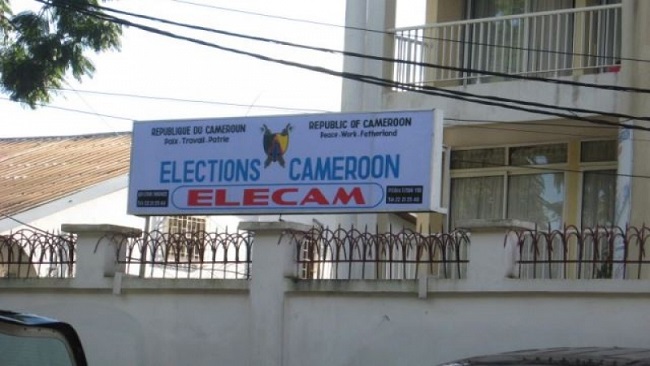
The unimpeachable source at the election-organizing body, ELECAM, who has elected anonymity, has just sent the results to the Cameroon Concord News Group. The source says that ELECAM officials are divided on how to proceed.
Some want the results to be doctored while others argue that the real results should be published as received. There is confusion going on at ELECAM as government ministers keep on calling the election body.
By Kingsley Betek

















11, October 2018
Yaounde: Tension mounts as ELECAM seeks to doctor results 0
Tension is mounting in Yaounde as supporters of Prof. Maurice Kamto suspect the election-organizing body is working behind closed doors to doctor the results. Mr. Kamto’s team yesterday held a press conference in which it deplored the government’s tactics aimed at falsifying elections and fomenting violence in the country.
The press conference, which was delivered by Prof. Kamto’s spokesperson, Olivier Nissack, was a moment for Mr. Nissack to state his party’s commitment to legality while at the same time underscoring the fact that MRC would defend its victory which is based on the results sheets available to them.
Meanwhile, Kamto’s treasurer, Okala Ebode, and another member of his strategy team, Engelbert du Bon Datchoua, have been kidnapped and taken to an unknown destination.
Many observers are wondering if Prof Kamto would be kept under house arrest just to ensure he does not achieve his objective. This was the same tactic that was used after the 1992 presidential election.
The government is on edge and it is using all intimidation tactics in the books to preempt a popular uprising. Yesterday, the city of Yaounde was full of riot police, a means the government wants to prove that it has the right muscles to scare even the most courageous adversary.
The government seems to have been cornered. The crises it has created in the regions over the last 25 years seem to be migrating like a huge dangerous storm to Yaounde, the nation’s capital. A miscalculation on its part could plunge the country into a long bitter civil war that might result in thousands of deaths and huge property destruction.
The government is already spreading the fake idea that in the event of any conflict in most of the country’s towns and cities, the losers will be the Bamilekes, a huge and hardworking ethnic group that controls the country’s economy.
The government hopes that using such a scare tactic will discourage the people who have brought Prof. Kamto his victory. But this lie is not cutting ice with the youths and rich Bamileke business owners who are sick and tired of the government’s corruption and inefficiency.
In 1992, the government which is also the ruling party, popularly known as a crime syndicate, robbed the opposition of its victory when the SDF candidate, John Fru Ndi, beat Mr. Biya by a wide margin, but the Supreme Court, acting in lieu of the Constitutional Council, handed the victory to Mr. Biya who immediately imposed a state of emergency in the Northwest region just to cage Mr. Fru Ndi.
Even the National Democratic Institute (NDI), an American not-for-profit organization that monitors elections, had recognized the numerous irregularities that had characterized and marred the 1992 poll.
The government might have succeeded in 1992, but it will have to deal with a different beast this time around. Mr. Fru Ndi had been called a bookseller just to belittle him and break him down, but this time around, their strategy is not going to work.
Prof. Kamto is a globally respected legal expert who will not be intimidated and bullied into submission. He has the following and has the potential to make East Cameroon ungovernable.
Despite government threats, Prof. Kamto and his team are simply going about their business without paying any attention to the sideshow staged by the military and the police under the supervision of the overzealous territorial administration minister, Atanga Nji.
Prof. Kamto is expected in Douala on Thursday where he will hold a press conference at the residence of former Bar President, Yondo Black. He will be accompanied by Akere Muna, another legal heavy weight who is hell-bent on bringing real political change to Cameroon.
The press conference will be coming at a time when there are hints of a move by Douala chiefs to manipulate youths to demonstrate against Prof. Kamto, a ploy hatched by the beleaguered regime to contain any political violence that might erupt after the release of the fake election results
Prof. Kamto is expected to raise important issues like the Anglophone crisis at a time when Ayuk Tabe will be appearing in court in Yaounde for trial and the gimmicks the government is playing to rob the people of their victory.
While the government is working over time to come up with more sinister plans to hoodwink the population into abandoning Prof. Kamto and into frustrating any plan the opposition might be hatching, Prof. Kamto and his team are calm and unfazed, as they have already won the hearts and minds of Cameroonians who are sick and tired of a regime that has been conducting itself like a mafia.
Cameroonians are determined this time around and they will be filing the streets on the day the results will be released. The military will be confronted just like Southern Cameroonians have done in the two English-speaking regions of the country.
The country is already awash with weapons and it will be a lot easier to cut Mr. Biya’s army to normal proportions. Southern Cameroonian fighters have already demystified the military and every Cameroonian now holds that he can face up to a military that is corrupt and divided.
The fighting in the regions is gradually spreading to the nation’s economic and political capitals and the government is scared that the election results might usher in a situation that might be hard for it to handle.
The signs are not good. Mr. Biya and his men have overplayed their luck and hands. The end may be near. The government might want to tread carefully in order to avoid a situation that might result in the population chasing cabinet ministers and the president in the streets like bunch of common criminals.
It is clear that in the event of any street fighting, Mr. Biya’s ethnic group will pay a huge price. The Betis account for less than 10% of the country’s population, but account for more than 70% of the top positions in government and the military. This has been a source of frustration to other Cameroonians, many of whom have simply decided to leave the country to seek greener pastures abroad.
Cameroonians are frustrated and many, especially the youths, hold that their fate is worse than death and they are prepared to fight a government they hold has imposed itself on them for 36 years. The regime’s dismal economic record and its poor management of the Anglophone crisis are coming back to bite it where it hurts the most.
After more than 36 years in power, Mr Paul Biya, the country’s president and the ruling party’s presidential candidate has run the country’s economy aground. He has been using the country’s treasury as his personal ATM. He spends most of his time abroad where he lavishes state funds.
His wife’s shopping and lavish lifestyle can only be compared to that of Marie Antoinette, the last French Queen, who together with her husband, Louis XVI, abused the French to the extent that a French revolution was orchestrated in 1789.
Regarding unemployment, the country is witnessing the highest unemployment rates on the continent. Cameroonians have been reduced to beggars in their own country. Today, to have a job, young men and women have to either pay the employers or have sex with their future bosses.
Homosexuality is on the rise and many young men now see it as a sure path to securing a job. The system has dehumanized its own citizens and this is a huge source of stress and frustration for many young Cameroonians who do not know where to turn to.
Regarding healthcare, the country’s hospitals have been reduced to consultation clinics while the road network has become a sure death trap.
There is still time for the government to understand that its tricks will not always produce the desired results. It must understand that Cameroonians are more determined today than in 1992. With a strong Diaspora and social media, it is possible for many things to be exposed.
Prof. Kamto is the man of the moment. This is his time. It will be wise to recognize this so as to do the right thing to avoid a bloodbath that might destabilize the entire sub-region.
Prof. Kamto has already stretched a hand of friendship to Mr. Biya and his family. It will be wise to accept this gesture in order to end up in history books as a hero and an elder statesman, instead of insisting on playing tricks just to end up as a common criminal at 86.
Americans had already foreseen this ugly situation and they had, through their ambassador in Yaounde, advised Mr. Biya to think about his legacy. But their advice fell on deaf ears. Will Prof. Kamto’s wise counsel also go unheeded? The ball is in Mr. Biya’s court.
By Kingsley Betek and Sama Ernest in Yaounde.