26, March 2018
Paul Biya: Cameroon’s ‘absentee president’ 0
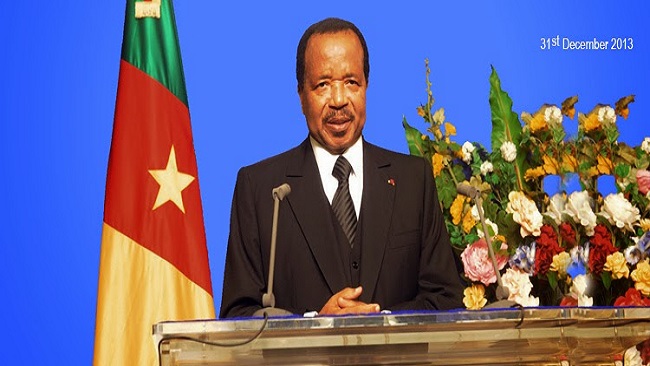
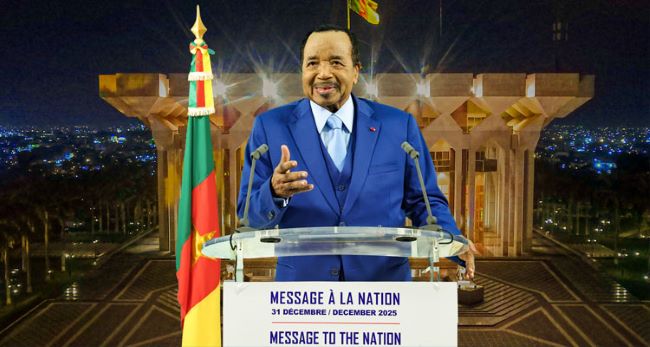
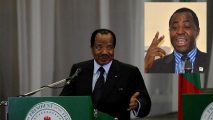
Cameroon’s President Paul Biya has been in power for 35 years. But while his longevity in office is a talking point at home, the time he spends out of the country has stirred international comment – as Paul Melly, an associate fellow of Chatham House, explains.
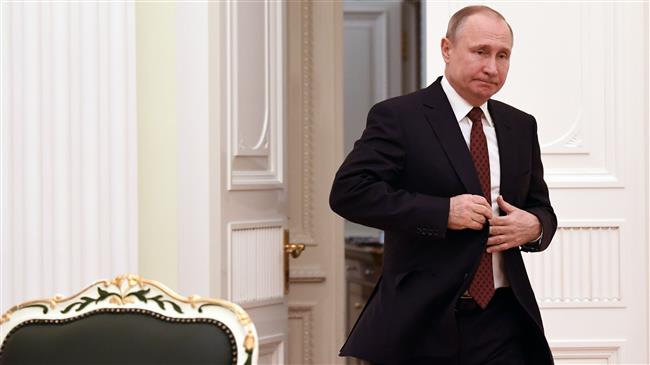
Criticised by some for a supposedly “hands-off” style of rule, Cameroon’s President Paul Biya recently held a cabinet meeting for the first time in more than two years.
Presidential elections are scheduled for October and Cameroonians are waiting to hear if the 85-year-old will seek a further term. But no such announcement was made at the meeting.
Mr Biya has been in power since 1982, making him one of Africa’s longest serving leaders. Under his rule, Cameroon has survived an economic crisis and moved from being a one-party state to multi-party politics.
But it has also been marked by endemic corruption and reversal of democratic gains, leading to the abolition of term limits in 2008, which allowed the octogenarian to run for re-election in 2011.
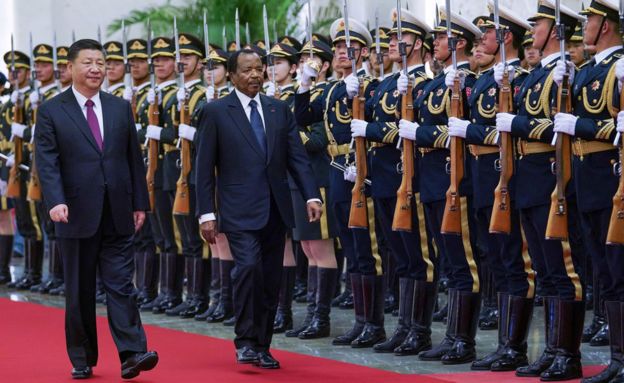 Image copyrightAFP
Today’s Africa is changing. The era of decades-old presidencies is slipping away. Satellite TV and the internet tell a growing urban audience about democratic changes of power in other sub-Saharan countries.
Some 60% of Cameroonians are under 25 and so were not even born when President Biya first came to power. There is massive demand for jobs and viable livelihoods.
The opposition Social Democratic Front has now recognised these generational realities. Earlier this year, the party’s leader, John Fru Ndi, 76, stepped aside to make way for a new presidential candidate, 49-year-old businessman and former pilot Joshua Osih.
Swiss hotel
This is the challenge that confronts Mr Biya as he decides whether to stand for a further term that could take him into a fourth decade in power in a country hungry for change.
His repeated absences from the country have riled critics.
His foreign travels have been the subject of an online spat between the state-owned Cameroon Tribune newspaper and the Organised Crime and Corruption Reporting Project (OCCRP), which calculated the amount of time the president spent abroad using reports from the daily newspaper.
The OCCRP estimates that the president spent nearly 60 days out of the country last year on private visits.
It also alleges that he spent a third of the year abroad in 2006 and 2009. The Intercontinental Hotel in Geneva is said to be his favourite destination.
The state-owned Cameroon Tribune called their investigation “a clear electoral propaganda”.
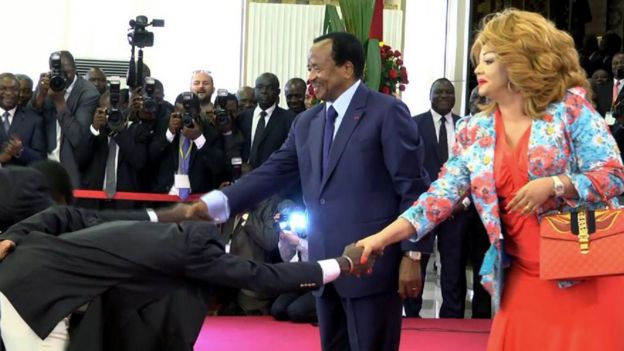 Image copyrightAFP
Back home, President Biya adopts a low-key style, staying out of the limelight and sometimes retreating to his home village.
He entrusts the day-to-day running of the government to the Prime Minister, Philemon Yang, who holds monthly gatherings of a “cabinet council”.
The prime minister is accorded wide latitude to manage the work of his ministerial team, while the head of state meets senior figures in private at the presidential palace in the capital, Yaoundé.
Culled from the BBC











26, March 2018
Southern Cameroons Crisis: UN urges Yaounde to respect human rights 0
The United Nations High Commission for Refugees (UNHCR) has appealed to the Government of Cameroon to respect human rights of all citizens for the sake of peace. The commission’s representative in Nigeria and ECOWAS, Mr Antonio Canhandula, made the appeal while speaking with newsmen on Monday in Makurdi. Canhandula said the instability in Anglophone Cameroon had forced thousands of citizens to seek asylum in Nigeria. He said Cameroonian Government should explore alternative ways of engaging with those who feel aggrieved for the sake of peace and that both parties should respect human rights.
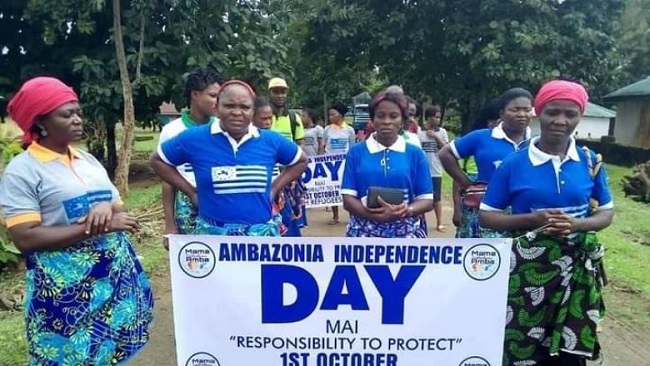
“UNHCR urges the Government of Cameroon to explore ways of engaging with those who feel aggrieved, for the sake of peace. “We also reiterate the need for respect of human rights by all parties involved,’’ Canhandula said. He said the refugees complained of exclusion from the national life by the Cameroonian Government, political processes and important positions in the government. “Longstanding grievances against the central government in Cameroon took a new turn in 2016 when a group of Anglophone Cameroonians triggered civil society-led demonstrations. “This was based on allegations of marginalisation by the authorities, particularly in the education and justice system. “Initially, the protesters called for the return to a federal system of government and greater autonomy. “However, on Oct. 1, 2017, the separatist movement, Ambazonia Governing Council, declared unilaterally the independence of Cameroon’s Northwest and Southwest Regions.
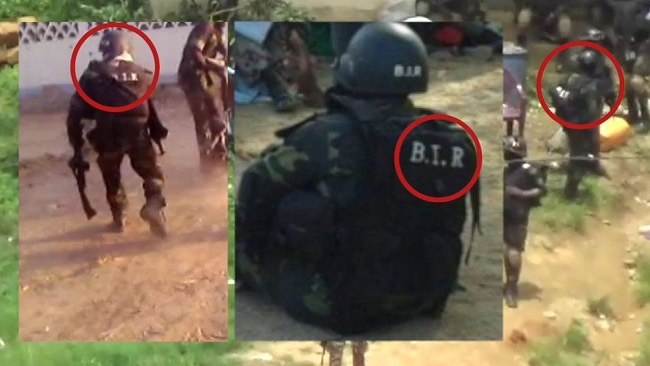
“Tensions ensued with government security forces clashing with movement, resulting in injuries and deaths and leading to an influx of English-speaking Cameroonians into Nigeria. “Critics accused government forces of killing dozens of civilians while the administration is also alleging that suspected separatists have killed more than 10 security personnel since the crisis intensified in October.’’
Canhandula further said that the UNHCR had registered 20,485 Cameroonian refugees seeking asylum in Benue, Cross River and Akwa Ibom states. He explained that the commission also opened a permanent office for the coordination of their activities in Calabar, Cross River, field offices in Adikpo, Benue and Ikom in Cross River. The UNHCR representative said that the Benue Government had allocated 191 hectares of land for the settlement of refugees in Kwande Local Government Area. He added that the site was being developed. According to him, each site has the capacity to host 4,000 persons. He, however, said that the influx is expected to continue and there is the need for more land in Benue. “We are still working with the state authorities in Cross River to identify a suitable location to move the refugees away from the border in line with international standards. “Issues of accessibility, security, topography, water resources, absorption capacity and good terrain for sanitation facilities are taken into consideration while selecting potential refugee sites.’’
Canhandula said the commission was yet to gain access to Akwaya, where some Nigerian refugees in Cameroon were located. “The Akwaya sub-division, in particular, hosts small refugee population of around 1,800 Nigerians and around 600 Cameroonian returnees, who had been refugees in Nigeria before being repatriated in 2015 and 2016. “This area is very difficult to access, particularly during the rainy season. “Nevertheless, our office in Cameroon is working to organise an assessment mission there. “But we cannot provide first-hand information at this moment,’’ he said.
Source: www.vanguardngr.com