6, December 2024
France has no prime minister, no government and Macron is hoping for a miracle 0
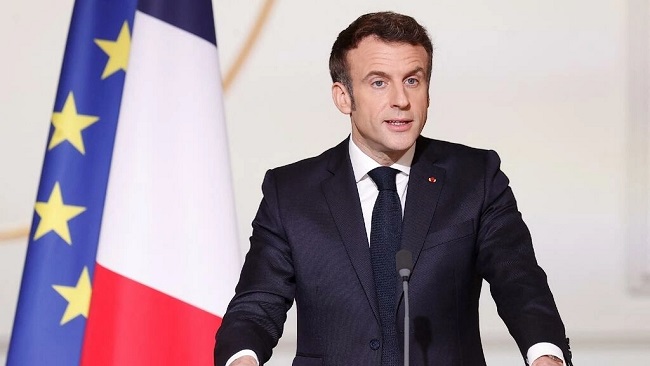
Uneasy lies the head that wears a crown. This is especially true for French President Emmanuel Macron this year as France grapples with a serious political crisis.
Europe’s second-largest economy has no prime minister, no government, and Macron is hoping for a political miracle. He must appoint a new premier to get a 2025 budget approved by parliament as soon as possible.
How did we get here?
Following a landslide victory by the far right in the European elections in June, the president dissolved the National Assembly, France’s lower house, and called snap parliamentary elections. While a leftist coalition swept up most seats, no party ended up winning an outright majority.
After two months of tense ambivalence, Macron finally appointed a new prime minister in early September. Michel Barnier, a former foreign minister and Brexit negotiator, would spearhead France’s new government – which turned out to be dominated by conservatives and centrists.
Fast-forward three months and everything has crumbled, yet again. After Barnier decided to push through his sweeping social security budget without a parliamentary vote, both the left-wing New Popular Front alliance and the far-right National Rally tabled votes of no confidence. Both were passed on Wednesday, toppling Barnier and his government.
It’s the first time a government has fallen to a no-confidence vote in France in more than 60 years. On Thursday morning, Barnier became the shortest-serving prime minister in modern French history when he handed his resignation to Macron.
What happens next?
Calls for Macron to resign poured in from his opponents after Barnier was defeated. Insisting the president’s resignation could break the deadlock, Mathilde Panot, head of the hard-left France Unbowed (LFI) party, told reporters he was “now calling on Macron to go”. Marine Le Pen, the far-right leader, said pressure was piling up on the president but that he alone had the last say on the matter.
But Macron has insisted, time and again, that he will not buckle under pressure. In an address to the nation Thursday night, Macron vowed to stay in office until the end of his term in 2027. He also announced that he would name a prime minister “in the coming days” but gave no hint about who that may be.
According to presidential sources, Macron is set to meet leaders of his own centrist forces, as well as the Socialist Party and the conservative Les Républicains on Friday to search for a compromise. Members of the far-right National Rally, hard-left France Unbowed, the Green Party and the French Communist Party have not said they will meet with the president so far.
Referring to the record five-year reconstruction of Notre-Dame, which will open its doors once again on Saturday, Macron said “we are able to do great things … we can do the impossible”. But the task is critical. Naming a replacement means finding someone capable of leading a minority government in a parliament with no majority.
Meanwhile, Barnier will stay on in a caretaker capacity, overseeing everyday business until the president appoints a new government.
What can Macron do now?
Macron cannot dissolve parliament like he did in June to hold new legislative elections until at least June 2025, meaning policymakers will have to battle potential stalemates, depending on who is chosen for premiership.
Concerns about the French economy are building in the face of the political chaos. France’s debt could rise to 7 percent of GDP next year if significant budget reforms are not put in place.
While it would be possible to extend the 2024 budget to 2025, avoiding a US-style government shutdown, it would mean no new measures could be introduced. With this option, it is unclear how or even when a new budget could be passed. The budget extension would also have to be voted by MPs, who could oppose the decision.
Macron has promised to pass a “special” finance law that will guarantee the continuity of the state within the next ten days. Since it is the first time in 45 years that France will end the year without a budget, the law is essential to ensure that public services continue to function. He also promised that at the start of the new year, the new government will prepare a new budget.
Whatever happens, the French president must act quickly to stave off any further pandemonium.
Reappoint Barnier or opt for a similar profile
Macron would have every right, constitutionally-speaking, to reappoint Barnier as prime minister. He could argue that given these dire times, choosing someone supported by a common base of centre to right-wing parties, would be better suited to pass a budget bill.
While it seems unlikely that Macron will take this route, he may opt for a similar type of profile as Barnier. French daily Le Parisien floated the name of François Baroin, a member of the conservative Les Républicains party who has spent most of his career working in politics. Baroin ticks the same boxes as Barnier and is considered, by his supporters, to be capable of speaking with everyone while not straying far from Macron’s political agenda. Staunch conservative Bruno Retailleau, who served as interior minister under Barnier with a hard-line stance on immigration and who promised to “restore order”, has also been mooted.
But both men have the same disadvantage as the outgoing prime minister and would risk facing no-confidence votes. Neither would be democratically chosen and neither belong to the New Popular Front, the left-wing alliance that hold the largest share of seats in parliament.
Choose a close ally
The French president could be tempted to take back control by appointing one of his close friends, such as Sébastien Lecornu, who served as defence minister in Barnier’s now toppled government. Defecting from the Les Républicains party to throw all his weight behind Macron’s 2017 presidency, he has proven his track record as a loyal ally.
Some say this move would appease Le Pen. Rumours of Lecornu dining with the far-right leader in March were leaked by French newspaper Libération, allegations later denied by Lecornu. Le Pen also said she intended to let the new prime minister do the job by promising to work with whoever is chosen in an interview on French TV channel TF1 on Wednesday.
Find a sweet spot
With every government reshuffle, the same name pops up – that of François Bayrou. A centrist veteran whose MoDem Party has been part of Macron’s alliance since 2017, Bayrou has made his rural roots a key part of his political identity. He has unsuccessfully run for president three times in the past.
For his supporters, Bayrou is well-placed to convince at least part of the Socialist Party not to file a no-confidence motion against him and does not rub the far-right National Rally the wrong way either.
Choose a leftist
When Macron appointed Barnier in early September, he made it clear he did not want a left-leaning prime minister. Lucie Castets, the candidate for the New Popular Front, and Bernard Cazeneuve, who served as PM under Socialist president François Hollande, were both left by the wayside.
Choosing someone like Cazeneuve could be a way to encourage Socialist lawmakers to stray from the leftist alliance and expand a centrist ruling group, but those rallying behind Macron have a fraught relationship with the left. What’s more, Macron does not want to hear about tax rises for the rich or repealing the controversial pension reform.
And appointing someone from the New Popular Front, such as Castets, is pretty much out of the question for the president. It would mean effectively acknowledging his defeat in the European and French parliamentary elections, which could lead to his party unravelling.
France is holding its breath to see who will lead its next government. But with every contender, the risk remains that MPs will choose to table a no-confidence motion and topple one pick after another.
Source: France 24



















8, December 2024
Manyu Political Landscape: Change is on the horizon 0
A senior Manyu political leader has informed the Cameroon Concord News Group that there will be significant political changes in Cameroon in 2025 and that Manyu Division will be a totally different political landscape, as the youths of the Division are calling for change.
The politician, who elected anonymity, said that the current political dispensation in Manyu is hurting the Division as many current political leaders have failed to bring much-needed economic development to the Division whose economy is in the throes of a severe crisis.
He added that the youths of Manyu were already grumbling and looking outwards for that person who would understand their problems and would seek to bring meaningful economic initiatives to the Division.
“We need factories. We need a good hospital. We want our children to go to school in the best possible conditions. We know that the Diaspora can help us, but their help could be coordinated for it to deliver better results and that is why we of Manyu Division are urging members of our Diaspora to participate in the politics of our Division. We need people who will not come to earn a salary. We need people with ideas,” the politician stressed.
“After next year’s presidential election, the people of Manyu should take a look at those who have been representing us at the national level,” the angry politician said, stressing that “we have to look at young people to take over from our current politicians, most of whom have never kept their election promises.”
“Besides the Member of Parliament from Eyumojock, Honorable Teku Tanyi, who is constantly in his constituency to bring hope and some development initiatives, most of our politicians are simply dormant and will only come home when there are elections or when their political interests are at stake,” the angry politician said.
“Elective positions in Manyu should be given to young, dynamic and well to do Manyu men and women who have the Division’s interest at heart. We need people who can bring development to Manyu. We need people who can bring jobs to our youths,” he added.
“We must start looking at young and successful men and women in the Diaspora who can mobilize resources abroad for Manyu development. A few names have already been dropped and we hear that one of two Manyu senatorial seats will go to one of Manyu illustrious sons who have been pushing for Manyu development for decades,” the politician said.
“Our current senator is old, sick and tired and has nothing to show for, given the time he has been at the Senate in Yaounde. The current senator should consider his age and should support any young person who might express an interest in running. Manyu needs change but we want that transition to be smooth and friendly so that there will be peace. However, if the plea of the grassroots is not taken seriously, there will be change and it will be painful,” he stressed
“Manyu needs change and it needs people with a broad and global world view. Manyu needs a political leader who can connect the Division with the Division’s growing Diaspora, especially in North America. Manyu needs a credible person, somebody with great development ideas. We are tired of empty promises. We do not care where the person comes from. We need someone who loves Manyu and his people and based on what I have been hearing, we have someone from North America who will bring us the progress we need,” he pointed out.
“Our Members of Parliament must do more for our people. The people of Manyu are disappointed and they want change and any elected politician who does not deliver will not represent us anymore,” he stressed.
By our Mamfe correspondent Nkongho Philip Agbor