30, August 2020
Mali in crisis: Divisions emerge between junta, opposition leaders 0
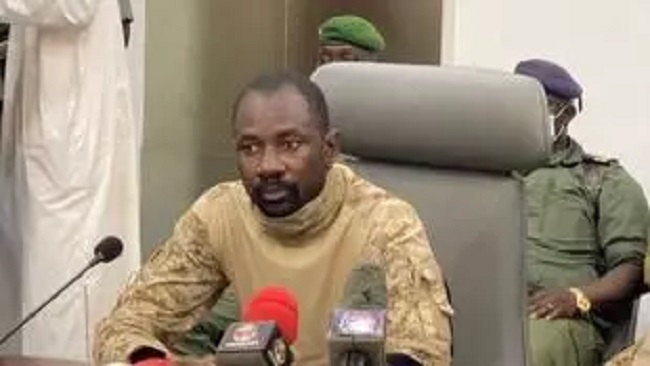
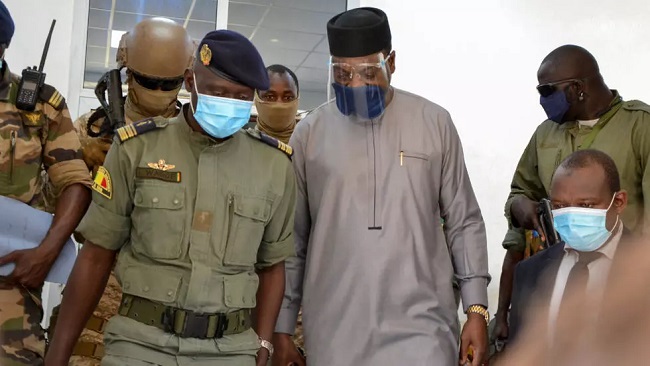
Tensions mounted on Saturday between Mali’s military junta and the country’s longtime political opposition after the coup leaders failed to invite prominent opposition figures to a planned forum on the country’s political future.
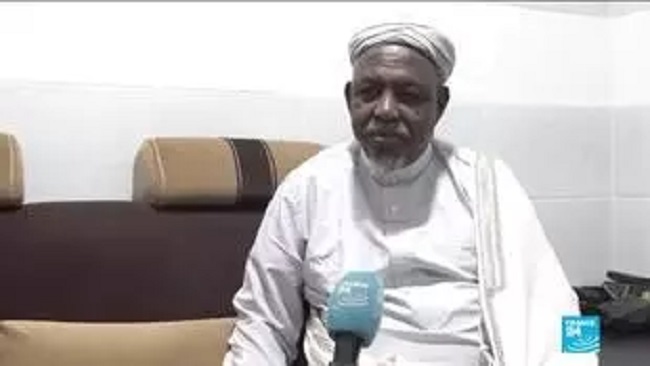
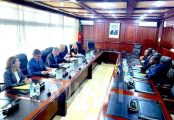
The meeting ultimately was cancelled and the junta leadership instead met with imam Mahmoud Dicko, an opposition leader who on Friday urged the junta to speed up the transition to civilian rule so the West African country could avoid further crushing financial sanctions.
“I ask them to be part of the solution and not another problem,” he said.
Only a week earlier, the opposition coalition known as M5-RFP that includes Dicko had publicly backed the coup, with thousands of their supporters taking to the streets after the junta’s overthrow of President Ibrahim Boubacar Keita. M5-RFP had led several months of demonstrations calling for his resignation three years before his final term was due to end.
In a statement late Friday, one M5-RFP leader said the alliance regretted not being invited to take part in Saturday’s planned discussions between the junta and various political actors.
“The M5-RFP is and remains a major player in this desired change and must be at the forefront in determining the structure of the transition,” Choguel Maiga said.
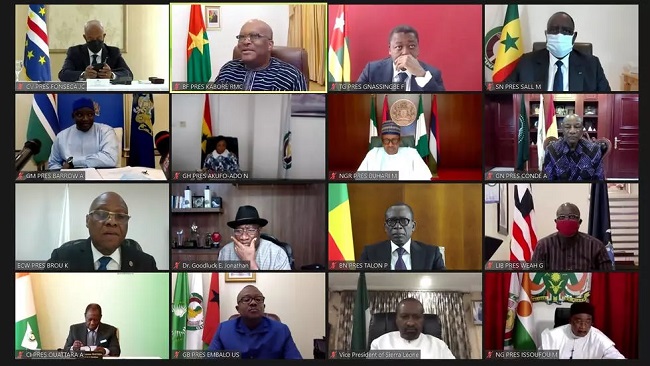
The path back to democracy has been a stumbling point with West African heads of state, who on Friday urged the junta to restore civilian rule within a year. But the junta has proposed a three-year timeline. That has led to the unraveling of talks and more threats of sanctions.
The regional bloc known as ECOWAS already has cut financial flows to Mali, and neighboring countries have closed their borders in a bid to step up pressure on the coup leaders.
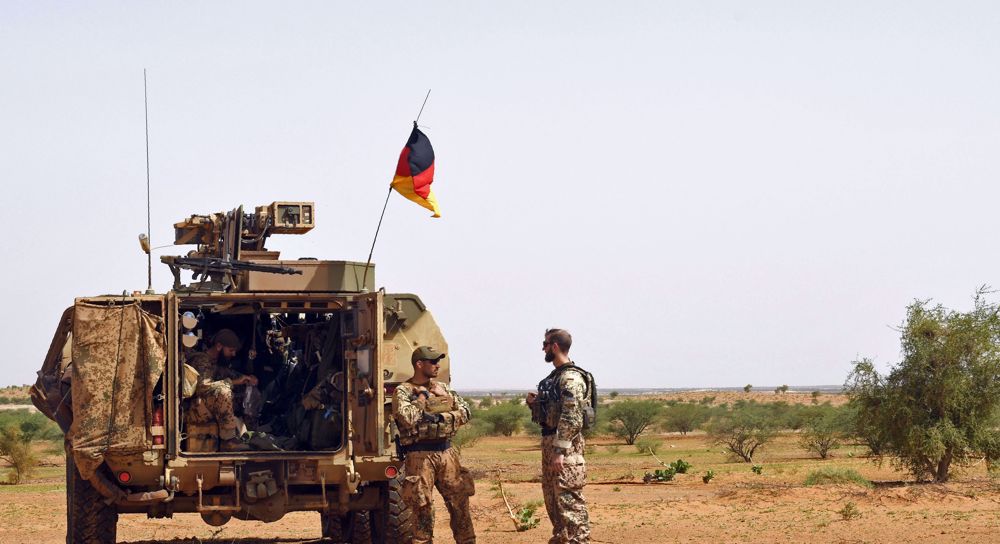
The international community has expressed alarm over the coup, fearing that the political vacuum could allow Islamic extremists to expand their reach. A similar coup in 2012 led to the militants overtaking major towns in the north where they implemented their strict interpretation of Islamic law, amputating the hands of those charged with theft.
A French-led military operation in 2013 ousted the extremists from power but the Malian military and its partners have faced an insurgency ever since.
There are concerns that the new political upheaval could erode what gains have been made in the fight to stabilize Mali.
Source: AP












1, September 2020
Tense election forecast for Ivory Coast as former president, ex-rebel leader file candidacies 0
Supporters of former Ivory Coast president Laurent Gbagbo and former rebel leader Guillaume Soro on Monday filed their candidacies for a tense presidential election in October.
The candidacies of the exiled leaders add to those of incumbent President Alassane Ouattara and former president Henri Konan Bedie — while the top Catholic leader warned the country was approaching a dangerous point.
Both Gbagbo and Soro had been barred by the electoral commission from running due to convictions in the country’s courts.
“We have just submitted the candidacy file of our political leader, president Laurent Gbagbo, the father of democracy in Ivory Coast,” said Georges-Armand Ouegnin, president of the pro-Gbagbo coalition called Together for Democracy and Sovereignty (EDS).
Gbagbo, 75, was sentenced in absentia to a 20-year term last November over the looting of the local branch of the Central Bank of West African States during the post-election crisis.
He could be jailed if he were to set foot in Ivory Coast.
Ouegnin said the decision to block Gbagbo from running was political, calling for the release of all political prisoners and the return of political exiles, including Gbagbo.
But Independent Electoral Commission chief Ibrahime Coulibaly-Kuibiert has said that anyone convicted of a crime cannot contest.
The courts have previously backed the body’s position, and judicial sources said they believed his candidacy was unlikely to be validated.
Soro camp cries foul
The country remains scarred by a conflict that erupted after the 2010 vote when Gbagbo refused to hand over power to the victor, current President Alassane Ouattara. Around 3,000 people lost their lives in several months of violence.
Gbagbo currently lives in the Belgian capital Brussels after being tried by the International Criminal Court. He was freed conditionally by the ICC after he was cleared in 2019 of crimes against humanity, a ruling prosecutors are appealing.
He has not made any public statement about whether he wishes to run again.
Meanwhile, relatives and supporters of Soro, a rebel leader who became prime minister, called for his candidacy to be validated.
Soro’s spokeswoman Aminata Kone-Zie accused the government of subterfuge “to make our president (Soro) ineligible under an alleged criminal conviction”.
Soro, 48, has been forced into exile in France in the face of a long list of legal problems at home.
He was sentenced in April to 20 years in prison for “concealment of embezzlement of public funds”.
A former ally of Ouattara, Soro was a leader in a 2002 revolt against Gbagbo that sliced the former French colony into the rebel-held north and the government-controlled south and triggered years of unrest.
‘Radicalisation of positions’
President Ouattara, 75, and former president Bedie, 86, submitted their candidacy papers last week.
Violence erupted after Ouattara’s announcement he was seeking a third term, claiming the lives of at least eight people in August.
Although the constitution limits presidents to two terms, Ouattara and his supporters argue that a 2016 constitutional tweak reset the clock.
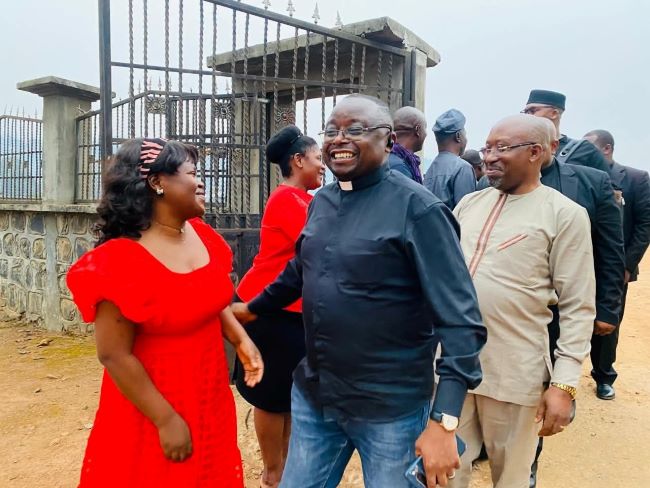
On Monday, the head of the country’s Catholic Church, Cardinal Jean-Pierre Kutwa, warned the country is approaching a “dangerous turn.”
He said Ouattara’s candidacy “is not necesssary”, adding his duty as guarantor of the constitution is “to take the time to organise elections in an environment pacified by reconciliation.”
“As the presidential elections approach, we are witnessing a radicalisation of positions from one side or the other,” he warned.
“These have become even more pronounced since the declaration of the president’s candidacy.”
The cardinal called on all sides to move towards dialogue.
The October 31 election in the world’s top cocoa grower comes after years of political turbulence and civil war.
Source: AFP