6, October 2018
Cameroon marred by violence ahead of presidential poll 0
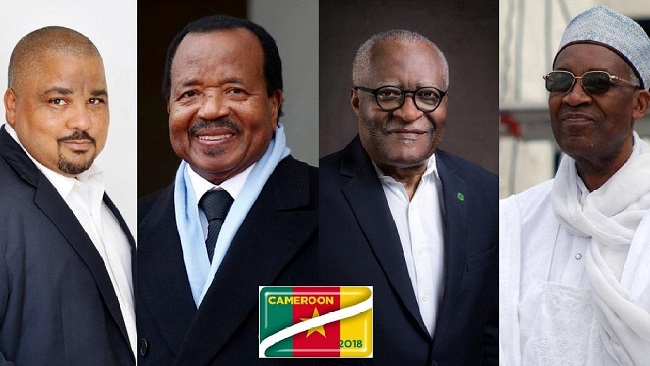
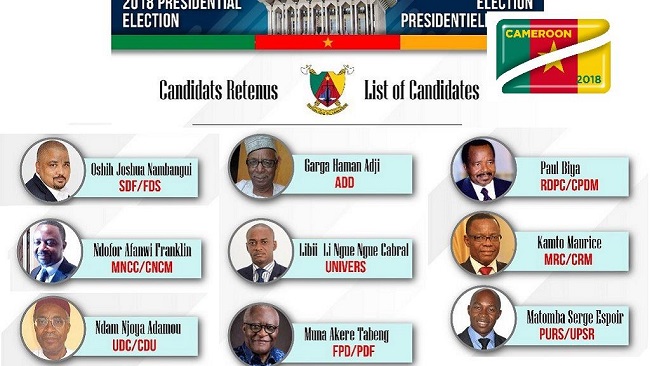
Eight candidates representing a string of opposition parties are vying to oust 85-year-old incumbent President Paul Biya, who has ruled Cameroon since 1982 and is also seeking a seventh term. But unrest in most parts of the country has triggered a serious refugee crisis, forcing thousands of residents to flee to neighboring Nigeria.
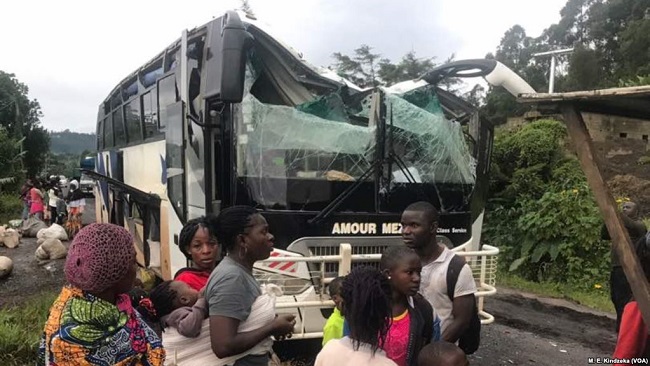
On Thursday, President Paul Biya’s campaign team came under gun fire as their convoy was driving top speed through the main highway into Buea, capital of the English-speaking southwest region.
Several supporters of the ruling CPDM party were injured in the gunfire exchange between government troops and armed separatists. Biya himself was not part of the Buea campaign convoy. One of Biya’s party official Gerald Ngalla told DW that “the president was worried that his presence in Buea could lead to further bloodshed.”
Credible elections “impossible”
Prince Ekosso, head of the United Socialist Democratic Party, believes the election will be flawed. “It is impossible for credible elections to take place in the northwest and the southwest,” Ekosso said.
Ekosso’s party, which had maintained a traditional support base in the south, could not hold any rally in the restive region, due to threats by the separatists, who have vowed to stop the elections in the Anglophone areas. “As a matter of fact, the towns and cities of the northwest and the southwest have been deserted,” Ekosso said.
He added that: “It’s already late now for anything to be done for free and fair elections to take place in the two regions.”
Opposition candidates have also been avoiding the restive regions too. FDP candidate Akere Muna was travelling through the English-speaking town of Mutengene and was chased by angry protesters. Four civilians were killed.
Last week, eight CPDM supporters who were planning a campaign rally in Bamenda were kidnapped from a hotel and have not been seen since then.
“They want to provide the solution through their political lenses,” said civil society leader, Willibroad Ze Ngwa urging the ruling CPDM party to call for peace. He said the party should stop giving the impression that it can solve the crisis through war.
“It is only their political party that should be able to provide the solution to the problem and we say no. We are saying that Cameroonians from all works of life should get to the field and talk to the people in a tone of appeasement, keeping their political jackets by the side.”
However, Enow Abrams Egbe, chairman of the electoral commission Elecam, believes otherwise. “I am just coming from the northwest and the southwest, the situation is perturbed but serene in a way that all the material is on the ground,” he told DW.
“The security is working hard, leaving no stone unturned to make sure that voters go to the poll free and fair. I am only assuring them that there will be no fright,” Egbe said.
6.6 million voters will be expected to cast their ballots at 25,000 polling stations all over Cameroon on October 7 to vote their new president. The divided opposition has failed to present a single candidate.
Opposition parties defy separatists
Presidential candidates have been encouraging voters to cast their ballots. Prophet Frank Ndifor Afanui, a candidate for the opposition Cameroon National Citizenship Movement, is the only one to travel to the restive southwest region so far, with a visit to Mutengene.
In Cameroon’s capital Yaounde, opposition Cameroon Renaissance Movement (MRC) candidate Maurice Kamto suggests the separatists should allow people to vote as the only way to change the system they have been fighting.
“They will not win the war, so why continue fighting that war? Is it a solution for a country in crisis just to split into two parts just because we maybe have a government which is not listening to them? Go and vote because it is the only solution. We do not have to sacrifice our people,” Kamto said.
Social Democratic Front (SDF) candidate Joshua Osih said he sees a solution to the conflict.
“The problem is not the secession. The problem is the marginalization and injustices that lead to that secession. The secession will not necessarily solve that problem,” said Osih.
Displaced voters
Elecam has vowed that those who have been “displaced will be able to vote,” according to the organizing body’s regional director Amadou Ali. “They’re not just displaced people – they are voters. The fact that they’ve been displaced will not have any impact on the election.” He added that people without their documents will be able to register to vote in the towns where they have sought refuge.
“It’s not true, I wasn’t able to get a voting card,” retorted Yagana, as she rested on a mat. “I’ve requested it but a local official asked me for 40,000 CFA francs ($70, €60).”
But Cameroonian analyst at the International Crisis Group (ICG), Hans de Marie Heungoup, believes only “one-third of those displaced in the far north are registered on the voters’ roll.” The region is Cameroon’s most populous and it’s poorest and has previously voted overwhelmingly for President Paul Biya.
Army policing polls
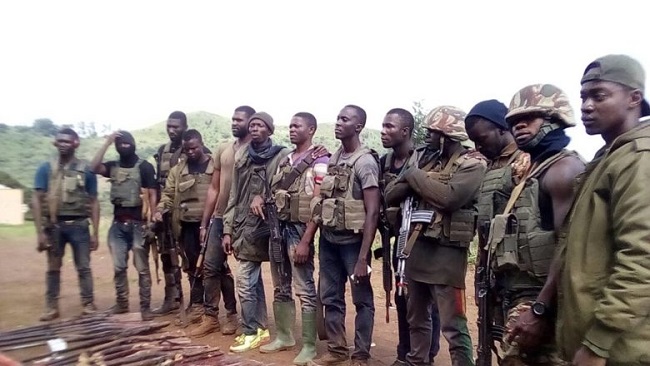
The army has been deployed to the two restive regions to battle separatist fighters since the end of 2017. According to the ICG, the secessionists control “a significant proportion of rural areas and main roads” in the regions. Skirmishes are violent and occur frequently, displacing thousands of local residents.
Around 246,000 people have been displaced in the southwest, according to the UN, while no estimate exists for the northwest region which is largely inaccessible to aid groups and journalists. Some 25,000 others are sheltering in neighboring Nigeria, according to the UN. In the face of continuing clashes, a surge of troops is planned, according to a senior official.
Elecam has also said that some polling stations will be “relocated” in the Anglophone region which has traditionally been a reliable well of votes for the main opposition Social Democratic Front (SDF) whose candidate is Joshua Osih. He has described the planned “relocations” in interviews as “an illegal measure” that could damage his chances.
Source: Deutschwelle












7, October 2018
Southern Cameroonians boycott Cameroun election as violence worsens 0
Many Cameroonians face being unable to vote in the country’s election on Sunday because of insecurity and fear driven by worsening violence in its anglophone regions.
Paul Biya, the 85-year-old who has ruled Cameroon since 1982, looks set to capitalise on a divided opposition to easily win his fifth election since reluctantly adopting a multiparty system in 1992.
Separatists in the English-speaking regions have announced a boycott of the poll, and many voters there have said they are too scared to go to the polls. At least 400 civilians have been killed in unrest in the past year, and hundreds of thousands have fled their homes.
“Who can vote when our brothers are dying? How can we even vote, when you don’t know how safe it will be?” asked Chimene Ngum, a 23-year-old student in Bamenda, capital of the anglophone Northwest region.
The rebellion that erupted in the country’s two anglophone regions was triggered by the violent repression of a peaceful protest a year ago, after lawyers complained that magistrates were being appointed to their courts despite their poor English. It spread to the regions’ teachers and students, then activists symbolically declared the two anglophone regions the independent republic of Ambazonia.
Biya’s government responded with a wave of arrests and killings.
For years, anglophones have felt deliberately sidelined and neglected, their infrastructure left to crumble. Last year, for instance, Biya’s home region was allocated almost twice the money that the anglophone regions got combined, the public investment budget shows, despite their vital importance to Cameroon’s economy. Much of the country’s oil production is off the coast of the Southwest region, and onshore are its biggest cocoa-growing areas.
Biya was due to visit Buea, the Southwest regional capital, on Wednesday for a rally, but called off his trip at the last minute after the “Amba boys”, as the forces of the Ambazonian separatists are known, issued more threats. It would have been the first trip he has made to the anglophone regions since 2014, in which time he has spent at least 260 days on private trips abroad, many to Geneva.
Teachers who were bussed into a heavily securitised Buea to participate in the ruling party’s rally said they were threatened that there would be consequences if they did not attend. Meanwhile, gunfights broke out between Ambazonian and Cameroonian forces in villages near the city.
It is unclear how many of the 4000 polling stations due to open in the anglophone regions will function on Sunday, though some are determined to cast their ballots.
“I am going to the polls this Sunday, despite the fact that our brothers don’t want us to. They should understand that this is the only way we can get the change we want,” said Judith Mafor, a supporter of the main opposition party. “We have tried with guns and this has taken us to the graves and to the bushes.”
Others said they would not risk voting and described feeling powerless.
“We vote all the time and the outcome remains the same,” said Josephine Ngum, a tailor from Bamenda. “Why do I have to vote again? In a country where real democracy is instituted, when someone’s term of office is over, he steps down for another person to take over. This is not the case with Cameroon.”
Chimene Ngum said she didn’t even have a voter’s card. “Even if I had one, I wouldn’t vote because the results would still be the same. Paul Biya always wins,” she said.
After Robert Mugabe’s fall from power last year, Biya took up the mantle of being Africa’s oldest president, making Uganda’s Yoweri Museveni, 74, and Nigeria’s Muhammadu Buhari, 75, seem young.
Equatorial Guinea’s Teodoro Obiang, 76, currently holds the title for the longest-serving president in Africa, having ousted his uncle in a military coup in 1979. Biya, who rules his cocoa and oil-producing country essentially by decree, is second.
Culled from The Guardian